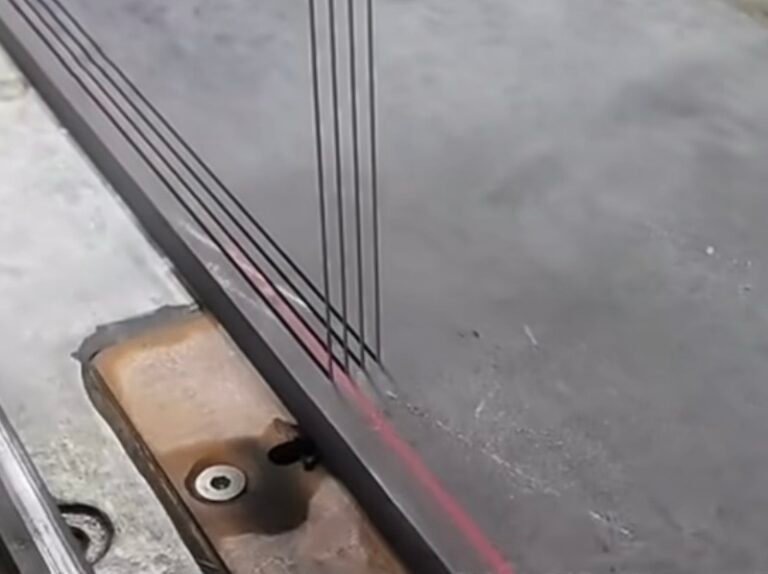
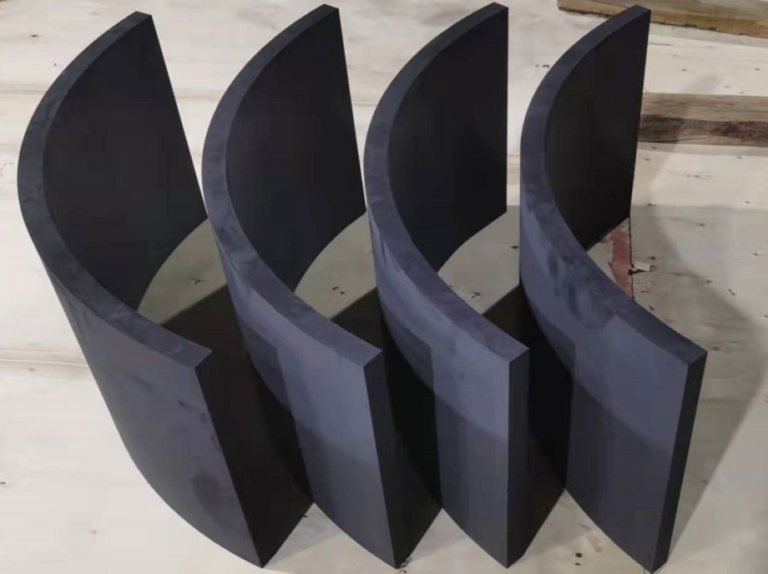
Graphite machining is widely used in high-precision industries, including aerospace, semiconductors, and energy storage. Despite advanced machinery and optimized cutting parameters, 흑연 가공 시 재료 손실 remains a critical factor affecting cost, yield, and component quality. Losses are not limited to visible chip formation; micro-cracks, edge breakage, and bulk material damage contribute significantly. Understanding these mechanisms, quantifying hidden costs, and evaluating alternative processes is essential for engineers managing high-value graphite production.
Sources of Material Loss in Machining
Chip Formation
Graphite, as a brittle material, produces fine chips during machining. Unlike ductile metals, it fractures easily under relatively low cutting forces, resulting in irregular fragments that are often difficult to reclaim. Chip volume and size are directly influenced by:
- Tool geometry, including edge radius and rake angle
- Feed rate and depth of cut
- Cutting speed and wire tension in diamond wire applications
Optimizing these parameters reduces chip volume while maintaining high surface quality.
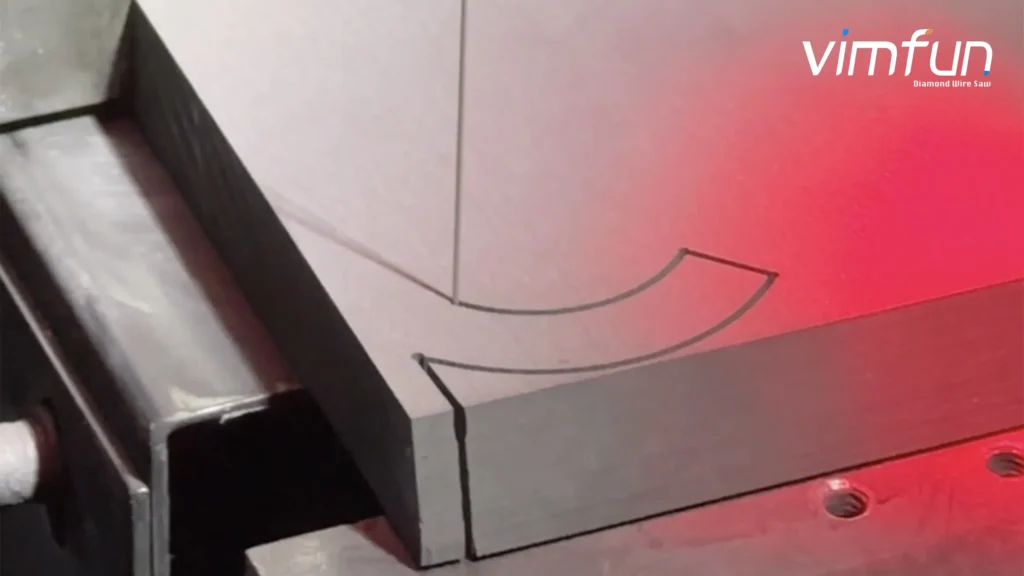
Bulk Material Damage
Beyond chips, bulk material damage occurs when micro-cracks propagate into the graphite body without forming loose fragments. This type of damage is particularly critical in brittle materials, where unnoticed internal cracking can:
- Increase scrap rates
- Reduce mechanical strength of electrodes or molds
- Affect surface integrity and subsequent machining stages
Compared with traditional CNC milling, diamond wire cutting distributes stress more evenly, reducing the likelihood of bulk damage.
Why Loss Is Often Underestimated
Hidden Cost in Standard Accounting
Manufacturing cost models traditionally track explicit costs, including tool wear, machine time, and setup. However, material loss, particularly kerf width and micro-cracks, is often treated as “normal” and excluded from cost calculations. This omission leads to a consistent underestimation of actual production costs.
Quantifiable vs Difficult-to-Measure Losses
Explicit losses such as tool wear or machine runtime are straightforward to monitor. Hidden losses, such as micro-fractures or edge chipping, require specialized measurement techniques. Without accurate monitoring, the cost of high-value graphite is consistently underestimated.
External Reference Suggestion:
Amplification Effect in High-Value Graphite
Material Price vs Loss Ratio
In premium graphite, even a 1% loss represents a substantial absolute cost, much higher than similar percentages in standard-grade graphite. This amplifies the economic impact of otherwise minor losses.
Sensitivity in High-Precision Applications
Industries such as aerospace, semiconductor substrates, and advanced electrodes demand high dimensional accuracy, smooth surfaces, and minimal micro-cracks. Small deviations in kerf or unnoticed internal damage can have amplified consequences in both function and cost.
External Reference Suggestion:
Why Kerf Control Outweighs Tool Price
Kerf Width and Cost Relationship
Kerf, the width of material removed during cutting, represents unrecoverable material. In high-value graphite, each 0.1 mm increase in kerf can significantly elevate costs. Precise kerf control reduces both material loss and subsequent finishing requirements.
Long-Term Comparison: Tool Cost vs Material Loss
While low-cost tools may reduce immediate expenses, they often generate wider kerfs and higher micro-crack rates. Conversely, high-precision cutting tools, such as diamond wire machines, maintain narrower kerfs (~0.4 mm), lowering long-term material loss and improving repeatability.
Example Comparison Table:
| Metric | Conventional Tool | 다이아몬드 와이어 커팅 |
|---|---|---|
| 커프 폭 | 0.8–1.2 mm | ~0.4 mm |
| 자재 손실 | 높은 | 낮은 |
| Repeatability | Poor | 우수 |
| 표면 마감 | 보통 | 높은 |
| Production Cost | 중간 | Reduced by lower loss |
Reassessing “Alternatives” from a Cost Perspective
Common Machining Alternatives
When evaluating alternatives, engineers must consider not only tool price but also material loss, surface quality, and precision. Common alternatives include:
- Conventional end mills or routers
- Waterjet cutting
- Laser cutting
- Precision diamond wire cutting
Engineering Cost Evaluation Framework
Cost evaluation should be based on:
- Material loss (kerf and micro-cracks)
- Surface integrity
- Dimensional accuracy
- Rework and scrap rate
Engineering Decision Flow
A structured approach ensures optimal process selection:
- Define quality criteria (tolerance, surface roughness, micro-crack tolerance)
- Quantify acceptable material loss
- Estimate unit cost of material loss
- Compare real cost of alternative machining processes
External References:
결론
Material loss in graphite machining arises from both chip formation and bulk material damage. Standard cost models frequently underestimate the true impact, particularly in high-value graphite applications. Kerf width and micro-crack management are more critical than tool price for long-term cost efficiency. Precision cutting technologies, especially diamond wire machining, minimize material loss, improve surface quality, and increase repeatability. Evaluating alternatives from an engineering and cost perspective ensures optimal selection and maximizes production efficiency.