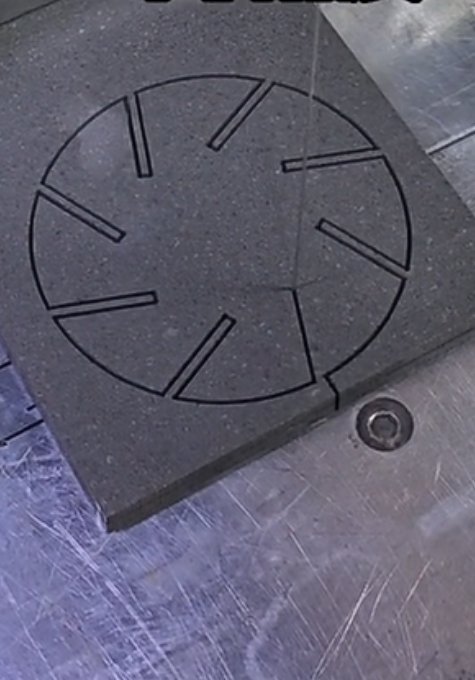
In graphite component manufacturing, achieving a single successful part is not enough. Modern industrial production requires repeatability, predictable output, and controlled variation across hundreds or thousands of components. This broader concept is known as graphite manufacturing stability.
Manufacturing stability refers to the ability of a production process to maintain consistent performance over time. It includes dimensional accuracy, surface integrity, tool wear behavior, and material response under repeated machining cycles. Without stable processes, manufacturers may face fluctuating product quality, higher scrap rates, and unpredictable production costs.
For engineers responsible for large-scale graphite component production, stability becomes more important than peak machining speed or short-term productivity improvements.
Understanding Manufacturing Stability in Graphite Production
Manufacturing stability is often misunderstood as the ability to produce a correct part once. In reality, stability refers to maintaining consistent quality across an entire production run.
In graphite manufacturing, stability means that the following variables remain predictable over time:
- dimensional tolerances
- surface roughness
- kerf width during cutting
- tool wear progression
- thermal and mechanical stress distribution
When these parameters fluctuate significantly, production becomes difficult to control. Small variations can accumulate across batches and eventually lead to quality failures.
Therefore, graphite manufacturing stability should be evaluated as a long-term process capability rather than a short-term machining result.
A useful reference for process capability and manufacturing stability evaluation can be found in the American Society for Quality guidelines on statistical process control.
For additional technical background on manufacturing process capability, engineers often consult the resource:
https://asq.org/quality-resources/statistical-process-control
Root Causes of Stability Decline in Machining
Traditional graphite machining methods often experience gradual performance degradation during long production cycles. Several factors contribute to this instability.
Tool Wear Accumulation
Graphite is abrasive due to its carbon particle structure. During machining, tool edges gradually wear down. As wear increases, cutting forces become less predictable, leading to inconsistent surface quality and dimensional variation.
Tool wear also increases the likelihood of micro-cracks and edge chipping, especially when machining complex graphite geometries.
Thermal and Mechanical Variability
Although graphite has high thermal resistance, localized heating during machining can still influence tool behavior and material removal characteristics. Over time, these small variations affect machining stability.
Material Structure Variability
Graphite blocks often exhibit variations in grain size and density. Even small differences between batches can cause significant differences in machining response. Without stable cutting processes, these variations amplify instability.
Together, these factors gradually reduce process predictability and weaken graphite manufacturing stability.
Process Drift in Large-Scale Production
One of the most critical challenges in industrial manufacturing is process drift. Drift refers to the gradual deviation of process parameters over time.
In graphite machining, drift can occur in several ways:
- progressive tool wear
- slight changes in machine alignment
- thermal expansion effects
- variation in material batches
These changes may be small in the short term but become significant during long production runs.
For example, a kerf width increase of only 0.1 mm might appear negligible in a single cut. However, across hundreds of cuts, this variation can lead to significant material waste and dimensional deviation.
Engineers managing production lines must therefore monitor process stability using statistical tools such as process capability analysis and control charts.
A widely used reference for industrial process stability analysis can be found through the International Organization for Standardization standards for quality management.
Further reading on process control can be found here:
https://www.iso.org/standard/62085.html
Advantages of Cutting in Continuous Manufacturing
Compared with conventional machining methods, cutting technologies designed for brittle materials often provide better process consistency.
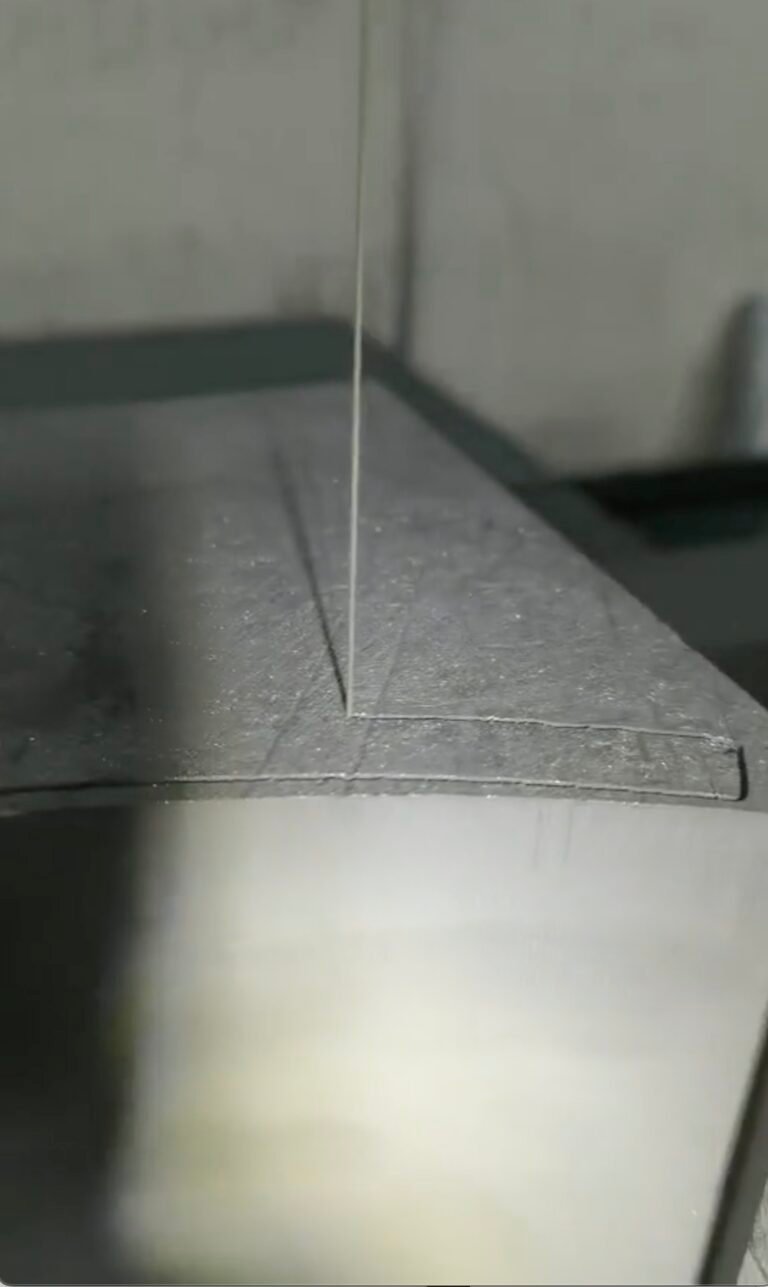
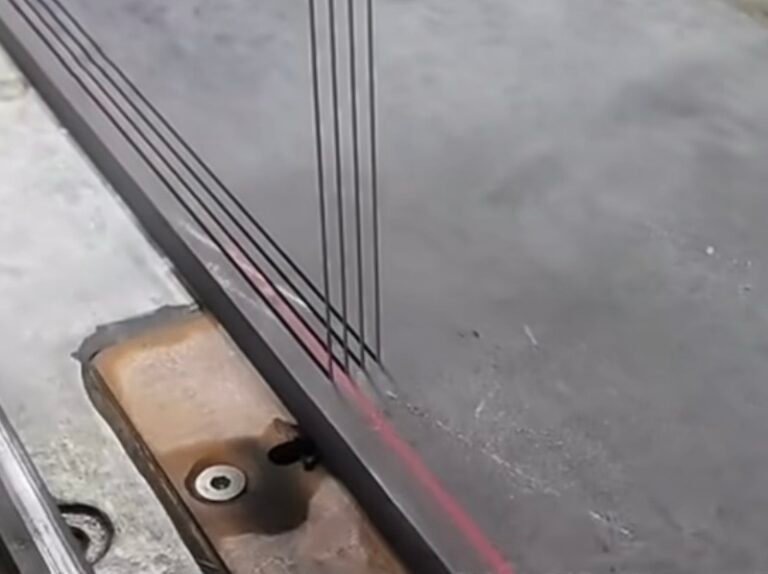
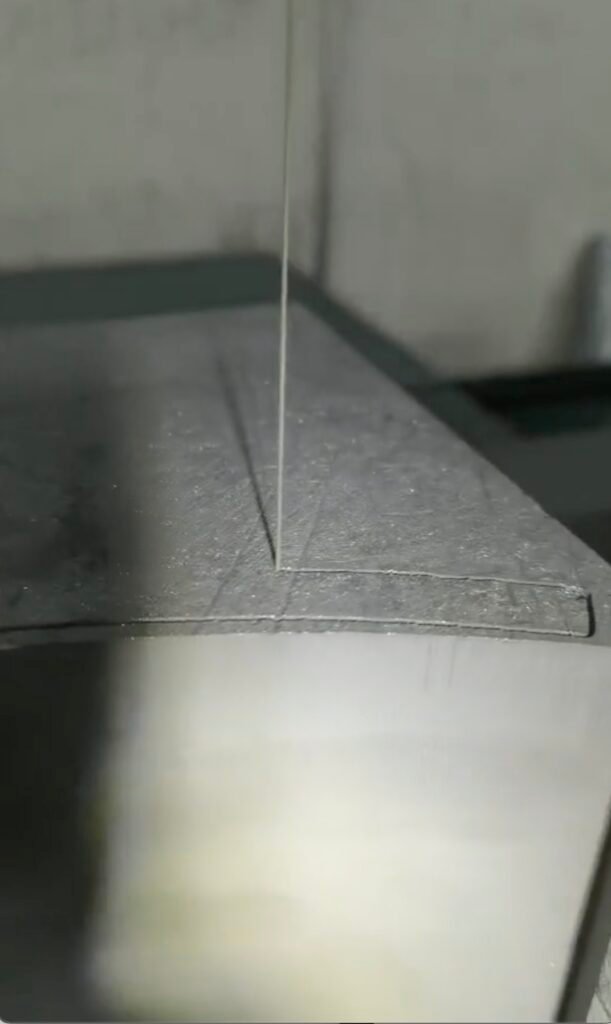
Continuous cutting systems distribute cutting forces more evenly across the cutting interface. In systems such as endless diamond wire cutting machines, the cutting wire moves continuously at speeds up to 80 m/s while maintaining controlled tension between 150 and 250 N.
Because the cutting action is distributed along the entire wire rather than concentrated at a single cutting edge, stress fluctuations are significantly reduced.
This creates several advantages for graphite manufacturing stability:
- reduced mechanical shock during cutting
- consistent kerf width around 0.4 mm
- lower probability of micro-crack formation
- smoother surface quality
These characteristics allow manufacturers to maintain stable performance across long production cycles without frequent tool replacement.
Consistency and Repeatability in Batch Production
Large-scale graphite manufacturing requires repeatability. Every part must meet identical specifications, regardless of when it is produced during the manufacturing cycle.
Stable cutting processes contribute directly to repeatability by reducing variation in three critical areas.
Surface Integrity
Stable cutting conditions produce smoother surfaces with fewer micro-cracks and particle pull-outs.
Dimensional Accuracy
Consistent kerf width ensures predictable material removal and improves dimensional control.
Process Predictability
When cutting forces remain stable, the machining process becomes easier to model and optimize.
For industries such as semiconductor manufacturing and aerospace components, where graphite parts must meet strict tolerances, this level of consistency is essential.
Why Stability Is the Key Metric for Replacing Machining
In many graphite manufacturing environments, engineers evaluate new technologies primarily based on speed or equipment cost. However, long-term performance is often determined by stability rather than maximum throughput.
Processes that offer higher stability typically provide:
- lower scrap rates
- more predictable production schedules
- reduced tool replacement frequency
- improved material utilization
For this reason, graphite manufacturing stability has become one of the most important metrics when evaluating alternatives to traditional machining.
Cutting technologies designed specifically for brittle materials often outperform conventional machining in this area because they reduce mechanical stress and maintain consistent cutting conditions.
Conclusion
Modern graphite component manufacturing requires more than occasional machining success. Sustainable production depends on process consistency, controlled variation, and reliable cutting performance.
Graphite manufacturing stability reflects the ability of a production system to maintain predictable quality over long production cycles. Factors such as tool wear, material variability, and process drift all influence stability in traditional machining environments.
Cutting technologies designed for brittle materials offer advantages by distributing cutting forces, reducing mechanical shock, and maintaining consistent kerf width. As a result, they support stable, repeatable manufacturing performance.
For engineers evaluating production technologies, stability should therefore be considered a primary decision metric rather than a secondary performance indicator.