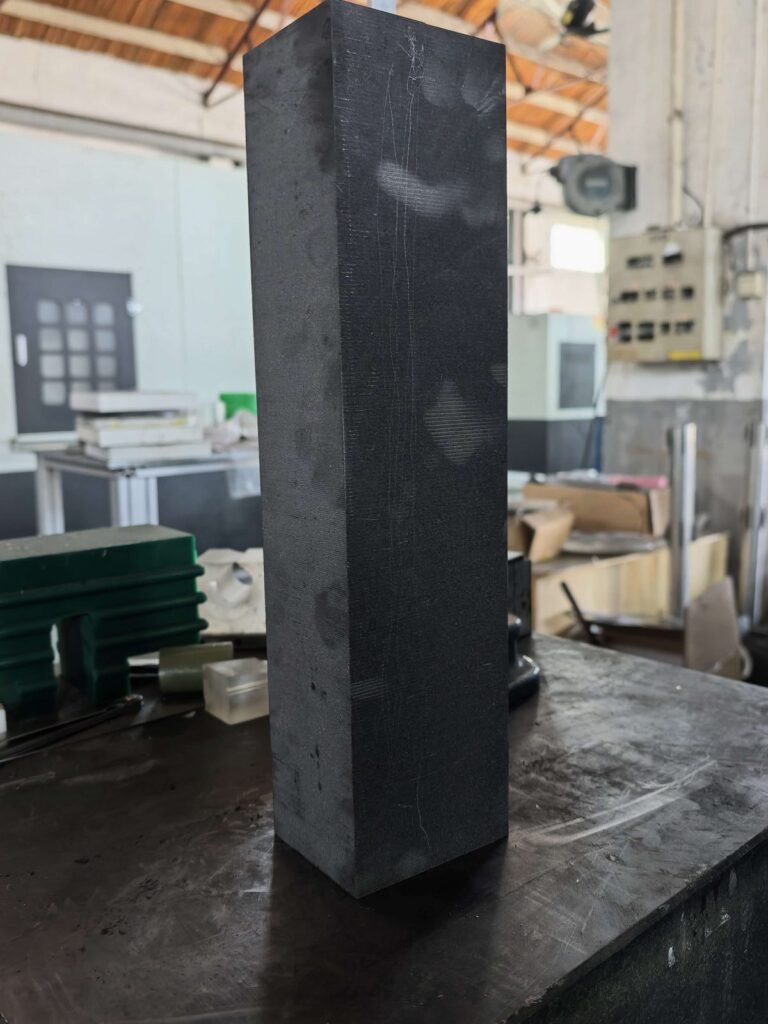
Isostatic Graphite Block Cutting Test: Flatness, Squareness and Size Measured on a 500 mm Bar
Isostatic graphite block cutting test on the Vimfun SVI250-80: one 500 × 87 × 70 mm bar, six cuts, measured for flatness, squareness and size. Full data.

Isostatic graphite block cutting test on the Vimfun SVI250-80: one 500 × 87 × 70 mm bar, six cuts, measured for flatness, squareness and size. Full data.
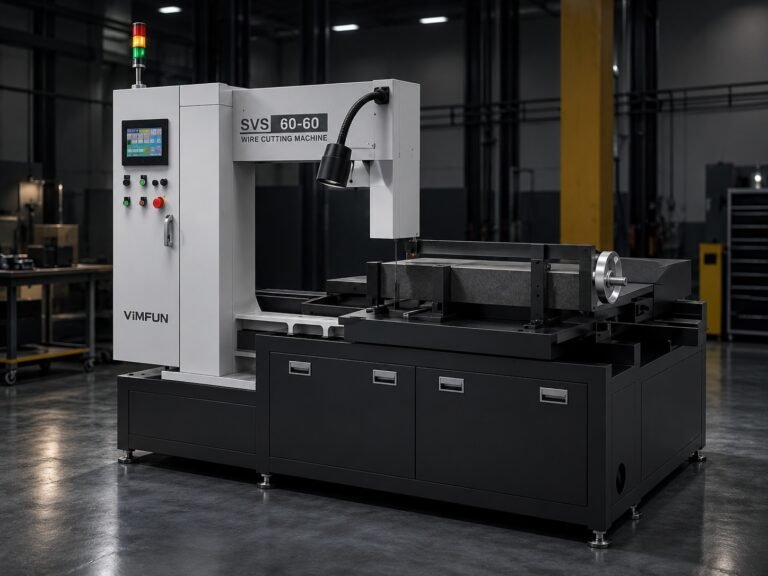
If you’ve been told a wire saw can hold ±0.01 mm on graphite, ask for the data. In our experience running SV60-60 and SH60-60 machines on isostatic and fine-grain graphite, the sustained production tolerance with wire-saw cutting sits at ±0.03 mm once the process has been qualified for the grade

A single graphite boat failure in a 12-inch semiconductor diffusion furnace can scrap the entire wafer batch, trigger unplanned line downtime, and force a root-cause investigation that lasts days. Yield loss on that scale is not a materials-quality problem. In a significant share of cases, the failure traces back not
Take a 100 mm cutting length and divide it into nominal 5 mm slices. With an assumed 1.0 mm kerf, the geometry allows 16 complete slices; with an assumed 0.5 mm kerf, it allows 18. That is a geometry example, not a production benchmark, but it shows why the low
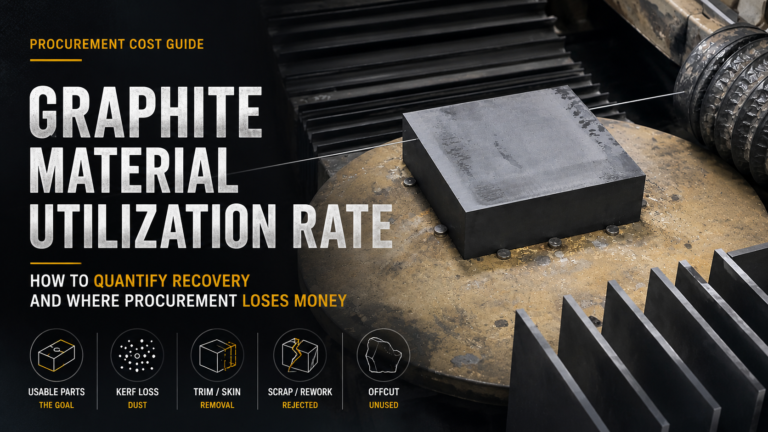
A block of isostatic graphite is quoted, cut, and delivered as finished parts — and somewhere between the block invoice and the finished part inventory, a meaningful share of the material becomes kerf dust, trim, and offcuts. That gap is the graphite material utilization rate, and it is often invisible
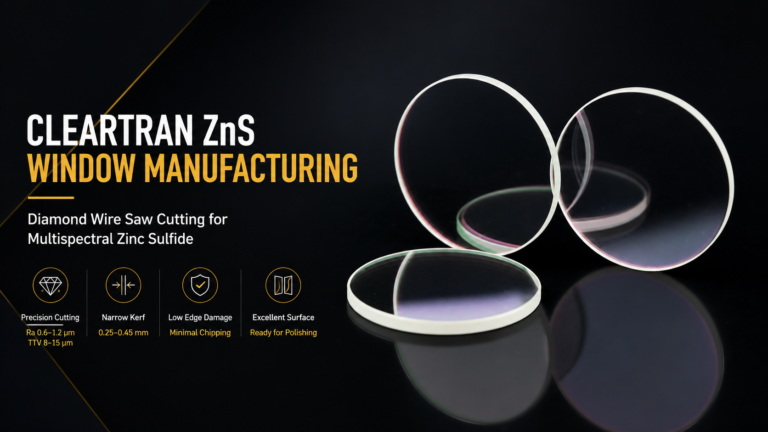
Cleartran ZnS is a denser, tougher grade of zinc sulfide that requires more disciplined cutting control than standard CVD ZnS. Cut it with standard parameters and you get acceptable dimensions but elevated subsurface damage — which shows up later as scatter in the finished window. Cleartran ZnS window manufacturing done
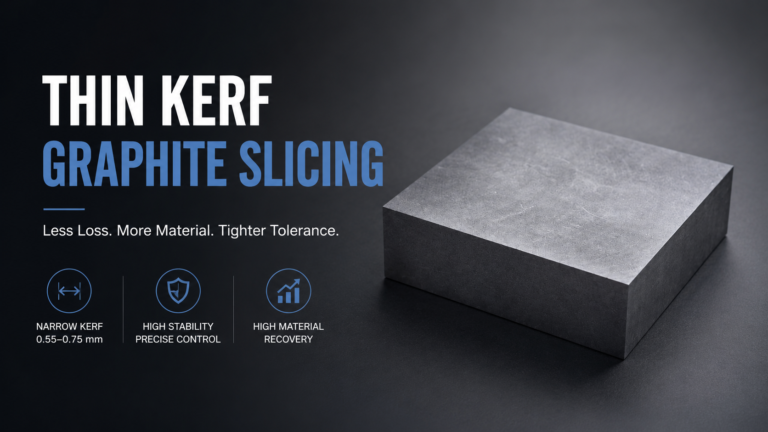
Thin kerf graphite slicing produces narrower cut widths than standard slicing — recovering more material per block while holding tighter dimensional tolerances across the batch. The process works well when parameters are matched to the specific graphite grade and geometry. When they aren’t, the failure modes are fast and difficult
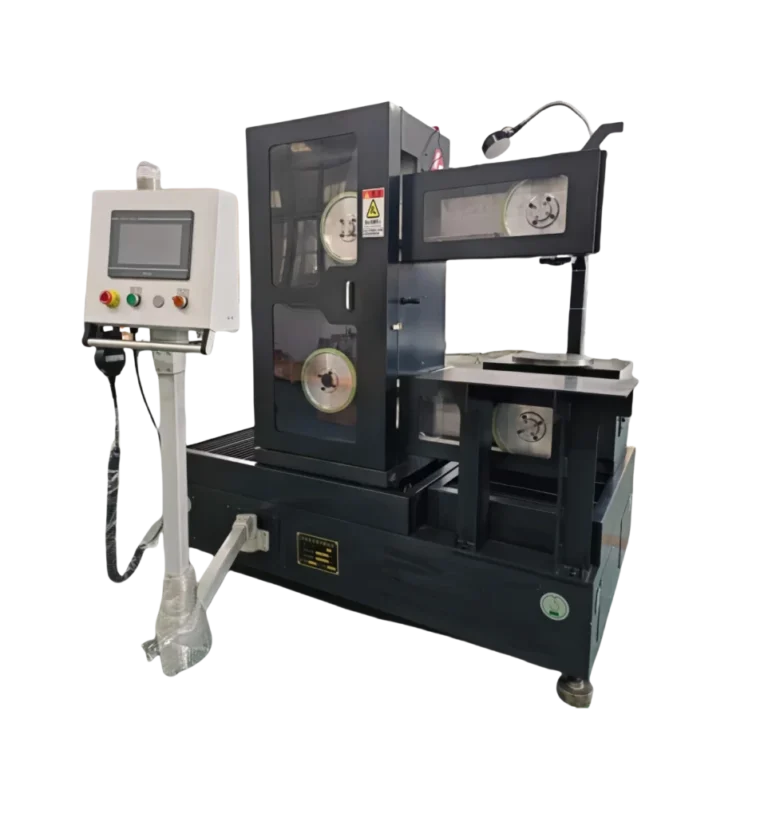
Graphite passes all tests. However, several chips can be harmed. This can happen if it removes faulty trace bits during use. The damage usually appears after shipping. Years of negotiating with graphite suppliers provide that. It’s apparent that semiconductor purchasers hold graphite machining companies to greater standards than other industries.
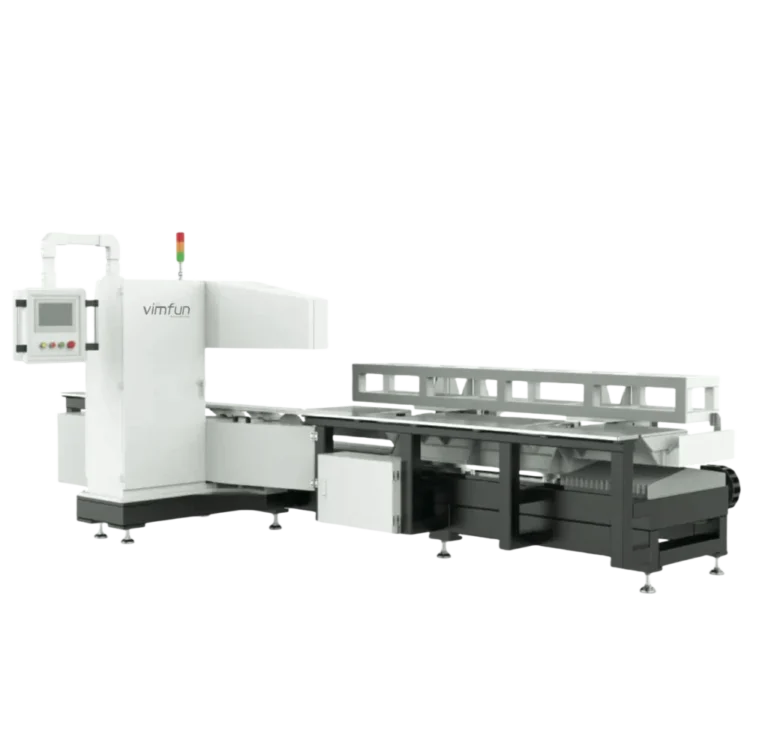
Most cutting machine accidents don’t happen during the cut. These occur when material slides unexpectedly while loading or setting. Vertical cutting machines improve material handling safety, one of three key benefits. Fixture systems secure material while cutting. Second, support structures prevent weight-driven sliding or falling. Third, the control systems adjust
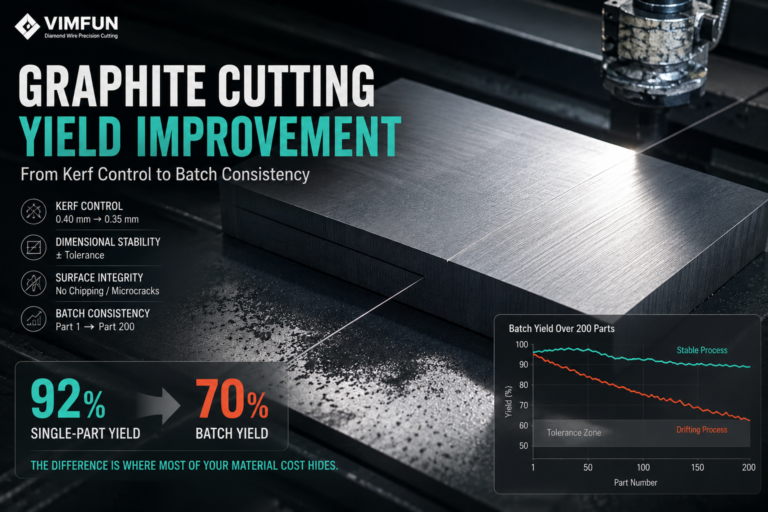
A graphite cutting operation running at 92% single-part yield can easily drop to 70% batch yield across a 200-part production run — the difference is where most of your material cost hides. Graphite cutting yield improvement is not about improving one cut; it is about controlling the variance across every