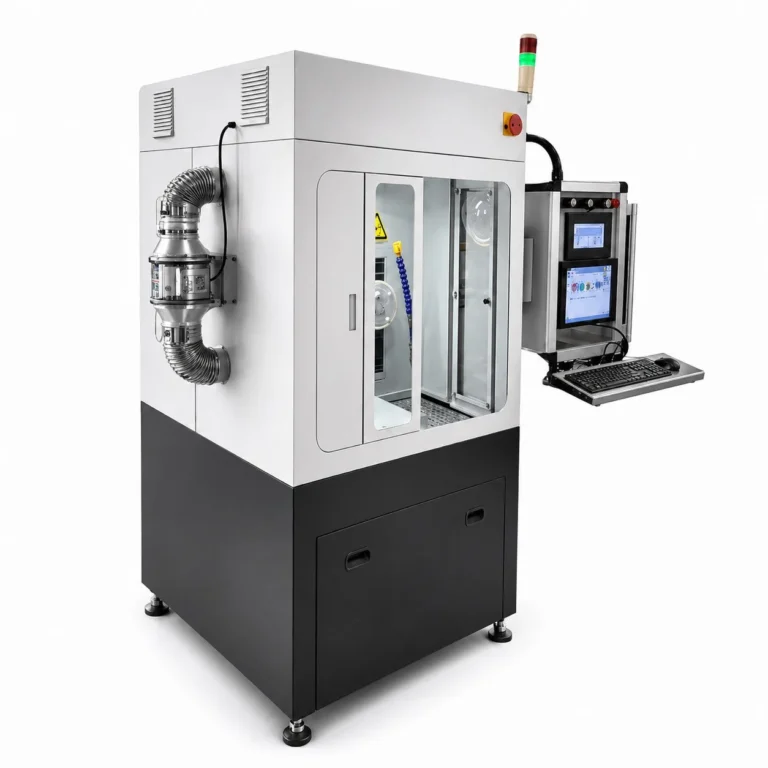
Мы получили партию из 200 штук Электроды для электроэрозионной обработки вернулись после обработки на станках с ЧПУ. Первые 50 выглядели идеально. К 120-му изделию они начали отклоняться от размеров — 10,05 мм вместо 10,00 мм. К 180-му половине был брак.
Tool wear. The CNC spindle had drifted, and by the time we caught it, 40% of the batch was useless.
That’s when we started looking at graphite electrode cutting vs machining серьезно — в частности, алмазно-проволочная резка как альтернатива. Не потому, что проволочная резка — это какая-то волшебная новая технология, а потому, что она решает фундаментальную физическую проблему, от которой не может уйти обработка на станках с ЧПУ.
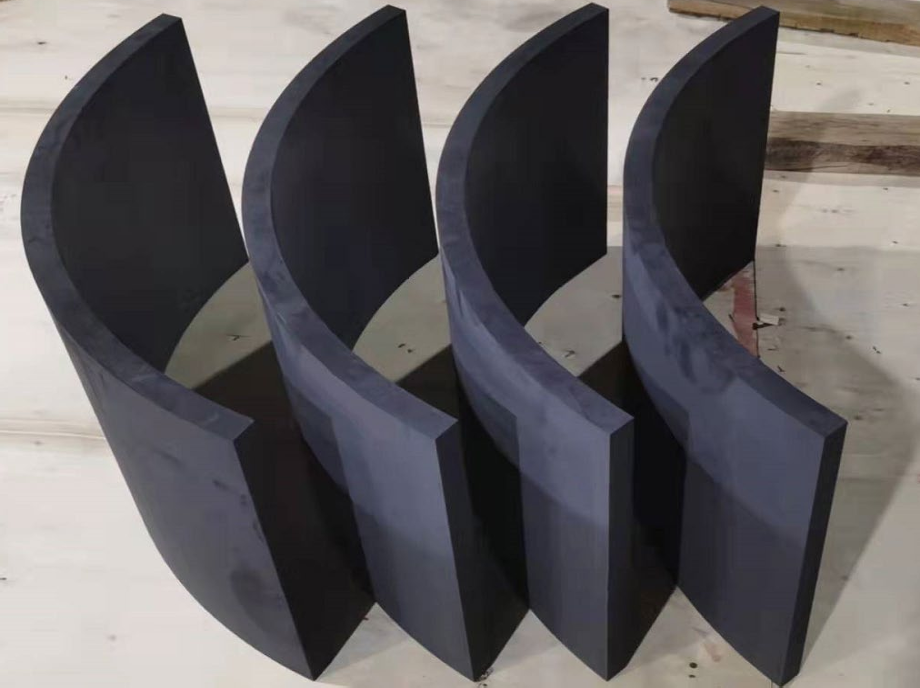
The Fundamental Difference: Separation vs Removal
This is where most people get it wrong. They think cutting and machining are just two ways to do the same job, with one faster or cheaper. They’re not. They solve different problems at the material level.
Machining = Material Removal
A CNC tool presses into the graphite surface with concentrated force. The tool chips away small bits. What happens in the subsurface? The stress concentrates at the tool-material interface, crack initiates below the surface, and that crack propagates into the bulk. The removed chip is damaged — but so is what remains.
This matters for graphite because graphite is brittle. Once a crack starts, it doesn’t stop at the surface. This is one of the core ограничениях обработки графита на станках с ЧПУ — the material itself fights back against the tool.
Алмазно-проволочная резка = разделение материала
Алмазно-проволочная пила непрерывно движется сквозь графит, разделяя материал по контролируемой плоскости. В отличие от вращающегося инструмента ЧПУ, проволока распределяет режущее усилие по всей ширине реза (0,3–0,5 мм), а не концентрирует его в одной точке контакта. Разрушение является преднамеренным, немедленным и ограниченным.
The bulk material stays intact. Only the kerf zone experiences separation damage.
For graphite electrodes, this difference cascades through the entire manufacturing process.
Material Damage Profiles: CNC vs Cutting
In our experience, the real cost of CNC machining shows up months later, not during the machining itself.
What CNC Does to Graphite
When the cutting tool engages, you get:
- Primary fracture zone — 0.5–1 mm of surface damage where the tool directly contacts
- Secondary crack propagation — Stress waves push 1–2 mm deeper into the material. These are subsurface cracks, invisible to the eye
- Thermal shock layer — High-speed friction heats the surface, then coolant cools it. Uneven cooling = thermal stress = micro-cracks perpendicular to the cut surface
- Residual stress field — The entire machined zone carries compressive and tensile stress that can take weeks to stabilize
The result: your electrode looks clean when it ships. During EDM operation, those subsurface cracks propagate under discharge heat, and the electrode fails early or wears unevenly.
Что алмазно-проволочная резка делает с графитом
Алмазно-проволочная резка дает:
- Kerf zone — 0.3–0.5 mm of intentional separation. This is where material actually leaves
- Edge micro-fractures — The kerf edge has tiny stress relief cracks (less than 0.1 mm deep). Abrasive polishing removes these completely
- Rapid stress relief — The moment separation is complete, residual stress drops immediately. No heat accumulation, no slow stress stabilization needed
- Bulk integrity — Except for the kerf zone itself, the electrode microstructure is untouched
The edge needs a light polishing pass (standard in any electrode finishing process), but the bulk of the electrode is clean. Unlike CNC, where surface damage from machining runs deep into the material and can’t be fully reversed, cutting’s damage is purely surface-level.
This difference shows up in two places: electrode lifespan and dimensional consistency.
Dimensional Stability Under Production Stress
Batch-to-batch consistency is the real killer in CNC electrode manufacturing.
Why CNC Drifts
CNC tool wear follows a curve. For the first 100 pieces, the tool is sharp and cuts to spec. Then:
- Wear begins increasing the tool radius
- The spindle applies more force to compensate
- Heat rises from increased friction
- The workpiece and spindle thermally expand
- Dimensional accuracy starts moving
Ниже приведена типичная схема отклонений, основанная на распространенных производственных условиях — конкретные цифры варьируются в зависимости от станка и марки графита, но форма кривой остается постоянной во всех цехах по производству электродов с ЧПУ:
| Production Run | Piece Count | Measured Size | Status |
|---|---|---|---|
| ЧПУ (иллюстративно) | Piece 1–50 | 10.000 ± 0.003 mm | ✓ Good |
| Piece 51–100 | 10.005 ± 0.008 mm | ~ Acceptable | |
| Piece 101–150 | 10.015 ± 0.015 mm | ⚠ Risk | |
| Piece 151–200 | 10.025 ± 0.020 mm | ✗ Scrap |
By piece 150, we’re outside tolerance. By piece 200, half the batch fails inspection.
The machine operator’s choice: stop every 100 pieces and re-tram the spindle (adds 1–2 hours per 100 pieces), or accept the risk of scrap.
Why Cutting Stays Stable
При алмазно-проволочной резке износ инструмента не приводит к увеличению размеров, как при механической обработке.
Бесконечная алмазная проволока изнашивается, становясь тупой, а не увеличиваясь в размерах. Ширина реза остается постоянной, даже когда скорость резки замедляется. Первое и 1000-е изделия имеют одинаковую ширину реза: 0,35 мм.
Moreover, most precision cutting systems have automatic feed rate adjustment. When tension rises (cut is slow), the system reduces feed. When tension drops (cut is fast), it increases feed. This self-regulation keeps consistency without operator intervention.
Алмазно-проволочная резка полностью устраняет этот механизм отклонения. Точность резки оборудования сохраняется на уровне ±0,03 мм независимо от количества изготовленных изделий — потому что проволока изнашивается, теряя остроту, а не меняя диаметр:
| Production Run | Piece Count | Measured Size | Status |
|---|---|---|---|
| Алмазная резка проволоки | Piece 1–250 | 000 ± 0,030 мм | ✓ В пределах допуска |
| Piece 251–500 | 000 ± 0,030 мм | ✓ В пределах допуска | |
| Piece 501–1000 | 000 ± 0,030 мм | ✓ В пределах допуска |
Точность, основанная на спецификации оборудования: точность резки ±0,03 мм.
После 1000 изделий ширина реза и точность размеров остаются на том же уровне, что и у первого изделия. Перенастройка не требуется.
For EDM electrode production, this matters because you’re often running multiple electrodes in parallel. If one batch drifts, the cavity geometry becomes inconsistent, and you get part-to-part variation in the final molded product.
Tool Wear & Dimensional Consistency
The economics of tool wear are completely different between the two methods.
CNC Tool Life vs Cost
Режущий инструмент ЧПУ для графита (твердосплавный или с алмазным покрытием) стоит 50–200 долларов США в зависимости от сложности. Согласно руководству по производству SME, управление сроком службы инструмента является одним из основных факторов затрат в прецизионной механической обработке. Для графита он надежно режет примерно 100–300 изделий, прежде чем отклонение размеров потребует смены инструмента.
For 500 pieces, you need at least 2–3 tool changes. Each tool change stops production for 15–45 minutes (remove old tool, install new tool, re-tram spindle, run test cuts on scrap).
Add the cost of scrap pieces produced while drift was happening, and the real tool cost isn’t just the tool itself.
One thing that tripped us up: we thought “higher-grade tools last longer.” They don’t, particularly for graphite. A $150 diamond-coated tool lasts about the same number of pieces as a $50 carbide tool. The difference is surface finish quality, not tool life.
Срок службы инструмента для алмазно-проволочной резки по сравнению со стоимостью
An бесконечная алмазная проволока стоит 20–50 долларов США. Он надежно режет 5000–20000 изделий в зависимости от калибра проволоки и скорости резки. Смена инструмента происходит не чаще одного раза за смену, даже при больших объемах производства.
When you finally replace the wire, it’s not because of dimensional drift — it’s because the cutting speed has dropped to an uneconomical level (2 mm/min instead of 10 mm/min). But the part quality is still good. You’re replacing the tool for efficiency, not for accuracy.
The second tool change isn’t mandatory for quality; it’s a choice to optimize cycle time.
Cost Profile: CAPEX vs OPEX vs Quality Loss
Ниже приведена примерная разбивка затрат для типичного сценария — фактические цифры варьируются в зависимости от возраста станка, стоимости рабочей силы и марки графита, но структура затрат и разрыв между двумя методами отражают то, что сообщают цеха по производству электродов.
CNC Machining Path
| Cost Item | Amount | Notes |
|---|---|---|
| Machine CAPEX (amortized per part) | $40 | Assuming $200k machine, 5-year life, 50k parts/year |
| Tool cost | $150 | 2.5 tools × $60/tool |
| Stopping time for tool changes | $120 | 3 tool changes × 15 min × $500/hour labor |
| Scrap from dimensional drift | $300 | ~30 pieces × $10/piece material + labor |
| Secondary finishing (polishing drift parts) | $200 | Extra rework |
| Total Cost / 500 Parts | $810 | |
| Cost Per Part | $1.62 |
Fair warning: this assumes scrap is caught during QC inspection. If drift escapes to the customer and causes EDM failure, add another $2000+ in customer service costs.
Путь алмазно-проволочной резки
| Cost Item | Amount | Notes |
|---|---|---|
| Machine CAPEX (amortized per part) | $25 | Assuming $100k machine, 5-year life, 50k parts/year |
| Tool cost | $30 | 1 бесконечная алмазная проволока × 30 долларов США |
| Stopping time for tool changes | $0 | No re-tram needed; operator can change wire in 5 min once per shift |
| Scrap from dimensional drift | $10 | ~1 piece from handling, not from tool wear |
| Secondary finishing | $40 | Standard polishing, no rework needed |
| Total Cost / 500 Parts | $105 | |
| Cost Per Part | $0.21 |
The cutting path is roughly 87% cheaper per part.
But the bigger difference isn’t per-part cost — it’s risk. With cutting, dimensional consistency is mechanical. With CNC, it’s operator-dependent. This is why material loss in CNC machining costs much more than the machine time itself — scrap and rework multiply the real expense.
When Each Method Still Makes Sense
We’re not saying CNC is obsolete. There are absolutely scenarios where it’s the right choice.
CNC Wins When:
- Tolerance tolerance is loose — If your electrode can be ±0.5 mm, CNC dimensional drift doesn’t matter
- The geometry is complex 3D — CNC can machine arbitrary curved surfaces. Cutting is limited to planar or simple cylindrical cuts
- The volume is very low — If you need 3–5 parts, CNC programming takes a day; cutting tool setup takes just as long. Neither has an advantage
- The size is very large — Large graphite blocks become expensive to cut (wire cost, longer cut times). CNC might be faster and cheaper for 300×300×500 mm blocks. That said, if process stability is critical, even large parts benefit from cutting
Алмазно-проволочная резка выигрывает, когда:
- Tolerance is tight — ±0,05 мм или лучше. Именно здесь критически важна стабильность размеров при алмазно-проволочной резке
- Volume is 100+ parts — Партия достаточно велика, чтобы амортизировать затраты на установку инструмента, но не настолько велика, чтобы скорость проволочной резки стала узким местом
- The geometry is planar or simple — Большинство EDM-электродов таковыми являются. Плоские поверхности, простые цилиндрические отверстия, прямые края — все это легко обрабатывается алмазно-проволочной пилой
- Material cost is high — Графит стоит 50–200 долларов США/кг. Экономия на ширине реза при проволочной резке (0,3 мм против 3 мм при ЧПУ) имеет экономическое значение. Подробнее об этом см. в нашем анализе потерь на ширине реза при резке графита
- Surface quality matters — Более низкий уровень повреждений при проволочной резке означает меньше доработок и более стабильную работу электрода. Влияние качества поверхности на EDM-электроды — это то, где алмазно-проволочная резка действительно превосходит
Hybrid Approach (Most Common in Practice)
Мы видели, что хорошо работает одно: черновая обработка на ЧПУ, чистовая — алмазно-проволочной резкой.
Используйте ЧПУ для быстрого удаления основного материала, а затем алмазно-проволочную пилу для окончательной прецизионной обработки поверхностей. Это даст вам:
- Fast stock removal from CNC
- Стабильность размеров и чистую поверхность от проволочной резки
- No need for elaborate rework
This works best when the cutting surfaces are simple and the complex geometry is on surfaces that don’t need cutting-level precision.
The Real Difference: Physics vs Operator Skill
В конечном счете, алмазно-проволочная резка работает, потому что она соответствует поведению графита. Графит хрупкий, и проволочная резка использует это — контролируемое разделение вдоль непрерывного пути проволоки более стабильно, чем попытка откалывать хрупкий материал вращающимся инструментом.
CNC works too, but it requires constant operator attention to catch drift before it creates scrap.
Для производства EDM-электродов, где стабильность размеров и качество поверхности напрямую влияют на срок службы электрода и стабильность разряда, алмазно-проволочная резка устраняет вариативность. Вы получаете одинаковый результат на первом и на 500-м изделии.
Этот выбор — резка против механической обработки — не абстрактен. Он формирует всю вашу стратегию производства электродов, от выбора инструмента до планирования партий и контроля качества. Для получения дополнительной информации о том, как это решение влияет на производственный процесс, см. наше полное руководство по Резка графитовых электродов для СЭМ.
Next step: Прежде чем принимать решение о методе производства, поймите конкретные проблемы, с которыми вы столкнетесь при каждом подходе. Наш полный ресурс по Резка графитовых электродов для СЭМ walks through the pitfalls on both sides — so you know what you’re signing up for.