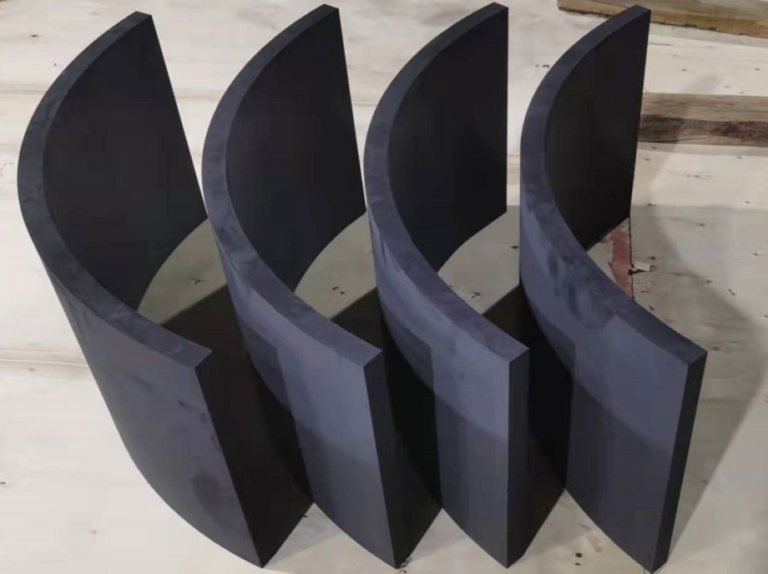
Graphite components are widely used in semiconductor equipment, EDM electrodes, thermal management systems, and aerospace applications. Traditionally, these parts are produced using CNC machining processes such as milling, drilling, and grinding.
However, engineers increasingly evaluate giải pháp thay thế cắt than chì processes when machining stability, precision, and material integrity become critical concerns.
Because graphite is a brittle and abrasive material, conventional machining can introduce tool wear, dimensional drift, and micro-cracks. In certain manufacturing scenarios, cutting-based technologies provide a more stable solution.
Understanding when cutting processes can serve as a giải pháp thay thế cắt than chì helps engineers select the most appropriate manufacturing strategy.
When Cutting Becomes a Reasonable Alternative to Machining
A giải pháp thay thế cắt than chì becomes practical when machining introduces excessive mechanical stress or process instability.
Typical situations include:
- processing large graphite blocks
- cutting thin graphite plates
- producing high-precision blanks
- reducing kerf loss and material waste
In these scenarios, separation-based cutting technologies—such as diamond wire cutting—can produce more stable results than traditional material-removal machining.
Unlike milling tools that repeatedly impact the material, cutting methods separate the graphite along a controlled path.
This difference significantly reduces mechanical stress and crack formation.

How Cutting Processes Avoid Key Machining Problems
One of the main advantages of a giải pháp thay thế cắt than chì is its ability to avoid several core machining challenges.
Traditional machining often suffers from:
- rapid tool wear caused by abrasive graphite dust
- vibration-induced edge chipping
- dimensional drift due to tool degradation
In contrast, cutting technologies rely on continuous contact rather than intermittent tool impact.
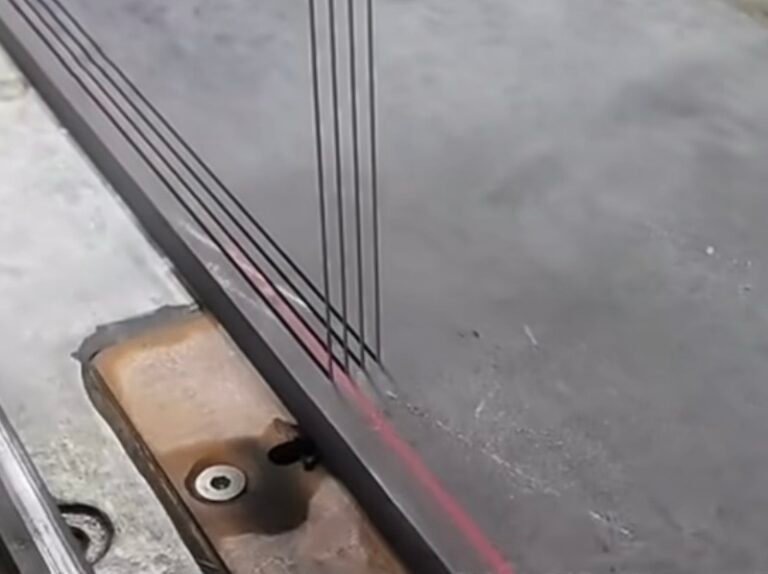
For example, diamond wire cutting systems use a continuously moving wire loop to slice through graphite materials. This mechanism distributes cutting forces more evenly along the cutting path.
As a result, cutting processes can significantly reduce crack propagation and edge damage.
Research on brittle material machining also shows that fracture-based removal mechanisms can lead to unpredictable material damage during conventional machining.
Tham khảo bên ngoài:
https://www.sciencedirect.com/science/article/abs/pii/S0924013606002202
Because of these differences, cutting methods are increasingly considered a giải pháp thay thế cắt than chì in precision manufacturing.
Engineering Significance of Continuous Low-Stress Processing
A key engineering advantage of cutting-based methods is the ability to maintain continuous, low-stress material separation.
In machining operations, cutting forces fluctuate as rotating tools repeatedly engage the workpiece. These cyclic loads can create localized stress peaks that initiate cracks.
In contrast, cutting technologies maintain relatively stable forces along the cutting interface.
For example, endless diamond wire cutting systems typically operate with:
- wire speeds up to 80 m/s
- controlled wire tension between 150–250 N
- kerf widths around 0.4 mm
This stable cutting environment reduces mechanical shock and improves material integrity.
Consequently, a giải pháp thay thế cắt than chì can offer improved reliability when processing brittle graphite structures.
Why Cutting Is Better for Thin Parts, Large Parts, and High Precision
Another reason engineers evaluate giải pháp thay thế cắt than chì solutions is the ability to handle geometries that are difficult for conventional machining.
Thin Graphite Components
Thin graphite plates or sheets are highly sensitive to vibration during machining.
Cutting technologies apply lower mechanical loads, which reduces the risk of edge chipping or structural failure.
Large Graphite Blocks
Machining large graphite blocks requires long tool paths and significant material removal.
Cutting processes can separate large sections efficiently while minimizing material waste.
High-Precision Graphite Blanks
Many graphite components require precise blanks before final machining operations.
Cutting technologies can produce highly consistent kerf widths and stable separation surfaces, making them suitable for preparing precision blanks.
Because of these benefits, cutting methods are increasingly used as a giải pháp thay thế cắt than chì in high-precision manufacturing environments.
Cutting as a Complement Rather Than a Replacement
Instead, the concept of a giải pháp thay thế cắt than chì should be understood as a division of roles between manufacturing technologies.
Typical production workflows may include:
- cutting graphite blocks into manageable blanks
- Gia công CNC cho các chi tiết phức tạp
- finishing operations for surface quality
This hybrid approach combines the efficiency of cutting with the geometric flexibility of machining.
Phần kết luận
Graphite machining remains an essential manufacturing method, especially for producing complex geometries. However, the brittle and abrasive nature of graphite introduces several challenges in conventional CNC machining.
In scenarios involving thin parts, large workpieces, or high-precision blanks, cutting technologies can serve as an effective giải pháp thay thế cắt than chì.
By applying continuous low-stress separation mechanisms, cutting processes reduce mechanical damage and improve dimensional stability.
Rather than replacing machining entirely, cutting technologies provide a complementary approach that allows manufacturers to optimize production workflows for graphite components.