Cleartran ZnS is a denser, tougher grade of zinc sulfide that requires more disciplined cutting control than standard CVD ZnS. Cut it with standard parameters and you get acceptable dimensions but elevated subsurface damage — which shows up later as scatter in the finished window. Cleartran ZnS window manufacturing done correctly delivers cut surfaces with Ra 0.6–1.2 μm and TTV within 8–15 μm on Φ50 mm blanks, ready for polishing with minimal additional stock removal.
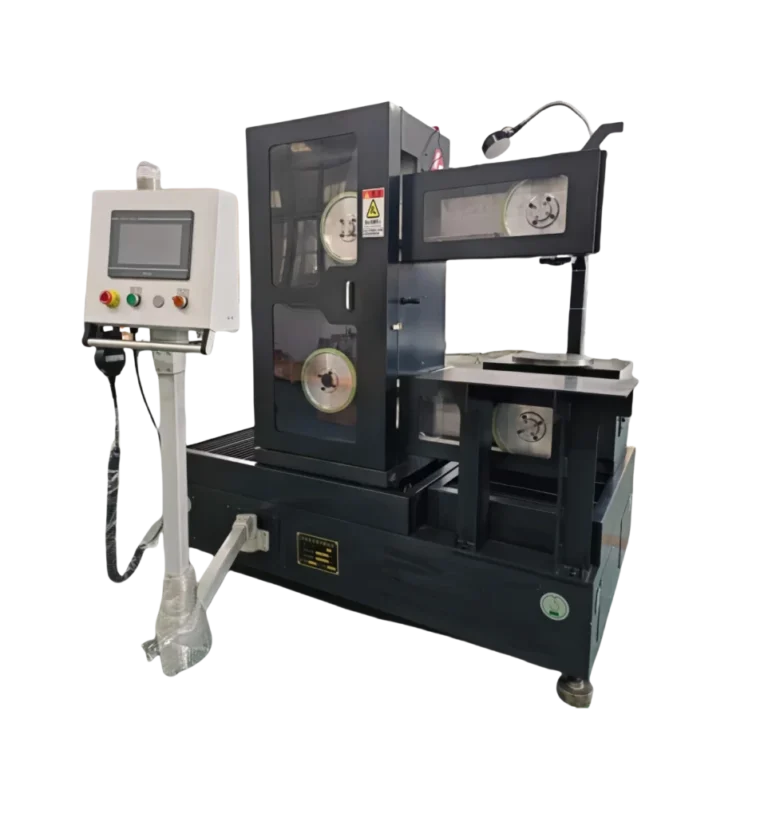
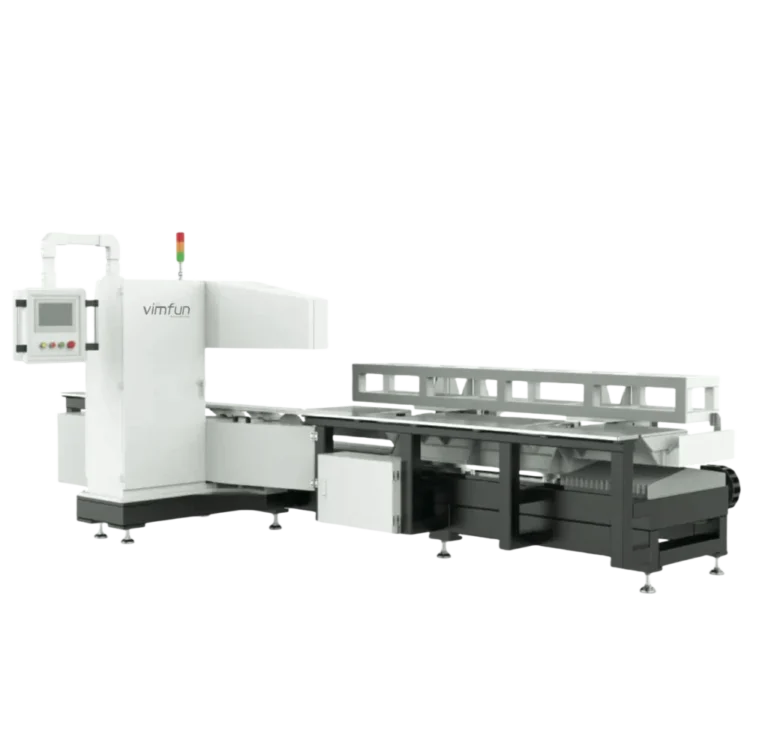
We process Cleartran ZnS windows using endless diamond wire saws. This page covers the machine setup and the cutting results we deliver on Cleartran window blanks.

Why Diamond Wire Saw for Cleartran ZnS
Cleartran is brittle and chips at the blank edge when cutting forces are applied unevenly. Diamond wire saws are the preferred cutting method for Cleartran ZnS window manufacturing because the wire distributes cutting contact across many abrasive points simultaneously, keeping lateral force at any single point low.
The alternative — ID saw blade cutting — applies localized force at the cut entry and exit edges, which produces more edge chipping and deeper subsurface damage on Cleartran. For high-value Cleartran blanks where yield per boule matters, wire saws recover more usable windows per cut sequence.
| パラメータ | ダイヤモンドワイヤーソー | ID Saw |
|---|---|---|
| カーフ幅 | 0.25–0.45 mm | 0.3–0.6 mm |
| Edge chipping risk | 低い | 中~高 |
| Surface Ra after cutting | 0.6–1.2 μm | 0.8–2.0 μm |
| TTV (Φ50 mm) | 8–15 μm | 10–25 μm |
See the ZnS optics cutting machine guide for a detailed wire saw vs ID saw comparison across the ZnS material family.

Our Approach to Cleartran ZnS Window Cutting
We use the same endless diamond wire saw platform that we use for standard ZnS, ZnSe, and germanium optics processing. What changes for Cleartran is the process discipline around wire selection, feed control, and blank mounting — not the equipment itself.
Wire selection. We use electroplated diamond wire for Cleartran cutting. Wire diameter is matched to blank size — thinner wire for smaller blanks where kerf efficiency matters most, larger diameter wire for bigger blanks where dimensional stability across the full cut is the priority. The specific wire diameter for a given job is determined during first-article validation.
Entry and exit zone control. The wire entry and exit edges are where Cleartran chipping risk is highest. We use a programmable feed profile that runs slower during the entry and exit portions of each cut, and at full production speed through the main body of the cut. This prevents lateral force spikes at the moments when the wire is engaging or exiting the blank edge.
Blank mounting. Every Cleartran blank is bonded to a glass or carbon backing block before cutting. The backing prevents the wire from cutting into open air at cut completion, which eliminates one of the most consistent sources of exit-zone chipping.
Coolant. White mineral oil, with flow rate targeted at the wire entry point to keep the kerf clear of ZnS swarf throughout the cut. Debris that stays in the kerf scores the cut surface and produces streaks that require additional polishing to clear.
First-article validation. For every new Cleartran job, we cut and measure a first-article blank before committing to production parameters. Parameter windows shift with blank diameter, Cleartran boule origin, and wire wear state — the validated parameter set for one job may not transfer directly to the next.
Cutting Results We Deliver on Cleartran ZnS Windows
The output metrics from our standard Cleartran cutting setup:
| Output Metric | Achieved Value |
|---|---|
| Surface Ra | 0.6–1.2 μm |
| TTV (Φ50 mm blank) | 8–15 μm |
| カーフ幅 | 0.25–0.45 mm (depends on wire diameter) |
| Edge chipping | Controlled with backing support and entry/exit feed reduction |
Values assume the first-article validation step is completed. Blank size, geometry, and Cleartran grade all influence achievable results — for blanks or requirements outside our standard range, please share your drawing and target specs for a job-specific feasibility review.
Cleartran vs Standard ZnS: What Changes at the Cutting Step
| Cutting Factor | Standard CVD ZnS | Cleartran ZnS |
|---|---|---|
| 送り速度 | Baseline | Reduced — Cleartran is harder |
| Wire tension control | スタンダード | Tighter — drift affects TTV more |
| Coolant flow | スタンダード | Higher — swarf management critical |
| 出入フィード制御 | 推奨 | 必須 |
| バッキングサポート | 推奨 | 必須 |
| 初回品検証 | スタンダード | 各生産バッチの前に必要 |
実際的な違い: Cleartranは、異なる装置ではなく、各ステップでより多くのプロセス規律を必要とします。. 同じワイヤーソープラットフォームが両方を処理します — セットアップ時間とパラメータ検証が変更される点です。.
関連するZnS切断ガイダンスについては、以下を参照してください。 マルチスペクトル硫化亜鉛処理 そして ZnS optics cutting machine 概要。当社の赤外線光学材料全般については、以下を参照してください。 赤外線光学機器製造装置 ピラーページ。.
よくあるご質問
Cleartran ZnSウィンドウの切断にはどの機械を使用しますか?
エンドレスダイヤモンドワイヤーソーマシン — 標準のZnS、ZnSe、およびゲルマニウム光学機器の処理に使用するのと同じプラットフォームです。機械は変わりませんが、ワイヤーパラメータとフィードプロファイルは、Cleartranのより高い硬度と損傷感受性に一致するように変更されます。.
Cleartran ZnSウィンドウで達成できる表面品質は?
ダイヤモンドワイヤー切断によるΦ50 mmブランクでRa 0.6–1.2 μmおよびTTV 8–15 μm。これらは標準のCleartran切断セットアップからのベースライン値です — 実際の結果は、ブランクサイズ、ワイヤー直径、および初回品検証の結果によって異なります。.
Cleartran ZnSウィンドウの最小注文数量は?
単一片のトライアルカットと生産ランの両方に対応します。リードタイムとセットアップ要件について話し合うために、ブランクの寸法と数量をお知らせください。.
Cleartran ZnSをカスタム形状に切断できますか?
はい。当社のワイヤーソーマシンは、ウィンドウブランクの直線切断と、長方形以外のウィンドウ形状の輪郭切断をサポートします。実現可能性のレビューのために図面をお送りください。.
Cleartran ZnSの切断はZnSeの切断とどのように異なりますか?
ZnSeはCleartran ZnSよりも柔らかく、一般的に高いフィードレートで動作します。出入領域のフィード削減とボンデッドバッキングアプローチは、どちらの材料でも同様です。以下を参照してください。 セレン化亜鉛光学研磨 ZnSeプロセスの詳細については、ページを参照してください。.