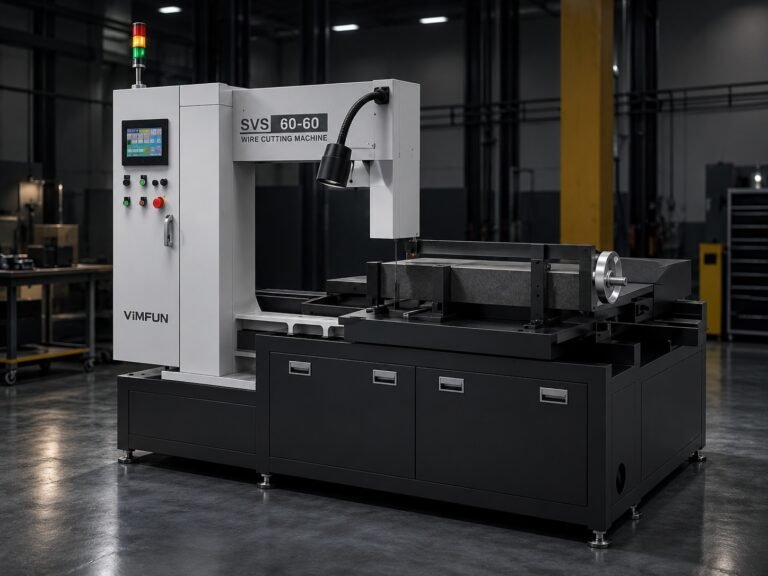
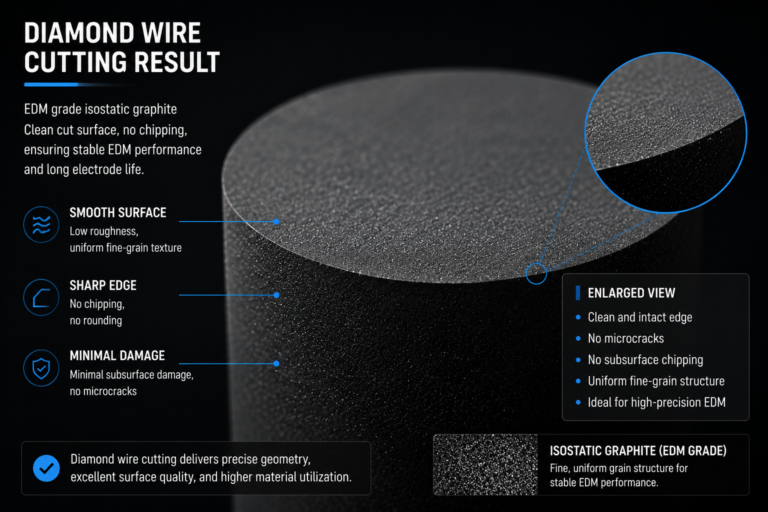
Graphite passes all tests. However, several chips can be harmed. This can happen if it removes faulty trace bits during use. The damage usually appears after shipping. Years of negotiating with graphite suppliers provide that. It’s apparent that semiconductor purchasers hold graphite machining companies to greater standards than other industries.
The article discusses why chip work requires purity. It handles strict chip tool limits. Cleanroom standards and graphite work are also contrasted.
Three key ways graphite machining firms serve semiconductors. Pure, trace-bit-tested material is used first. Second, they cut pieces to chip tool tolerances. Third, they observe cleanroom norms to prevent dust damage. Each point and what to ask a source before ordering are included below.
Why Semiconductor Manufacturing Relies on Machined Graphite
All chip work is machined from Graphite. It produces process fixtures, wafer boats and susceptors. These parts are made of graphite for two reasons. One, it takes heat very well. Two, it cuts into tight, exact shapes. The mix sustains stable demand for グラファイト加工会社 that serve chip makers.
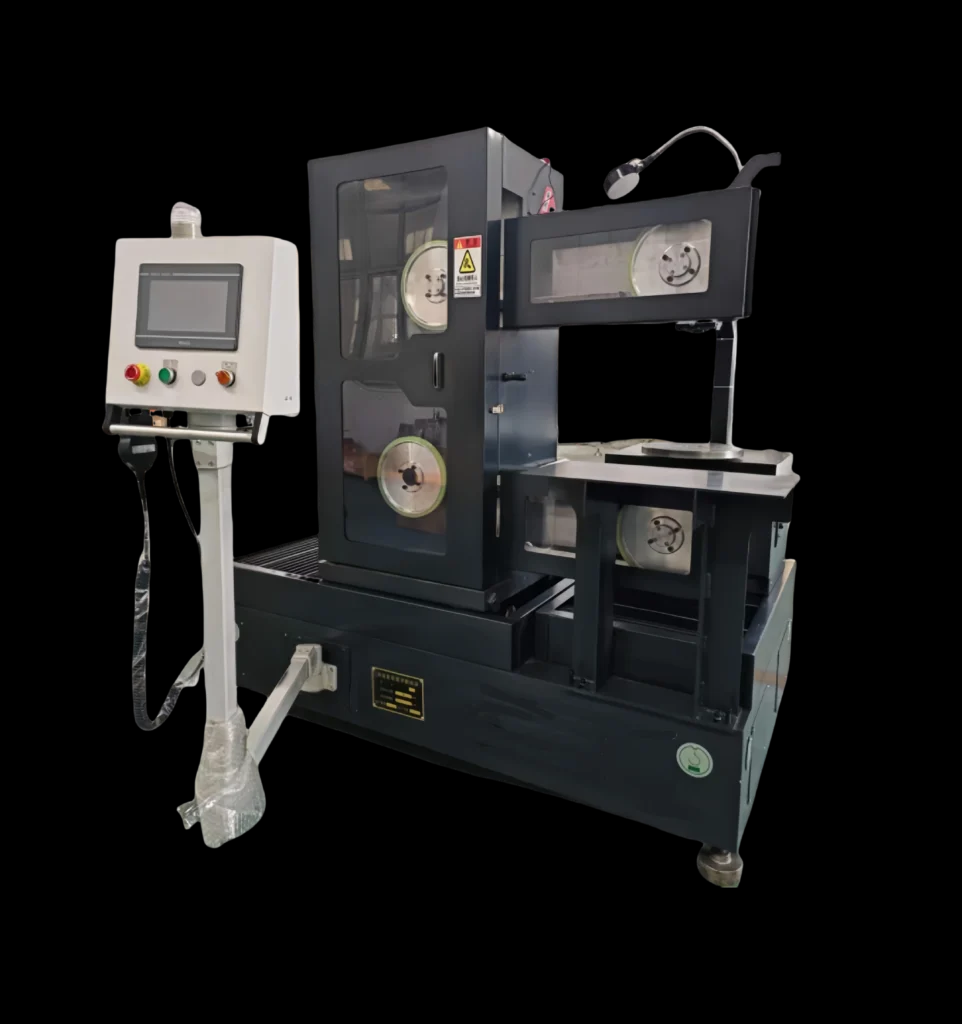
- Graphite’s high heat strength prevents it from deforming in very hot steps
- Easy to cut so shops can make accurate shapes for wafer tools.
- Electric flow is important for steps where power has to go through the part.
- Low heat growth keeps parts the right size as heat transfer shifts
Graphite Machining vs Advanced Graphite Machining
Initially the basic cutting steps appear much the same. The same tooling is used for standard graphite work and 高度なグラファイト加工. But chip jobs require more. They need stricter limits, proven purity and clean, careful handling. This is not the case with ordinary graphite work.
A mold shop that does a lot of EDM work will rarely need trace-bit records. A shop that makes wafer boats almost always does. This one needs some staff, setup and record changes all over the shop.
What Makes Graphite Machining Companies Suit Semiconductor Industry Needs?
There are three distinct differences between graphite machining companies that are fit for chip work. They test/validate high purity in their graphite. They’re sticking with cutting limits that fit what chip tools need. They follow clean-room rules when cutting, finishing, and handling.
- Purity: Trace Elements Matter Here More Than Almost Anywhere Else
Trace metal bits are very sensitive for chip work. Even tiny bits, sized in parts per million, can be introduced into a process. This can impact wafer output. That’s why buyers ask for proven purity data. “Simply saying ‘high purity’ is not enough by itself.
- Precision: Tolerance Demands Beyond General Industrial Work
Chip-tooling components generally require closer size allowances than standard graphite parts. Process gear only works when each part is matched to the shape. A small size gap accepted by a mold shop can throw off wafer handling equipment.
- Cleanliness: Contamination Control Through the Entire Process
Clean work for chip grade graphite extends beyond the finished part. It is about controlling dirt during cutting, handling and packing. Dust collected at any step can destroy a part before it ever gets to a chip plant.
What “High-Purity” Graphite Actually Means
Purity is what chip buyers look at most closely. It is difficult to see with the eye. It is easier to check with tests.
Purity Documentation Suppliers Should Provide
| Purity Factor | What It Means | なぜ重要なのか |
| Trace-bit test | A test such as ash-content or spectroscopic testing | Shows real dirt levels, not just a claim |
| Purity grade | Different chip steps need different purity levels | Not every job needs the top grade |
| Lot tracking | Records tied to one graphite batch | Lets a buyer trace a problem back to its source |
| Batch match records | Data checked across many orders | Shows purity stays steady over time |
Precision Standards for Semiconductor Graphite Components
Different parts of the chip need different care. So “tight limit” doesn’t mean the same thing every time.
- Robots have to grip and move wafer boats and carriers so they have repeat sizes source
- Susceptors require a uniform, flat thickness, because uneven sections heat a wafer unevenly
- Process fixtures need to be the same size all the way along a full run, because small gaps can cause trouble later
- Mating surfaces should have a smooth finish, as rough spots can shed dust on their own
Cleanroom-Level Cleanliness in Graphite CNC Machine Operations
A graphite cnc machine for graphite chip work requires more than a sharp tool. It also requires a good plan. Space around the machine is important. What happens after the cut is just as important as the cut itself.
- Machining Environment Controls
The shops that serve chip buyers often have a controlled space for this purpose. This separates the chip grade parts from the regular graphite jobs in the same building.
- Handling and Packaging Protocols
What happens after the cut is almost as important as the cut. In a dirty space , dust can stick to a moving part . And even a part shipped haphazardly can gather dust. But this dust can negate the purity work done prior. Clean packing and handling prevent this.
Graphite Milling Machines for Semiconductor-Grade Work
Gear choice comes down to purity, size and clean rules. A few characteristics are common to グラファイト加工会社 that serve chip buyers.

- Closed machines with powerful dust vacs reduce dirt risk for chip-grade parts
- Chip tooling spindle precision often exceeds standard shop standards
- Using gear only for chip work, not also for other jobs, reduces the risk more
- Auto part handling inside the machine reduces hand touches so dirt risk is minimized
General equipment choices for graphite milling machines are beyond the scope of this article. Things like CNC type, spindle tech, auto setup are worth a look by themselves.
Common Mistakes Buyers Make When Choosing a Supplier
Buyers that compare graphite machining companies make some buying mistakes again and again. They deserve to be mentioned here.
- Accepting a simple purity claim without requiring evidence at the batch level
- Thinking tighter limits always mean better when the real need is matching the part’s own limit
- Just skipping the checks of handling and packing, just looking at the cutting step
- Overlooking sample parts before ordering full
Evaluating Graphite Machining Suppliers
Four Steps for Buyers to Compare Graphite Machining Suppliers Consider this a simple checklist before you order.
- Ask for trace-bit or purity proof linked to particular graphite lot, not a general company statement
- Make sure the tolerance range of the shop matches your part’s actual size requirement
- Ask if there is a separate clean area where chip-grade work is done, separate from the regular jobs
- Before submitting a full order, ask for sample parts with purity and size records
Purity and size needs can vary by chip process type. Compare current specs with your own process team. No general guide, including this one, should be taken as a hard and fast rule.
よくある質問
Why is purity of graphite important for semiconductor fabrication?
Chip work is very sensitive to trace dirt and even tiny bits, in parts per million, can hurt wafer output. This is why not just a claim, but proven purity checks are important.
- Purity claims without batch data are difficult to trust
- Different limits for different process steps
What are the common graphite components used in semiconductor fabrication?
Common parts are wafer boats, carriers, susceptors and process fixtures. These parts use graphite for its strength against heat and its precise, repeatable shapes.
- Robots use wafer boats to move wafers
- Susceptors evenly distribute heat on a wafer
How do they check the purity of graphite for semiconductor use?
Purity is checked with trace-bit tests, e.g. ash-content testing or spectroscopic testing, associated with a single traceable graphite lot and not with a generic claim.
- Lot tracking helps to trace any problem
- The name of the test method, not just a result
Semiconductor order– what to ask a graphite machining supplier?
Ask for purity proof for the specific lot of material. Ask for proof of limit skill on your part. If the work is done in a separate clean space.
- First, ask for proof and sample parts
- Check packing and handling processes also
Is the machined graphite the same for each step in a semiconductor process?
No. Purity grade, size limit and finish requirements can vary by process step and by the gear utilized. A piece may fit one step, not fit a step.
- Need to check with our process team
- Don’t think one grade fits all jobs
結論
Three things separate graphite machining companies that meet chip requirements. They show purity. They meet tight size limits. And they keep clean standards through cutting, handling and packing- not by normal shop skill alone.
ヴィムファン is worth looking at for teams evaluating suppliers against this list. Its verified purity records, clean, chip-centric work jives with the above checklist.