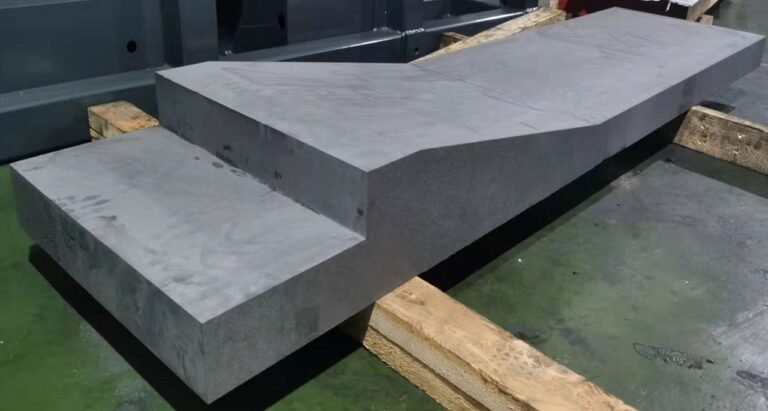
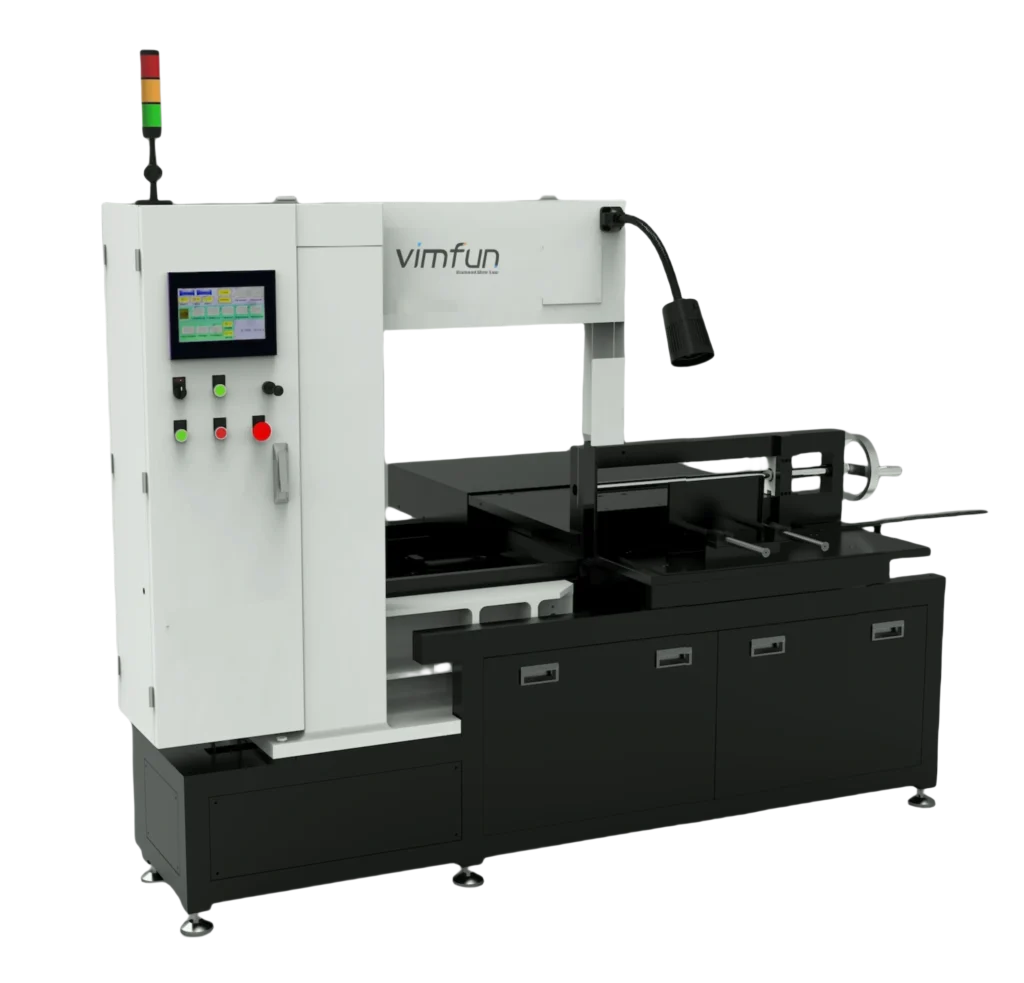
What Are Graphite Machining Alternatives?
Graphite machining alternatives are processing methods that replace or supplement conventional CNC milling and turning for graphite — primarily endless diamond wire cutting, precision slicing, and profile wire cutting. They exist because graphite's brittleness, porosity, and anisotropy create specific failure modes in CNC machining that no amount of tooling upgrade fully resolves.
This is not an argument against machining. CNC machining remains the right choice for complex 3D geometries, tight angular tolerances, and low-volume prototype work on graphite. The case for graphite machining alternatives arises in production scenarios where tool wear accumulates, dimensional drift becomes systematic, kerf loss translates to significant material cost, or coolant contamination disqualifies the output for its intended application.
Why CNC Machining Creates Unique Problems in Graphite
Graphite's layered crystalline structure means cutting forces propagate differently than in metals or ceramics. Tool engagement generates localized impact at grain boundaries, producing micro-cracks and edge chipping that are invisible to standard inspection but propagate during downstream handling or thermal cycling. Unlike metal machining, where higher spindle speeds and sharper tooling progressively improve results, graphite machining reaches a point of diminishing returns — the material's fundamental fracture mechanics limit what any rotary tool can achieve.
The alternative approach — continuous diamond wire cutting — operates on a fundamentally different mechanical principle: controlled micro-abrasion at high wire speed (40–70 m/s) with stable, low cutting force. This removes the impact mechanism entirely, reducing subsurface damage depth from 20–50 μm (typical CNC milling) to 2–5 μm (diamond wire). For a detailed comparison, see EDM and alternative machining methods.
The 3 Core Scenarios Where Alternatives Outperform Machining
Not every graphite application needs an alternative to machining. The decision depends on production volume, material value, dimensional requirements, and contamination sensitivity. Three scenarios consistently favor switching: high-volume slicing where kerf loss accumulates into significant material cost; applications requiring zero coolant contact (EDM electrodes, semiconductor components, battery anodes); and large-block processing where CNC tool reach and dimensional consistency over long cuts become limiting factors.