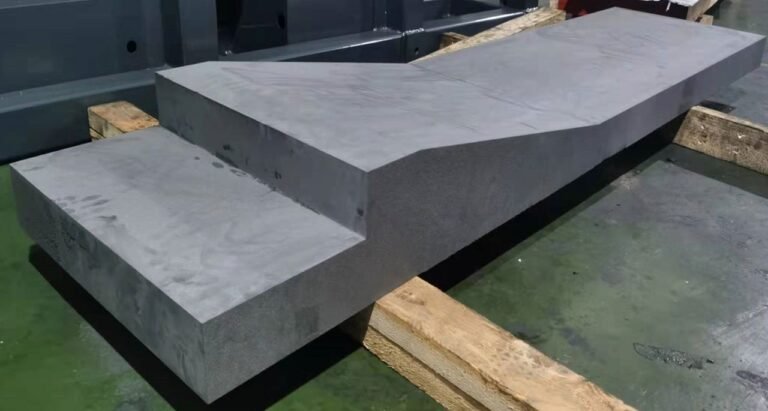
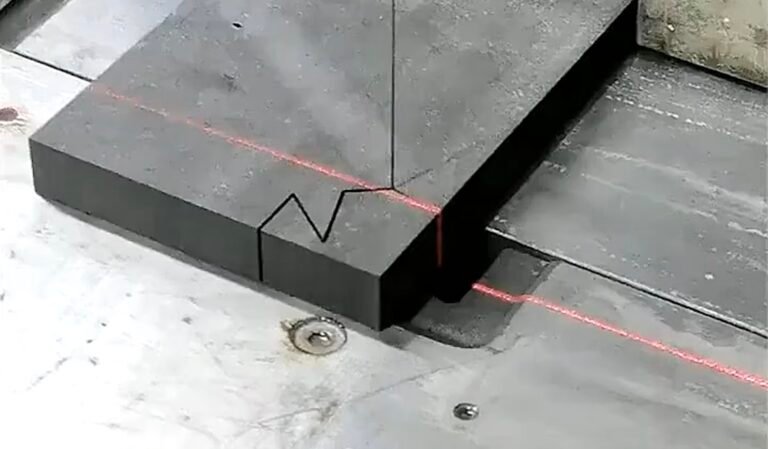
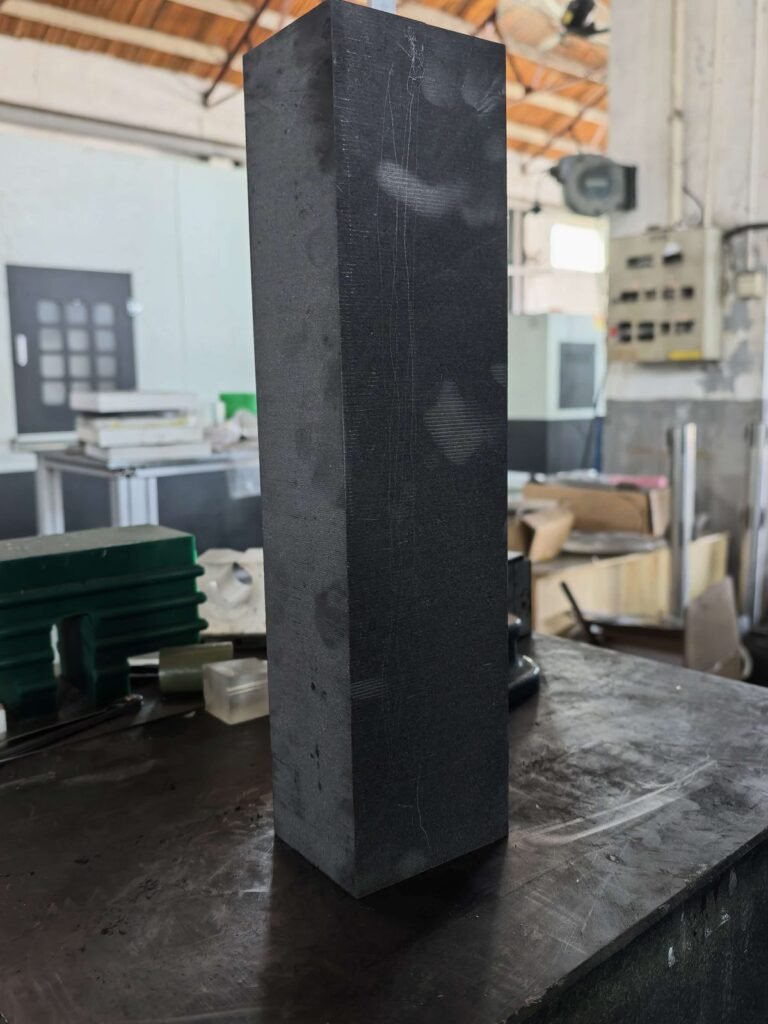
Choose between graphite block cutting vs slicing by defining the next usable output. If the job needs smaller stock sections, begin with division; if it needs repeated plates, qualify a slicing route. A shaped through-contour adds a different access and inspection problem.
These operations can belong to the same manufacturing chain. Treating them as competing names for one machine capability makes quotations difficult to compare and can leave the critical finishing operation out of the route.
This guide compares the output, setup and acceptance evidence for each operation. For the parent stock-preparation topic, see 工業用グラファイトブロック切断.
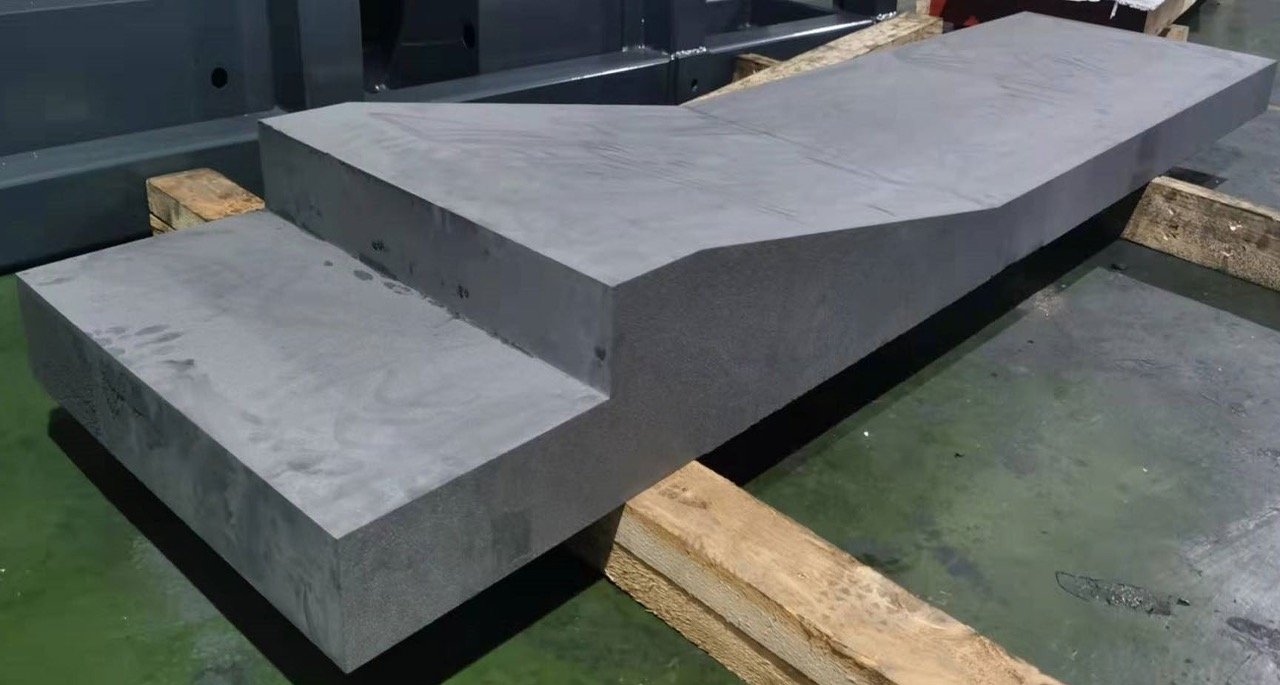
Graphite Block Cutting vs Slicing Starts with the Output
Block division converts incoming stock into manageable blanks, bars or sections. The acceptance question is whether the new blank contains the required geometry and allowance and can be located for its next operation.
Slicing produces plates from stock with a specified thickness and face relationship. Plate count, thickness variation, edge condition and handling become part of the production requirement. A section that is suitable for rough blank preparation may need further work before it can be sliced as intended.
Profile cutting follows an outline rather than merely producing a smaller rectangular envelope. The route must address wire access, local geometry, retained-part support and how the measured contour relates to the drawing.
Material identity remains relevant across all three. SGL Carbon supplies different isostatic grades with distinct properties. Preserve the grade and lot information as the stock moves between operations, rather than applying one generic graphite recipe.
Compare Graphite Block Cutting vs Slicing and Profiling on Equal Terms
Use the same finished requirement when comparing graphite block cutting vs slicing and profiling. If one quotation ends with a rough blank while another includes inspection and finishing, their cycle times and prices describe different deliverables.
| Requirement | Block division | スライス | Profile cutting |
|---|---|---|---|
| Main output | Smaller stock section or blank | Plate or repeated plates | Accessible cut contour |
| Key reference | Seating face and cut-face relationships | Thickness reference and face geometry | Drawing datums and contour alignment |
| Main handling question | Support before and after separation | Support and removal of plates | Restraint of retained part and offcut |
| Inspection emphasis | Size, geometry and finishing stock | Thickness, face relationship and damage | Local outline and feature position |
| Typical next step | More cutting or machining | Profile cutting or finishing | Holes, datums or finishing as required |
The table is a process-selection aid, not a capability chart for every machine. Equipment travel, loading arrangement and accessible features need separate confirmation.
When Block Division Is the Useful First Operation
Choose division when the incoming block is larger than the stock required by the next step. Plan the cuts around the usable blanks, fixture access and the available material, not simply the maximum number of rectangles that fit in a drawing.
Mark any surfaces needed as datums. Repositioning after an initial cut changes the locating chain, and an offcut that appears usable may lack a suitable face for the following operation. Establish that face in the route or allow stock for doing so later.
Include loading and unloading in the review. A short cutting cycle does not establish a practical process if the separated piece cannot be restrained or removed using the approved handling arrangement.
For graphite block cutting vs slicing, division is often the upstream preparation question: what stock section will the slicing operation actually receive? Agree that section with the slicing team before cutting away its locating allowance.
When Slicing Should Define the Route
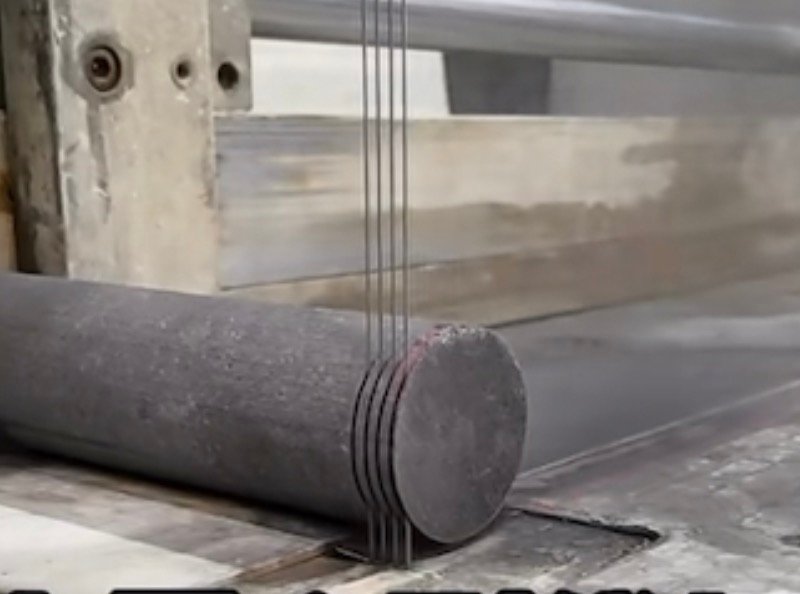
Choose a slicing-led route when repeated plates are the required output. Specify plate thickness, thickness variation, face relationships, required quantity and the surfaces that will be finished later.
Define whether the quoted thickness is as-cut or after grinding. A plate that satisfies the as-cut target may not contain enough stock to correct its geometry and still meet the finished dimension. Keep those states separate in the drawing and inspection report.
Review single-wire and multi-wire arrangements against the actual requirement rather than treating multi-wire as an automatic improvement. A configuration suitable for repeated plate production may not be the right choice for varied blank sizes or a complex contour.
使用 精密グラファイトスライスガイド for the plate-specific qualification questions. This comparison does not assign a universal minimum thickness or throughput to either equipment arrangement.
When a Profile-Cutting Stage Is Needed

Add profile cutting when a plate or block must become an accessible outline. Identify the intended cut direction, internal openings, local corners and regions that need restraint near final separation.
The manufacturing sequence may be division, slicing, profiling and then finishing. Another drawing may be better served by profiling a thicker blank before a later operation. Compare the actual access and support conditions instead of assuming one sequence always wins.
内部開口部には、それ自体のエントリーとねじ切りレビューが必要です。ブラインドポケットはさらに別の機能です。外部輪郭の写真やCNC制御に関する一般的な声明から、どちらかを推測しないでください。.
の graphite profile cutting topic page 図面レビューのフレームワークを提供します。引用において、プロファイルステージ、その検査、およびそれが置き換えない仕上げを含めて表示したままにしてください。.
ビデオ:さまざまなグラファイト切断操作
Watch on YouTube · Vimfun Endless Diamond Wire Saw
プロセスビューを使用して切断ルートを区別します。それらは、サイクルタイム、公差、または材料回収のマッチングされた比較ではありません。.
フィールドノート:なぜ1本のバーがプレートの能力研究ではないのか
の 公開されたグラファイトバーのトライアル SVI250-80を使用して、公称500 x 87 x 70 mmのブランクを製造しました。ワイヤー径補正をオフにして、0.8 mmワイヤー、50 m/sのワイヤー速度、42 mm/minの送り速度を記録しました。.
幅は87.00 mmから87.30 mmに増加し、厚さは69.90 mmから70.10 mmの範囲でした。その幅のテーパーは、下流の在庫計画に関連する文書化された欠点です。これにより、結果を一般的な精度数値として責任を持って要約することができなくなります。.
このテストでは、薄い繰り返しプレート、複雑な輪郭、または最小内部半径を資格付けしませんでした。その測定された寸法は、製造されたブランクの有用な証拠です。それらを別のジオメトリに転送すると、主張が変わります。.
グラファイトブロックの切断とスライスを比較するには、選択された出力に適した証拠を要求してください。写真付きのバーは、プレートの厚さ分布の代わりにはならず、プレートの厚さレポートは内部輪郭を証明できません。.
受け入れられた出力と下流の作業を比較する
セットアップ、切断、再配置、検査、仕上げ、および予想される材料カテゴリを含むルートシートを作成します。図をそれが説明するステージに添付したままにします。そうしないと、同じカーフまたは許容値が2回カウントされる可能性があります。.
ブロックの準備については、受け入れられたブランクと使用可能な残りを記録します。スライスの場合は、受け入れられたプレートとその厚さの状態を記録します。プロファイリングの場合は、分離された輪郭と図面の要件を満たす輪郭を区別します。.
比較可能な検査ルールを使用します。. NISTは測定プロセスのばらつきについて議論しています. したがって、ルートの比較は、すべての読み取り値の違いをプロセスの改善として解釈するのではなく、ゲージ、サポート、または評価方法の変更を特定する必要があります。.
カーフが低いからといって、納品部品のコストが自動的に低くなるとは想定しないでください。後でより多くの修正が必要な在庫は、その利点を消費する可能性があります。測定された出力と現実的な次の操作要件を使用して、ルート全体を比較します。.
実用的な選択シーケンス
まず、必要な中間出力をセクション、プレート、または輪郭に分類します。次に、次の操作に必要な基準面と表面を特定します。第三に、提案された機器が必要なジオメトリに到達し、サポートできるかどうかを確認します。.
次に、トライアルを要求する前に、受け入れシートを定義します。便利な寸法だけでなく、実現可能性を決定する機能を組み込みます。ジョブで薄いプレートと難しい輪郭の両方が必要な場合は、両方の要件をサンプルプランに保持します。.
最後に、同じ納品ポイントで候補ルートを比較します。どの操作が含まれているか、何が機械加工される必要があるか、および非準拠の出力がどのように記録されるかを尋ねます。そこで、単純に見えるグラファイトブロックの切断とスライスの決定が、信頼できる生産上の選択肢になります。.
Known Limitations / Trade-offs
単一のルートがすべてのグラファイトグレード、在庫サイズ、および図面に最適であるわけではありません。便利な開始ブランクはより多くの材料を消費する可能性があり、タイトにネストされたレイアウトはサポートを複雑にする可能性があり、プレート先行シーケンスは1つのセットアップを改善するかもしれませんが、別のセットアップをより壊れやすくする可能性があります。.
この比較では、最小プレート厚、保証された輪郭公差、または生産率を確立しません。それらには、構成固有のドキュメントと代表的なテストが必要です。暫定的なサイクルタイムの見積もりは、測定された切断記録とは別に保持してください。.
操作には、異なる証拠のニーズもあります。最初のサンプルは、限定的な実現可能性を確立します。繰り返しの出力、ワイヤーの状態の変化、および定期的な再配置は、サプライヤーが生産クレームを行う前に、より広範な資格認定を必要とします。.
バイヤーの質問
1台のマシンで3つの操作すべてを実行できますか?
構成とジオメトリによっては可能です。実際の操作、固定具、およびアクセス配置を確認してください。機械名や軸数だけでは、完全な製造ルートを定義することはできません。.
プロファイリングは常にスライスの後に行うべきですか?
いいえ。両方のシーケンスのワークピースサポート、厚さ、アクセス、および下流の要件を確認してください。選択されたルートは、普遍的な操作順序に依存するのではなく、重要な機能をどのように維持するかを説明する必要があります。.
比較引用には何を含めるべきですか?
サプライヤーに同じ材料、在庫サイズ、完成した要件、中間許容値、および数量を提供します。カット済み出力と完成済み出力の間の明確な境界線、および測定方法と含まれる操作を要求します。これにより、グラファイトブロックの切断とスライスの比較が有用な成果物の比較になります。.
図面と提案されたルートを送信してください プロセスレビューのお問い合わせページ. 即時の要件がブランク、プレート、または輪郭であるかどうかをマークします。.