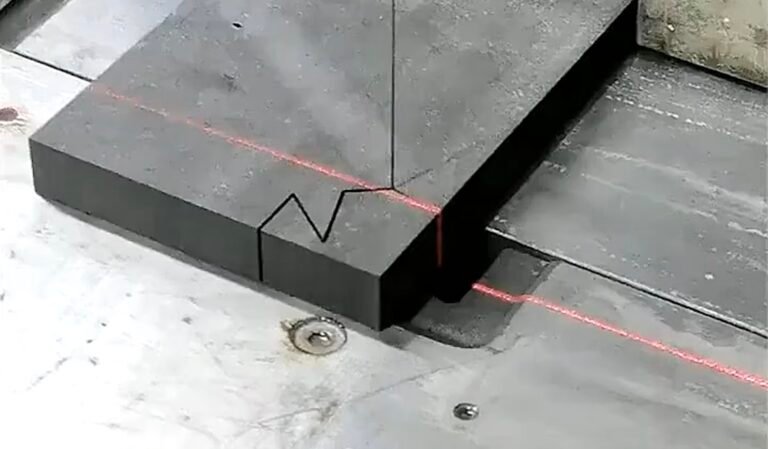
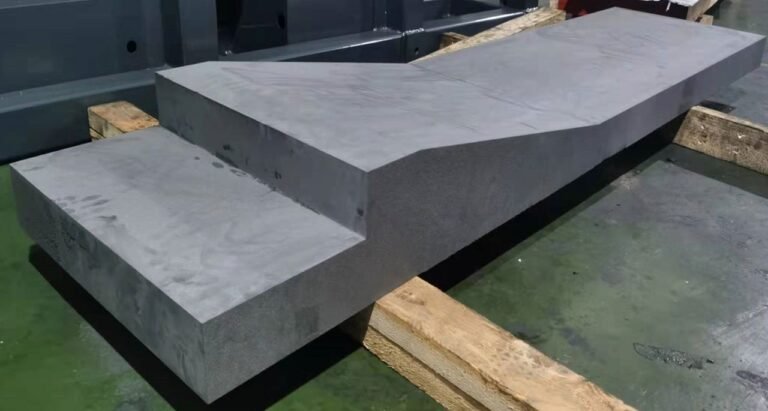
グラファイトの輪郭切断と機械加工は、2つの機械名の競争ではなく、経路計画上の決定事項です。有用なブランクを生成できるアクセス可能な輪郭にはワイヤーカットを使用し、それらを必要とするフィーチャーや仕上げ面にはフライス加工、穴あけ加工、研削加工を残します。.
間違いは、分離された輪郭と完成した部品を比較することです。基準面の準備、穴あけ、局所的な仕上げが必要な場合があります。これらのステップが含まれるまで、主張された時間または材料の利点には、一貫した納入境界がありません。.
この記事は、複雑なグラファイトの輪郭に焦点を当てています。 graphite profile cutting topic page は、図面と機器のレビューを対象としています。 graphite machining alternatives page は、より広範なストック準備の選択肢に対処します。.

グラファイト輪郭切断対機械加工は、フィーチャー分類から始まります
各フィーチャーを貫通輪郭、内部開口部、盲目フィーチャー、基準面、または仕上げ面としてマークします。これらのフィーチャー間の必要な関係を記録します。単独では正しい外部形状でも、重要な穴をそれに対して配置できない場合は使用できない可能性があります。.
カットされたままにできるフィーチャーを特定します。最終的な要件が別の操作を必要とする場合は、在庫を確保します。製造計画が実際にそれを必要としない限り、すべてのブランク面に完成部品の公差を割り当てることを避けてください。.
材料選択とプロセス設定を分離してください。. SGL Carbonは、等方性グレード間で異なる特性を説明しています。. A route qualified on one supplied grade should not be assumed to behave identically on another.
管理された図面をすべてのサプライヤーの共通参照として使用します。CAD輪郭は役立ちますが、厚さ、材料の識別、基準面の要件、または表面仕様を置き換えるものではありません。.
ワイヤー輪郭切断が適合する場所
必要な出力がアクセス可能な貫通輪郭ブランクである場合に、ワイヤー経路を検討してください。エントリー、エグジット、サポート、および分離シーケンスを確認します。内部輪郭については、ワイヤーシステムが開口部にどのように到達するか、および保持される材料がどのように制御されるかを確認します。.
The potential value is in producing a useful shape before final machining. Whether it reduces total work depends on how much material must otherwise be removed, the necessary allowance and the additional setups introduced.
Do not quote a benefit simply because wire kerf appears smaller than a milling tool diameter. Tool diameter, kerf, removal volume and finished-part material recovery describe different quantities. Compare the actual geometry and routing assumptions.
For graphite profile cutting vs machining, ask the wire supplier to identify the geometry it will deliver and the features it excludes. A precise boundary makes the following machining operation easier to plan.
Where Machining Remains Necessary
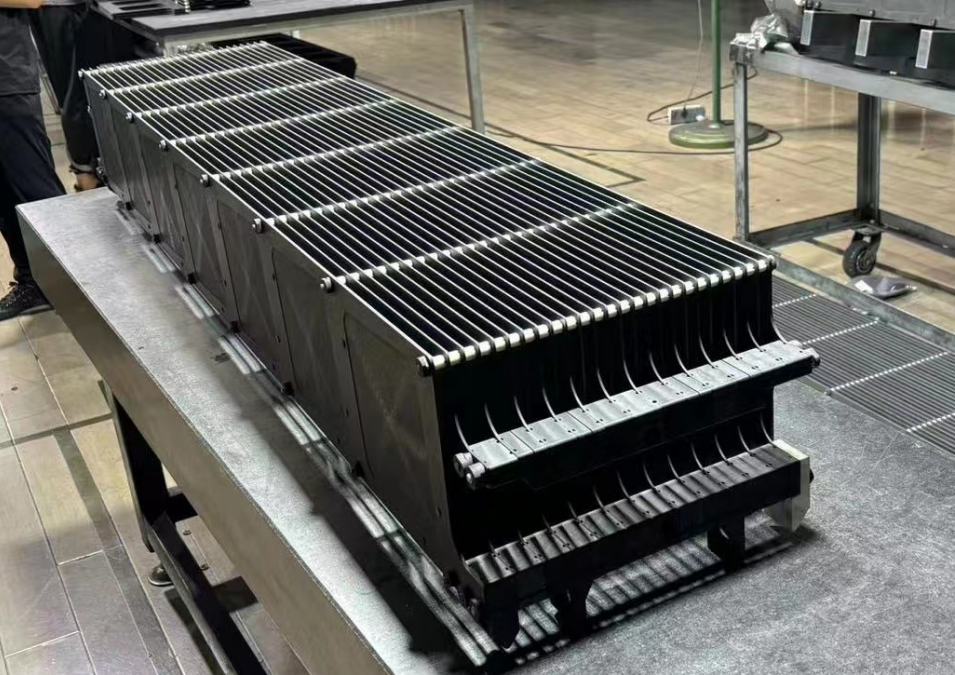
Review blind recesses, drilled features, threads, grooves and specified finished surfaces as separate manufacturing requirements. Do not assume that an external wire-cut outline proves capability for any of them.
Machining may also establish a final datum or correct a cut face before another operation. That does not mean cutting failed. It means the blank and final component have intentionally different acceptance conditions.
A machining-only route can be reasonable when the part is small, stock is already close to size or the wire route would add disproportionate handling and setup. Likewise, a combined route can be reasonable when it avoids unnecessary bulk removal while preserving accessible finishing stock.
Use an operation-by-operation comparison. The cutting vs machining guide provides background, but the decision on a specific contour should remain tied to its drawing and accepted output.
Compare Complete Routes in Graphite Profile Cutting vs Machining
| Stage | Wire blank plus machining | Machining from larger stock |
|---|---|---|
| Incoming material | Stock suitable for the proposed cut and fixture | Stock suitable for the machining setup |
| Initial shape | Accessible contour with defined allowance | Roughing and shape generation as required |
| References | Cut and machined datums assigned explicitly | Datums established within the machining route |
| Final features | Remaining holes, pockets and critical surfaces | All specified features within the chosen operations |
| Inspection | Blank acceptance followed by final inspection | In-process and final inspection |
| Cost boundary | Include cutting, transfer and finishing | Include roughing, tools, setup and finishing |
Do not populate this comparison with invented hourly rates or assumed rejection percentages. Obtain the actual process content and compare equivalent delivery states. If a supplier supplies only a preliminary estimate, retain that distinction in the purchasing decision.
The relevant unit is an accepted component at the agreed stage, not simply a minute of cutting or a kilogram of material removed.
Plan Datums Across the Handover
Choose the reference surfaces that will locate the blank in the finishing fixture. Check that the wire route preserves access to them and leaves enough stock for any required preparation.
If the outline is cut before a critical datum is finished, define how the later operation will establish the drawing relationship. If the datum is finished first, review whether the cutting fixture can protect and use it appropriately.
Keep alignment consistent between inspection reports. NIST identifies uncertainty as relevant to judging measurement results. A purchasing comparison should therefore record how the suppliers measured the feature, rather than relying on similar-looking numbers.
When evaluating graphite profile cutting vs machining, ask the receiving operation to approve the blank drawing. This catches a missing locating surface before a full batch reaches the next machine.
Video: Wire cutting as one stage of the route
Watch on YouTube · Vimfun Endless Diamond Wire Saw
The video illustrates the wire-cutting side of the route. It does not show a controlled comparison with CNC milling or prove that finishing operations can be removed.
Field Notes: A Blank Can Require More Correction Than Expected
The available SVI250-80 bar trial concerns straight blank preparation rather than a complex contour. It nevertheless documents a handover issue: a nominal 87 mm width increased from 87.00 to 87.30 mm along a 500 mm sample.
The same run used 0.8 mm wire and 42 mm/min feed, with wire-diameter compensation off. Thickness readings ranged from 69.90 to 70.10 mm. Different features of the blank therefore presented different correction requirements.
That is a real shortcoming to consider when comparing an as-cut blank with a finished requirement. It does not prove the cause of a contour error or the cost saving of a combined route. The record contains no matched profile-machining comparison.
For your own contour, request measurements of the stock remaining at its critical regions. A smooth face or acceptable overall envelope will not reveal whether a local feature has enough allowance for final machining.
Run a Comparison Trial That Answers the Buying Question
Give both routes the same drawing revision, material grade and delivery requirement. Identify the difficult feature in advance. Require the same final inspection basis, even if the intermediate inspection methods differ.
Record setup and transfer work separately from cutting or machining time. Note operator interventions, fixture changes, consumable assumptions and any extra pass needed to recover a feature. Otherwise an attractive headline cycle can conceal the practical work.
Retain material categories: accepted component, usable remnant, planned scrap and rejected output. Keep a remnant’s possible future value separate from current accepted production.
A graphite profile cutting vs machining trial should also state what has not been tested. A successful first component does not establish extended wire life, tool life or batch rejection rate. Request repeated output only where those factors drive the purchase.
Known Limitations / Trade-offs
Wire cutting has access and local-geometry constraints. Machining has its own fixture, tool and material-removal requirements. Neither route should be presented as universally superior without the drawing, material and acceptance conditions.
Combining operations can reduce one type of work while adding transfer, locating and inspection. A larger allowance can make a blank easier to accept but increase subsequent machining. A tighter blank requirement can reduce finishing stock while demanding additional qualification.
This article does not establish a guaranteed contour tolerance, minimum corner radius or time-saving percentage. Specific claims need equipment documentation and measurements from a representative part. Keep general route reasoning separate from those numerical claims.
Record Why the Selected Route Won
Write the decision in terms of the drawing and accepted output. Identify the feature that favored the selected route, the finishing it still requires and the assumptions that remain provisional. Keep that note with the sample report so a later design change can be reviewed against the original reasoning.
For a family of parts, identify which differences require another check. A larger stock thickness, smaller opening or changed datum may invalidate the earlier comparison even if the general outline looks familiar. Do not extend the accepted trial by product name alone.
Also retain the losing route’s relevant conditions. It may become useful when quantity, incoming stock or final geometry changes. A practical graphite profile cutting vs machining decision is conditional, and recording those conditions is more useful than declaring a permanent winner for every future order.
Questions for a Supplier Review
Is a wire-cut contour a finished component?
Only when it meets all applicable drawing requirements at delivery. If holes, datum faces or finish still need work, define the output as a blank and include the remaining operations in the route.
Which route should I choose for a closed internal opening?
First confirm wire entry and threading feasibility on the actual configuration. If that route is inaccessible or adds unacceptable work, evaluate machining or another suitable process. The opening geometry should decide the review.
What makes the comparison credible?
A common finished requirement, documented operations and equivalent acceptance rules. Include the condition of the delivered blank, the finishing it needs and the evidence behind any performance estimate. That’s a practical graphite profile cutting vs machining comparison.
Use our drawing-review contact page to share the outline, material grade, thickness, datums and final-machining requirements. Mark which surfaces you intend to accept as-cut.