EDM graphite electrodes fail not because of poor shaping or finishing, but because their cutting requirements were never fully met at the start of the process. Geometry, material behavior, surface condition, and batch consistency each impose constraints that eliminate conventional approaches before the electrode ever reaches a CNC machine.
Understanding what graphite electrode cutting requirements actually demand — and why they are stricter than most manufacturers expect — is the starting point for building a reliable, consistent electrode production process.
The Geometric Complexity of EDM Electrodes
EDM electrodes are not simple rectangular blanks. A single electrode may combine thin ribs (0.5–2 mm wide), sharp internal corners, steep draft angles, and multiple reference surfaces that must remain perpendicular and parallel to each other within tight tolerances.
This geometry creates a fundamental problem at the cutting stage. The blank delivered by cutting establishes the datum from which CNC shaping begins. If that blank arrives with incorrect face angles, twist, or bow, the CNC machine must first consume allowance correcting the cutting errors before it can begin adding electrode geometry. That consumes material, tool life, and cycle time — and in some cases, leaves insufficient stock to complete the finished form.
As covered in the analysis of Cắt điện cực đồ chì EDM and its role in manufacturing, the cutting stage is where electrode geometry is established, not merely approximated. Every downstream operation builds on what cutting delivers. For electrodes with multiple critical faces — a common requirement in precision mold work — the cutting method must maintain parallelism and perpendicularity across all faces simultaneously. This rules out approaches that prioritize throughput over geometric fidelity.
Graphite Brittleness and Thermal Sensitivity Create Hard Limits
EDM-grade graphite is significantly more brittle than the metals and composites that most precision cutting equipment was designed for. Fine-grain isostatic grades — used for precision EDM electrodes — resist crack propagation across grains but fracture readily at stress concentrations: sharp corners, thin sections, and cut edges.
Manufacturers such as SGL Carbon Và Toyo Tanso specify isostatic EDM graphite grades with low flexural strength relative to metals, meaning the material cannot absorb significant cutting forces without localized fracture. The practical implication: any cutting method that applies compressive or shear forces to the graphite — through tool contact, clamping pressure, or vibration — risks producing edge chipping or subsurface cracking, regardless of how precisely the machine operates.
Brittleness also interacts with thermal behavior in a way that makes high-speed cutting counterproductive. When cutting generates concentrated heat — through friction, aggressive feed rates, or tool contact — thermal gradients develop across the graphite grain structure. In metals, these stresses relieve through plastic deformation. In graphite, they accumulate until they exceed local fracture toughness, producing microcracks that are invisible to the naked eye but structurally significant.
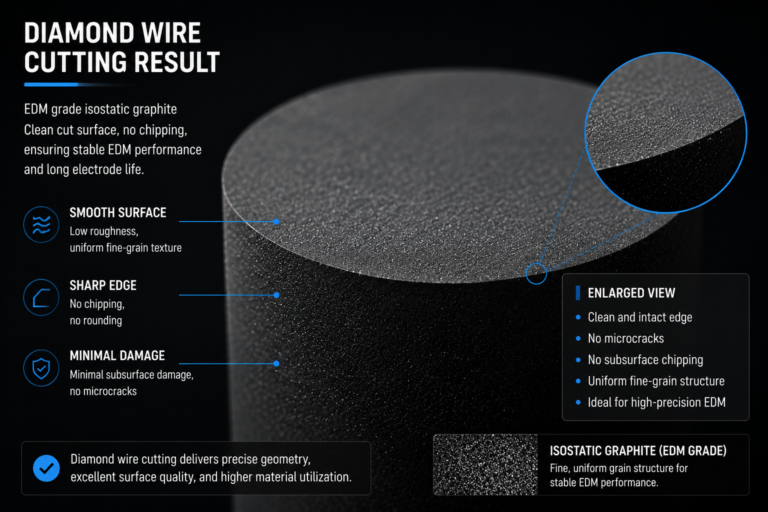
The result is subsurface damage: a layer of compromised material beneath the cut surface that carries residual stress and latent cracking. This layer does not affect the blank’s initial appearance but becomes a failure site during EDM, when thermal cycling during discharge reactivates the stress field and accelerates electrode wear. Cutting methods that generate low heat and low contact stress — such as wire cutting — minimize this damage layer and preserve the graphite’s structural integrity through to the finished electrode.
Graphite Electrode Cutting Requirements for Discharge Surface Quality
EDM depends on controlled electrical discharge between electrode and workpiece. That discharge behavior is directly sensitive to the micro-geometry of the electrode surface and edges — which means graphite electrode cutting requirements extend well beyond dimensional accuracy into surface physics.
Edge sharpness matters because sharp electrode edges concentrate the electric field, enabling controlled, stable discharge initiation. When cutting produces chipped or rounded edges, the field distribution becomes irregular, discharge initiation becomes inconsistent, and EDM process control degrades. In high-precision applications — such as fine-cavity mold electrodes — even minor edge irregularities propagate into workpiece surface defects.
Surface roughness matters because the electrode surface acts as the primary emission surface for the discharge. Excessive roughness — deep cutting marks, torn graphite grains, or surface contamination from cutting debris — disrupts the discharge pattern and increases arc instability.
Các key challenges in EDM graphite electrode cutting include both edge chipping and surface contamination as systematic production problems, not occasional defects. They emerge from cutting methods that apply cyclic compressive and shear forces to brittle graphite — exactly the loading conditions this material handles poorly at the grain level.
A clean, low-force cutting process delivers the surface and edge condition that EDM requires without additional preparation steps. When the cutting process is inadequate, secondary operations — lapping, hand dressing, edge cleanup — add cost while achieving only partial recovery of what should have been correct from the outset.
Dimensional Consistency Across Batch Production
Individual dimensional accuracy is a necessary condition for electrode production. It is not sufficient. What precision EDM electrode manufacturing requires is dimensional consistency across an entire batch — the same result on the first piece, the fiftieth, and the hundredth.
This distinction matters because electrode procurement is almost always batch-based. A production run requires multiple electrodes of the same geometry: roughing electrodes, semi-finishing electrodes, finishing electrodes, and backups. When those pieces vary dimensionally across the batch — even if each individual piece falls within tolerance — the EDM process cannot be optimized and held stable. Parameters set for one electrode may not transfer cleanly to the next, and the operator must compensate manually rather than rely on a repeatable process.
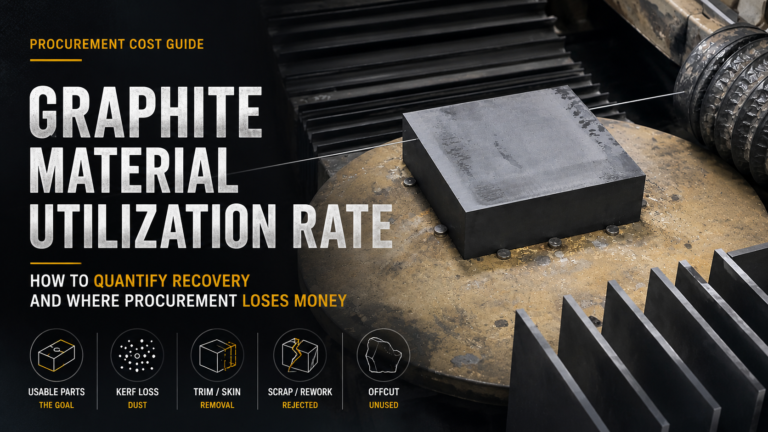
The dimensional constraint tightens further when electrode material cost is considered. High-value, fine-grain graphite grades represent significant material investment per blank. As examined in the study of tổn thất vật liệu do rãnh cắt điện cực graphite, material efficiency and dimensional consistency are directly linked: a cutting process that drifts dimensionally also wastes more material, because oversized allowances must be maintained to ensure minimum dimensions are still met at the end of the production run.
The requirement, then, is not just accuracy but process stability — a cutting method that delivers the same geometric result on piece 100 as on piece 1, without operator intervention to compensate for tool wear, thermal drift, or setup variation.
Why Conventional Machining Cannot Meet Graphite Electrode Cutting Requirements
CNC machining is capable of high precision. The question is not whether a CNC machine can cut graphite — many do — but whether the machining approach is compatible with the specific graphite electrode cutting requirements outlined above.
The fundamental issue is contact mechanics. CNC machining removes material through repeated tool-workpiece contact: each pass applies a cutting force to the graphite. In a material with low fracture toughness, repeated contact forces accumulate stress at subsurface sites. The result is a blank with a damaged surface layer and residual stress field that no subsequent operation can fully reverse — shaping and finishing can work around it, but cannot eliminate it.
Tool wear compounds this problem directly. CNC cutting tools lose sharpness progressively through use. As tools wear, cutting forces increase, edge quality degrades, and the subsurface damage layer deepens. The same dimensional drift that affects part accuracy also affects material damage: the last pieces in a production run are both less dimensionally accurate and more structurally compromised than the first.
Thermal management presents a third constraint. CNC machining generates friction heat at the tool-workpiece interface. Graphite is a poor thermal conductor, so temperature gradients develop rapidly in the blank during cutting. These gradients produce the thermal stress and microcracking described earlier, and they are difficult to control consistently across a long production run where tool condition, coolant coverage, and feed rates all shift gradually.
A detailed comparison of how these constraints play out in practice is covered in the graphite electrode cutting vs machining analysis, which examines force profiles, thermal behavior, and batch consistency differences between the two approaches. The summary: machining satisfies some graphite electrode cutting requirements but creates conflicts at the material and process level that prevent it from meeting all five simultaneously.
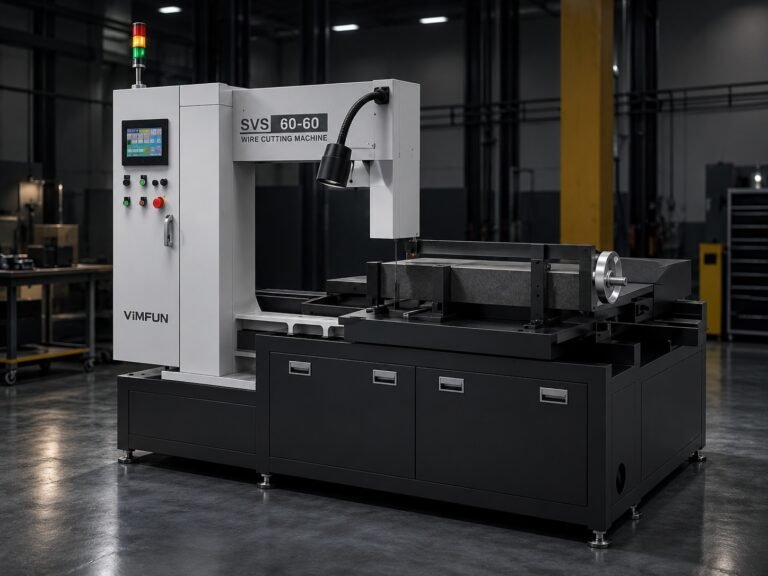
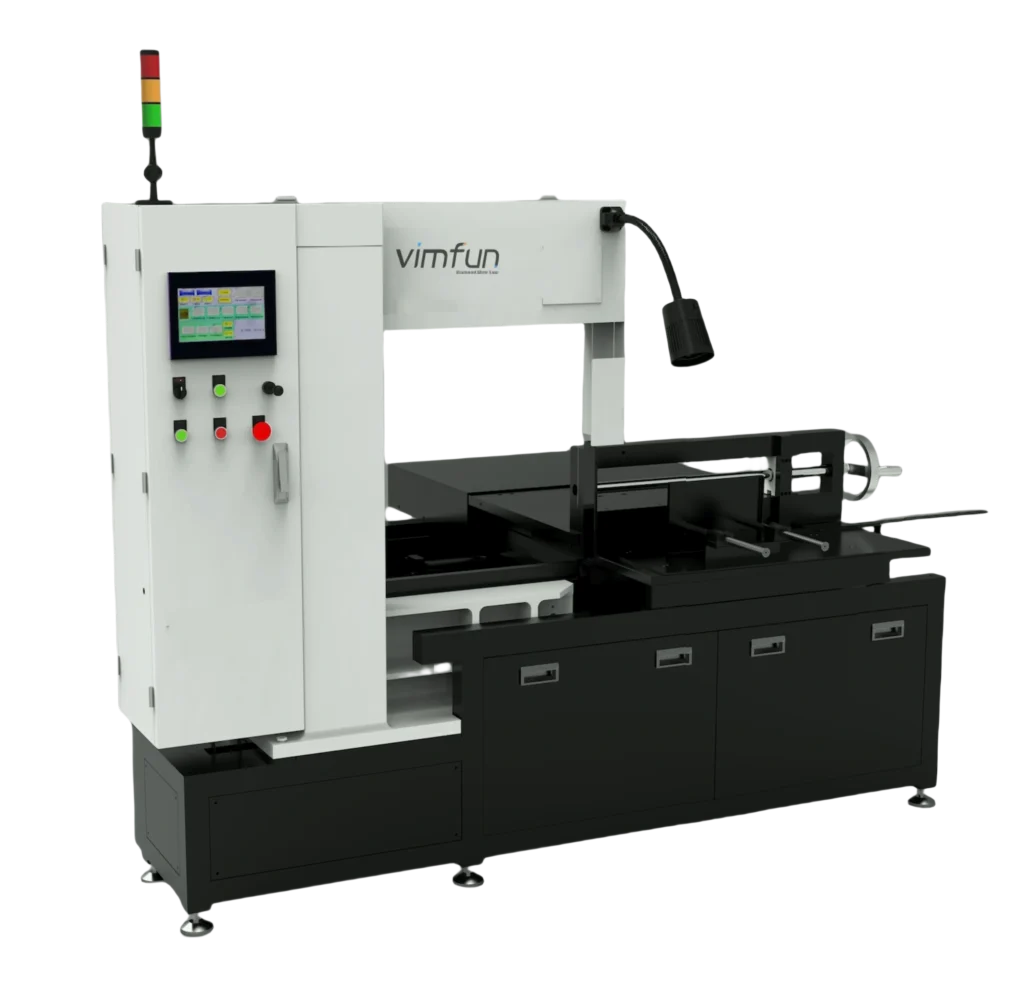
Wire cutting addresses these constraints differently. The cutting zone is narrow and controlled, contact forces on the graphite are low and consistent, heat is managed by continuous coolant flow along the wire path, and dimensional stability is maintained across the full batch because wire wear does not translate into the same kind of progressive dimensional drift that tool wear creates in CNC. The process does not scale in every direction — wire cutting has its own geometry and throughput constraints — but for electrode blank production, it addresses the requirements that machining struggles with.
Five Requirements That Define the Right Cutting Process
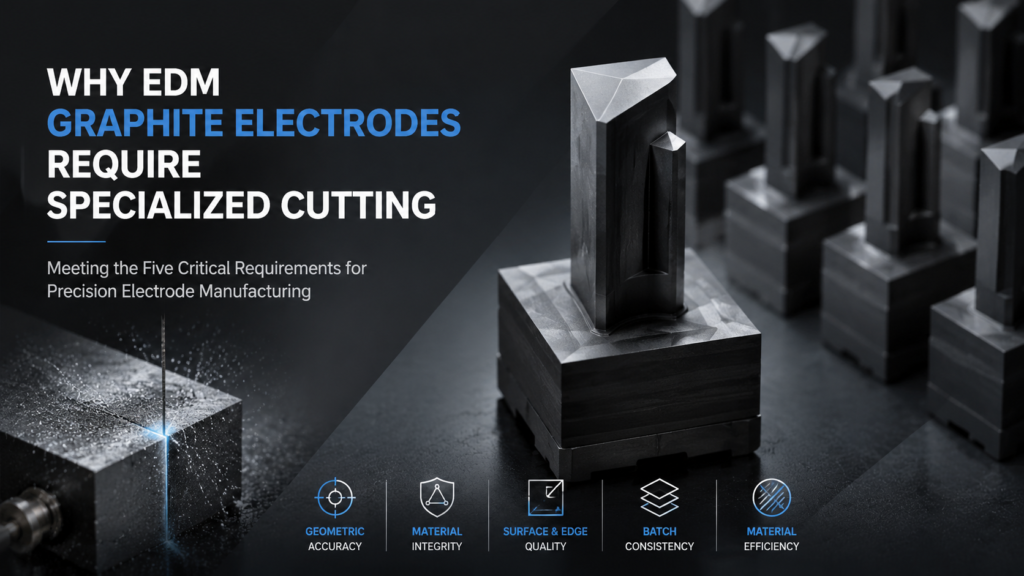
Graphite electrode cutting requirements resolve into five concrete demands that the production process must satisfy simultaneously:
- Geometric accuracy — blank dimensions and face relationships within the tolerance budget available for the shaping stage
- Material integrity — minimal subsurface damage and residual stress from the cutting operation itself
- Surface and edge quality — condition compatible with EDM discharge without requiring secondary preparation
- Batch consistency — no dimensional or quality drift across the full production run
- Material efficiency — kerf loss appropriate to the value of the graphite being processed
No single requirement is unusual in isolation. Meeting all five simultaneously, consistently, at production scale — that is what defines graphite electrode cutting as a specialized discipline rather than a routine material preparation step.
The full Cắt điện cực đồ chì EDM process resource covers how these requirements translate into equipment selection, process parameters, and quality verification at each production stage.
If your current electrode cutting process is meeting some of these requirements but failing on others — inconsistent batch dimensions, edge chipping on fine-grain grades, or subsurface cracking showing up as early electrode wear — contact us to discuss where the gaps are and what a more consistent process looks like.