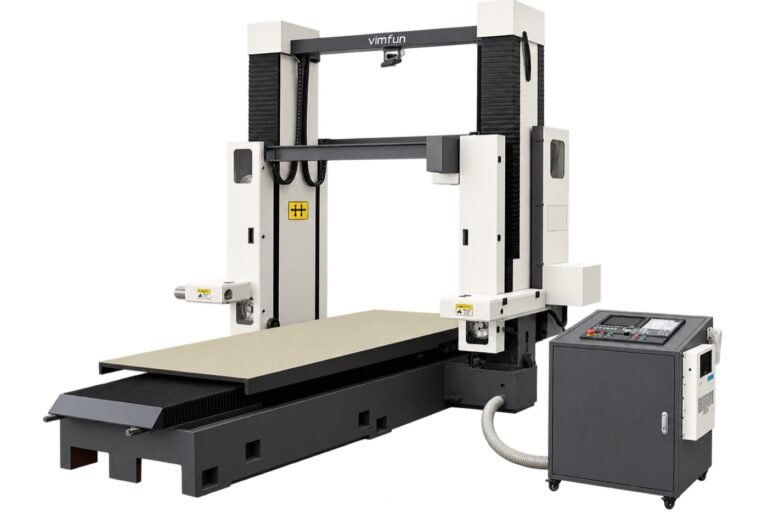
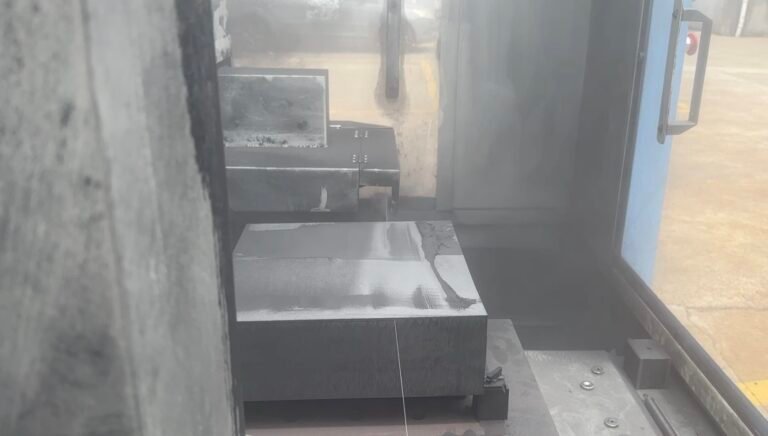
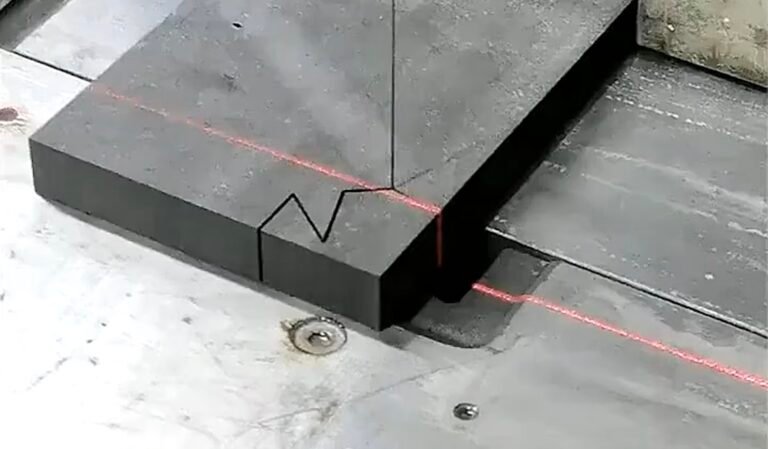
A block that fits an SHG in one cutting direction may not fit when the same setup needs both directions. Combined graphite block cutting capacity must be checked as a complete length, width and height envelope, with the intended supports and fixtures included in the review.
Start with the operation sequence. If a block needs a long trim followed by a cut in the other direction without being relocated, the combined column is the relevant starting point. The largest model number or the longest advertised stroke cannot answer that question on its own.
This article addresses configuration review. The industrial graphite block cutting guide covers the wider preparation route, while the SHG product page owns the equipment selection and quotation information.
Five Pre-Trial Checks
Use these five checks as an index to the detailed review below. They organize the proposed job; they are not a claim of measured SHG performance.
- Select the required cutting mode.
- Measure maximum incoming stock dimensions.
- Confirm the available height.
- Review block support and load.
- Check fixture and assembly access.
Define Combined Graphite Block Cutting Capacity by the Required Operations
Write down the incoming stock dimensions before selecting a model. Keep the proposed blank dimensions separate. The machine encounters the stock that arrives at the table, including any irregularities that still need trimming, rather than the neat rectangle on the finished drawing.
Identify which cutting directions are necessary on that stock. A single-direction operation and a combined-direction operation use different envelopes in the published comparison. Do not select the larger envelope now and leave the second operation to be resolved after installation.
Also define what staying in one setup means for the job. Retaining the block on the table does not remove the need to review support, fixture clearance or the newly separated piece. These conditions belong in the same inquiry as the stock dimensions.
The material description matters too. SGL Carbon distinguishes several isostatic graphite grades with different properties. Grade identification accompanies the cutting trial; a dimensional fit does not qualify cutting conditions across every supplied graphite.
Read the Combined Graphite Block Cutting Capacity Table
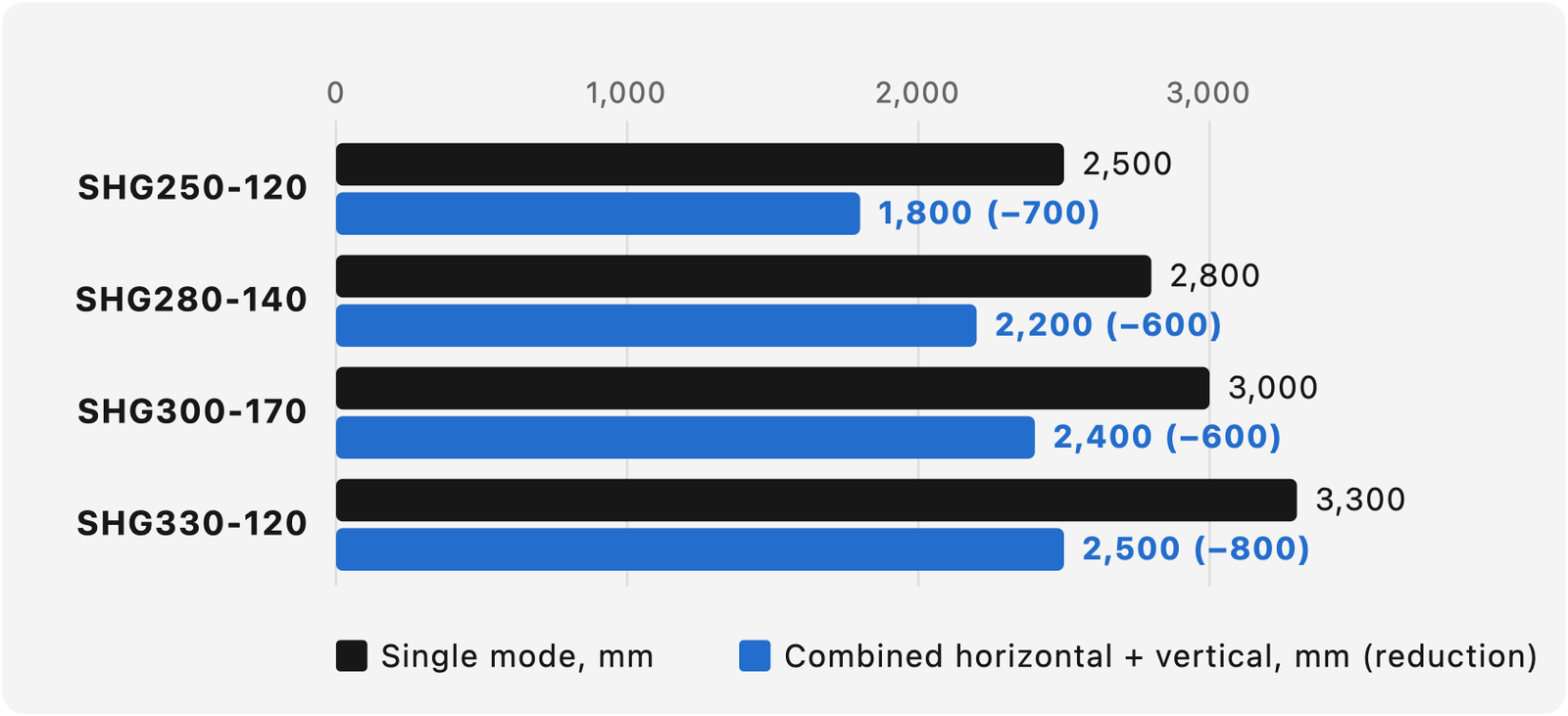
The public SHG comparison lists nominal dimensions in millimetres, ordered length × width × height. The following values are configuration information, not measured cutting tolerances or proof of workpiece load capacity.
| Modèle | Horizontal uniquement | Vertical uniquement | Combined directions |
|---|---|---|---|
| SHG250-120 | 2500 × 1200 × 1000 | 2500 × 1200 × 1000 | 1800 × 1200 × 1000 |
| SHG280-140 | 2800 × 1400 × 1400 | 2800 × 1400 × confirmer H | 2200 × 1400 × confirmer H |
| SHG300-170 | 3000 × 1700 × 1400 | 3000 × 1700 × confirmer H | 2400 × 1400 × confirmer H |
| SHG330-120 | 3300 × 1200 × 1000 | 3300 × 1200 × 1000 | 2500 × 1200 × 1000 |
“Confirm H” is an unresolved height condition that needs configuration review. It is not permission to carry the horizontal-only height into another column. Published dimensions remain subject to order confirmation for the actual installation and workpiece.
Examinez le SHG model capacities by cutting mode with the proposed sequence beside them. The useful comparison is between the required workpiece envelope and the appropriate mode, not between isolated maximum numbers selected from different rows.
Video: SHG cutting modes
Watch on YouTube · Vimfun Endless Diamond Wire Saw
Combined graphite block cutting capacity must still be checked against the model table and the proposed setup. This SHG series demonstration provides a visual introduction to the equipment and cutting modes; it does not confirm the example block dimensions, available height or accepted configuration.
Video: SHG series oversized-graphite demonstration
Watch on YouTube · Vimfun Endless Diamond Wire Saw
This SHG series short provides an equipment reference for combined graphite block cutting capacity review. It identifies the machine family more directly than the previous unconfirmed-model cylinder clip. The series label does not establish a particular model envelope, usable height, supported load or acceptance of the proposed block.
Why the Combined Length Is Shorter
The published mechanism description gives the horizontal and vertical assemblies a shared longitudinal X travel. Using both assemblies in one setup therefore leaves a shorter workable block length than operating in only one direction. That reduction is specific to the listed configurations.
For SHG250-120, the listed length changes from 2,500 to 1,800 mm. For SHG330-120, it changes from 3,300 to 2,500 mm. The other two listed models each lose 600 mm between the single and combined columns. These differences describe nominal operating envelopes, not a general clearance rule for unrelated machines.
Do not try to recover the reduction by assuming the block can overhang or that a head can simply be parked elsewhere. Those are proposed changes to the arrangement and need an engineering review. A quotation should state the accepted envelope explicitly.
Check Combined Graphite Block Cutting Capacity with a Three-Dimension Worksheet
Use one worksheet for each stock family and required mode. Record incoming length, width and height, the largest dimensions actually expected, the intended orientation and the reference face. Include the drawing revision so later changes cannot silently invalidate the review.
Compare all three dimensions against the same model and mode. A pass in length does not compensate for a fail in width. An unconfirmed height remains open even when the other dimensions fit exactly. Keep each outcome visible: within the listed envelope, outside it, or requiring confirmation.
Next add the support and handling information. Record block mass, proposed loading method, support locations and what happens to each separated section. The product page asks for these inputs because nominal cutting size does not establish that the proposed loading arrangement is acceptable.
Finally, identify anything that sits in the moving assembly’s path. A clamp can occupy space even if it does not touch the planned cut. Treat access to the full cutting route as a separate approval item rather than subtracting an invented universal allowance from the published table.
Work Through the 2,400 × 1,400 × 1,200 mm Example
Consider a hypothetical block measuring 2,400 × 1,400 × 1,200 mm that requires both cutting directions. These dimensions are a selection example from the published product discussion, not a report of a completed customer trial.
SHG250-120 falls short on the listed combined length and width. SHG280-140 has the required nominal width, but its 2,200 mm combined length is shorter than the proposed stock. Neither becomes suitable merely because its single-direction length looks more generous.
SHG300-170 is a candidate: the listed combined length and width match the hypothetical stock. Its combined height still says “confirm H.” Actual dimensions, supports and clearances also need review, especially because a nominal match leaves no basis for accepting oversized incoming material automatically.
SHG330-120 offers a longer combined length of 2,500 mm, but its listed 1,200 mm width is below the example’s 1,400 mm. A higher model number does not make it the right choice. The example shortlists a configuration; it does not constitute a purchase approval.
Keep Worktable Size, Axis Travel and Cutting Envelope Separate
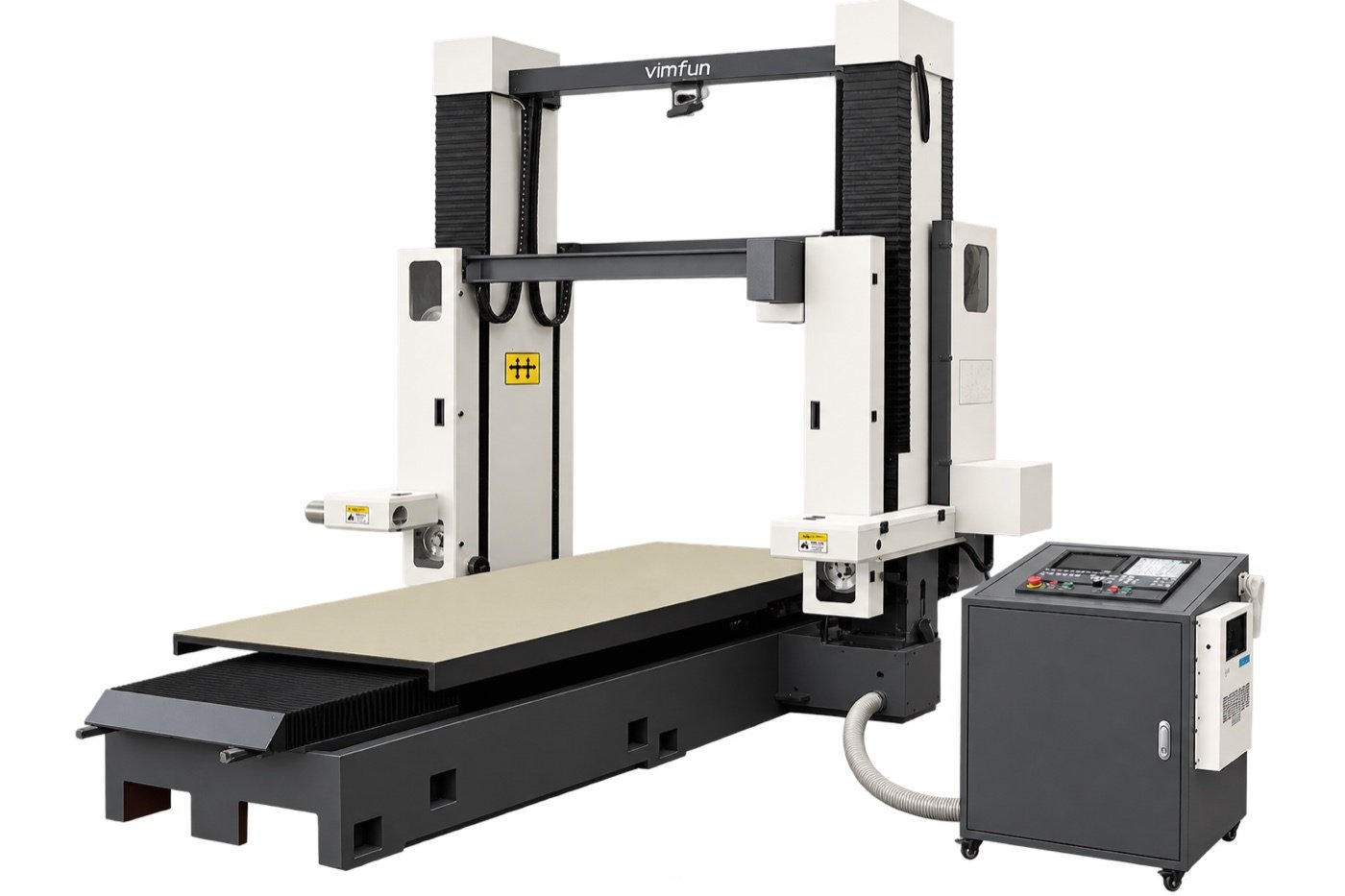
The product specification lists worktable dimensions and X/Y/Z travel separately from cutting capacity. Read those as different descriptors. Table width is not automatically the maximum block width, and an axis stroke does not independently approve every block orientation.
For example, SHG300-170 is listed with 3,000 / 1,400 / 1,400 mm X/Y/Z travel and a 3,000 × 1,000 mm worktable. Its mode-dependent cutting envelopes remain the ones in the comparison table. These entries require explanation together, not replacement with a single “maximum size.”
Ask the supplier to mark the accepted setup on a drawing where the relationship is not obvious. Show the supported area, stock projection, locating features and assembly access. Do not resolve an apparent dimensional mismatch by guessing how unsupported stock will behave.
Field Notes: A Smaller Trial Shows Why Fit and Acceptance Differ
Le published isostatic graphite trial concerns one nominal 500 × 87 × 70 mm bar on an SVI250-80, not an SHG combined-mode test. Reported width readings rose from 87.00 to 87.30 mm with wire-diameter compensation disabled.
That record is useful because a physically cuttable workpiece did not produce one uniform width result. It cannot establish SHG capacity, compensation performance or the cause of every dimensional change. No matched SHG combined-mode acceptance record is supplied with this article.
The distinction is practical: combined graphite block cutting capacity tells the buyer which setup deserves review; the trial and inspection record determine whether the resulting blanks meet the intended handover requirements.
Confirm the Measurement Basis Before Final Selection
A drawing inquiry should identify whether dimensions are nominal stock values, measured maxima or acceptance limits. Those are different inputs. List the inspection method and sampling positions when the stock is irregular, and preserve which face defines each direction.
NIST’s measurement uncertainty guidance explains why a reported value must be judged against its intended use. A nominal envelope match should not be treated as proof that the actual stock, measurement method and setup leave adequate room.
Utilisez le block cutting process checklist to connect capacity review with blank inspection and transfer to downstream machining. The final quotation should retain every configuration condition that mattered during selection.
Known Limitations / Trade-offs
Combined graphite block cutting capacity is a mode-dependent planning boundary, not a promise of finished tolerance, loading capacity, cycle time or accepted output. Unconfirmed height, material condition and fixture access remain separate decisions. The table does not authorize alternative wire routing or machine modifications.
Keeping the block in one setup can suit a route that needs both directions. A single-direction route may use a longer listed envelope, but relocating the stock later introduces another locating and handling step that must be evaluated. Compare complete routes rather than choosing only the larger published length.
Questions fréquemment posées
Can the horizontal-only height be used in combined mode?
Only after configuration confirmation where the combined column leaves height open. Copying the value across columns would convert an unresolved condition into an unsupported specification.
What should accompany a combined graphite block cutting capacity inquiry?
Send the maximum incoming dimensions, mass, material grade, required directions, cut sequence and blank drawing. Add support and fixture sketches, loading access and downstream datum requirements. Request written confirmation of every open dimension before treating a shortlisted SHG as selected.
Why is a larger SHG model not always the right selection?
Length, width and height must pass together in the required cutting mode. For the published hypothetical block, a longer model can still be too narrow. Compare the complete envelope and leave any unconfirmed height open rather than selecting by model number alone.
Does combined graphite block cutting capacity include a confirmed table load?
No. The published dimensional envelope and the workpiece support review are separate inputs. Send the block mass, support arrangement and loading method with the drawing. Obtain the configuration-specific load confirmation; do not infer it from the machine’s own weight.
Can a nominal match be treated as approval for oversized incoming stock?
No. The example only shortlists a configuration. Supply actual maximum incoming dimensions and review fixtures, supports and assembly access before the supplier confirms the accepted setup. Do not substitute the smaller finished-blank dimensions for the stock that must be loaded.