Precision Graphite Slicing: 5-Stage Process & Proven ROI Guide | Vimfun
Process & ROI Authority

Точность
Графит Нарезка

Precision graphite slicing determines manufacturing quality — not downstream finishing. Explore the complete engineering process, validated cutting parameters, and the full ROI case for diamond wire technology.

±0,05 ммSlicing accuracy
83.2%Material yield
≤ 0.8 mmШирина пропила
Ra ≤ 1.25 μmОтделка поверхности

Why Graphite Slicing Method Determines Your Material Yield

Точная нарезка графита is the controlled process of separating graphite blocks into defined-thickness sections — holding dimensional tolerance, flatness, and parallelism within ±0.05 mm across every slice in a production batch. Unlike conventional cutting, graphite slicing with endless diamond wire technology targets repeatability: the same result on slice 1 and slice 400.

Graphite is one of the most technically demanding materials to cut. Its brittle, porous, and anisotropic structure means conventional methods — band saws, milling cutters, grinding wheels — either contaminate the material through coolant penetration, generate excessive kerf waste, or produce surfaces requiring extensive secondary processing. Endless diamond wire technology solves all three problems simultaneously.

Why the Graphite Slicing Method Matters for Material Yield

The graphite slicing method directly determines material recovery from each block. A band saw's 2.0–4.0 mm kerf yields only 66.4% of material from a 1 m³ block sliced to 4 mm sections. Diamond wire slicing reduces kerf to ≤ 0.8 mm — recovering 83.2% of the same block and producing 42 additional slices per cubic meter. At EDM-grade graphite prices of $15/kg, that is $4,662 in recovered material value per block.

This guide covers the complete graphite slicing process — from material preparation and fixturing to dimensional inspection — along with validated cutting parameters, ROI calculations, and a comparison of competing methods. For deeper dives into specific aspects of slicing accuracy, see the in-depth topic guides in the section below.

Graphite Slicing Accuracy: What ±0.05 mm Means in Production

Graphite slicing accuracy of ±0.05 mm is not just a machine specification — it is the tolerance that downstream operations depend on. Grinding can remove material; it cannot add it back. A slice 0.15 mm undersize has already failed its tolerance before any secondary operation begins. This is why the graphite slicing stage is the single highest-leverage control point in the entire manufacturing chain — errors introduced here propagate irreversibly through every subsequent process. See our Стандарты производства EDM-электродов справочник по контексту промышленных допусков.
Что это такое

Что такое прецизионная резка графита?

Прецизионная резка графита использует алмазную проволоку с непрерывным контуром под контролируемым натяжением и скоростью подачи для получения графитовых секций с заданной толщиной, плоскостностью и параллельностью — все в пределах узкого окна допуска, от которого зависят последующие процессы.

Инженерное определение

Непрерывная замкнутая алмазная проволока движется со скоростью до 70 м/с в одном направлении, удаляя графит путем микроабразии, а не механического зацепления зубьев. Диаметр проволоки до 0,3 мм обеспечивает ширину реза ≤ 0,8 мм — что является основой преимущества в производительности по сравнению с ленточными пилами.

Основной механизм

Чем отличается от резки ленточной пилой

Ленточные пилы прилагают высокое, прерывистое режущее усилие — вызывая микротрещины и сколы кромок в хрупком графите. Алмазная проволока работает за счет стабильного микрошлифования при постоянном натяжении (150–250 Н), что приводит к снижению напряжения под поверхностью, лучшему качеству поверхности и более узкой ширине реза.

Ключевое отличие

Режимы резки: резка, профилирование и внутреннее отверстие

Машины с бесконечной проволокой поддерживают три типа резки, критически важные для производства графита: прямая резка для автоматизированного пакетного производства с несколькими разрезами; резка внешнего профиля для сложных периметральных геометрий; и резка внутреннего отверстия — продевание проволоки через предварительно просверленное отверстие для вырезания полных внутренних контуров.

Область применения
Свойства материала

Почему графит трудно резать точно

Изостатический и мелкозернистый графит представляют четыре особые проблемы при механической обработке, с которыми обычные инструменты плохо справляются. Понимание их объясняет, почему выбор метода прецизионной резки графита не является взаимозаменяемым.

01

Хрупкость и анизотропия

Слоистая кристаллическая структура графита означает, что его механические свойства зависят от направления. При высоких силах резания границы зерен непредсказуемо разрушаются, создавая микротрещины на кромке и подповерхностные повреждения, которые распространяются во время использования. Алмазная резка проволокой с низким усилием принципиально лучше подходит для механики разрушения графита.

02

Пористость и загрязнение охлаждающей жидкостью

Открытая пористая структура графита ценна в высокотемпературных применениях — но она необратимо поглощает водосодержащие охлаждающие жидкости и смазочно-охлаждающие масла, изменяя электропроводность и тепловые свойства. Для полупроводникового, электроэрозионного и аккумуляторного графита сухая резка — это не вариант, а требование. Алмазная резка проволокой требует нулевого использования охлаждающей жидкости.

03

Образование проводящей пыли

Графит при резке генерирует мелкий, электропроводящий порошок, который проникает в компоненты станка, может вызвать короткое замыкание в электрических системах и создает опасность для дыхания. Микроабразивное действие алмазной проволоки минимизирует образование пыли по сравнению с методами абразивного диска или фрезерования.

04

Большой размер блока и сложность геометрии

Промышленный изостатический графит поставляется в больших блоках — часто превышающих 500 × 500 мм и длиной до 2500 мм. Резка их в масштабе с постоянной точностью размеров, при одновременной поддержке резки внешнего профиля и внутреннего контура, требует платформы станка, которую обычные пилы не могут обеспечить.

Процесс

Процесс резки графита, шаг за шагом

Прецизионная резка — это пятиступенчатая последовательность, в которой каждый шаг либо создает, либо предотвращает ошибку размеров. Понимание этой цепочки является основой контроля процесса — и объясняет, почему резка является стадией, не подлежащей переделке в производстве графита.

01
Материал
Подготовка
Осмотр блока, кондиционирование поверхности, установка опорной поверхности. Плотность входящего материала и однородность зерна определяют базовую линию резки.
02
Настройка и
Крепление
Зажим заготовки, натяжение проволоки (150–200 Н), обнуление осей. Жесткость крепления определяет уровень вибрации и прогиб проволоки на протяжении всего реза.
03
Провод
Резка
CNC-controlled feed at 50–100 mm/min. Wire speed, tension, and dry cooling all influence kerf width, surface finish Ra, and wire life.
04
Dimensional
Inspection
Thickness, flatness, and parallelism measurement against tolerance spec (±0.05 mm). First-article and statistical process verification.
05
Выход
& Handoff
Conforming slices transferred downstream. Ra ≤ 1.25 μm finish often eliminates secondary grinding for EDM and battery applications.
Critical principle:  Precision graphite slicing is a non-rework stage. Dimensional errors propagate through every subsequent operation. Grinding can remove material — it cannot add it back. A slice 0.15 mm undersize has already failed its tolerance before any secondary operation begins.
Technical Reference

Validated Graphite Slicing Parameters

The following parameters represent validated reference values from real graphite machining deployments. Final parameters should always be confirmed by trial cutting on the specific grade and block size in use.

ПараметрRangeEngineering Notes
Диаметр проволоки0.6 – 1.0 mmHeavier wire for large blocks (≥ 500mm); 0.6 mm for fine-tolerance work and thin slices
Натяжение проволоки150 – 200 NБолее высокое натяжение = более быстрый рез, меньший срок службы проволоки. Стабильное натяжение = постоянная траектория резки
Скорость провода40 – 70 м/сБолее высокая скорость = более острый микрорез, лучшее качество поверхности. Поддерживать на протяжении всего срока службы проволоки
Скорость подачи50 – 100 мм/минУменьшить при появлении изгиба проволоки или отклонения размеров. Работа с жесткими допусками: использовать нижнюю половину диапазона
Метод охлажденияСухой — без охлаждающей жидкостиЗагрязнение жидкостью необратимо повреждает пористую графитовую структуру. Сухая резка обязательна
Срок службы проволоки~7 дней (8ч/день)Дольше, чем у стекла или керамики. Заменять при видимом изгибе или увеличении времени резки. Срок поставки новой проволоки — 7 дней
Шероховатость поверхностиRa ≤ 1.25 μmПодходит для прямого использования в большинстве применений для электроэрозионной обработки и анодов батарей без вторичного шлифования
Точность резки±0,05 ммУгловая точность < 1 угловой минуты на 100 мм перемещения. Точность повторного позиционирования ±0,01 мм
Min. Slice Thickness0,1 ммFor ultra-thin battery and semiconductor substrate applications
Wire bow — the critical feed speed constraint: Diamond wire is flexible. Under feed pressure, the wire forms a slight bow (curvature). If feed speed is too high, this bow increases, causing the actual cut path to deviate from the programmed path. When tight tolerances (±0.05 mm) are required, keep feed speed within the lower half of the recommended range. As wire nears end-of-life and bow becomes visible, increase tension slightly and reduce feed speed to extend usable life before replacement.
Material Yield & ROI

The Financial Case for Precise Graphite Slicing

The most direct economic argument for diamond wire adoption is material recovery. For high-value isostatic graphite, the kerf difference between a band saw and a precision graphite slicing wire saw translates directly into additional usable slices — and significant saved material cost per block.

МетрикаЛенточная пилаПроволочная пила
Ширина пропила2.0 mm0,8 мм
Cycle per 4mm slice6.0 mm4.8 mm
Slices per 1 m block166208
Kerf material lost332 mm (33.2%)166 mm (16.6%)
Material yield66.4%83.2%
Extra slices gained+42 slices/block

Basis: 1m³ block, 4mm slice thickness, 1.85 g/cm³ graphite density

+42 Extra slices per 1 m³ block vs. band saw
$4.6K Material saved per block at EDM-grade price ($15/kg)
Each slice = 7.4 kg × 42 slices × $15
83.2% Material yield with diamond wire (vs. 66.4% band saw)
$559K Annual material savings at 10 blocks/month (EDM grade)
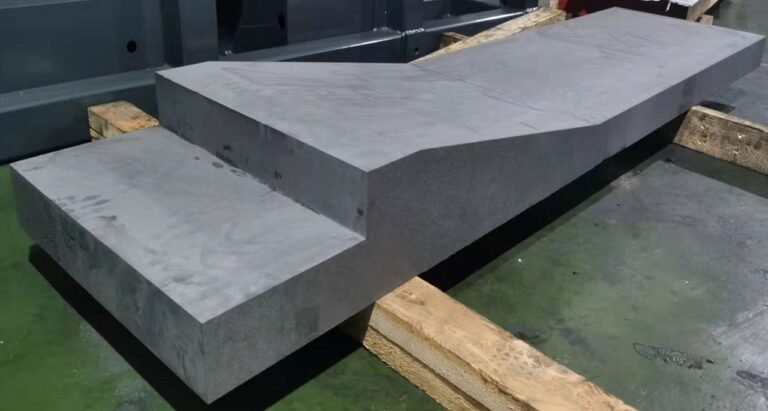
precision graphite slicing — diamond wire cutting through large isostatic graphite block
±0.05 mm tolerance
Why It Matters

Why Slicing Accuracy Determines Manufacturing Quality

Every tolerance decision made at the slicing stage compounds through finishing, assembly, and final performance. Slicing is where the manufacturing ceiling is set — or broken.

01

Thickness errors cannot be corrected downstream

Grinding removes material — it cannot add it. A slice 0.15 mm undersize has failed its tolerance before any secondary operation begins.

02

Coolant contamination is permanent and disqualifying

Graphite's open pore structure permanently absorbs cutting fluids, altering conductivity and thermal properties. Any wet cutting method is disqualified for semiconductor, EDM, and battery graphite.

03

Edge quality at slicing determines defect yield

Micro-cracks and edge chipping at the slice edge propagate during downstream handling. Diamond wire's micro-abrasion mechanism minimizes these at source.

04

Surface finish Ra ≤ 1.25 μm eliminates secondary operations

Wire-sawn graphite surfaces are often usable directly in EDM and battery applications, eliminating the secondary grinding step entirely and reducing cycle time.

Приложения

Industries That Demand High-Accuracy Graphite Slicing

These industries specify tight slicing tolerances because their downstream processes and end-product performance depend directly on dimensional consistency at the graphite stage. View all cutting machines →

01

EDM Electrode Blanks

Isostatic graphite sliced to ±0.05 mm tolerance for EDM electrode blanks. Thickness consistency determines electrode uniformity. Ra ≤ 1.25 μm finish reduces secondary grinding. EDM-grade graphite: $15/kg; 42 extra slices = $4,662 saved per block.

EDM / Tooling
02

Lithium Battery Anode Sheets

Thin graphite sheets sliced to tight thickness tolerance for lithium-ion anode production. Flatness and parallelism directly affect electrochemical uniformity and battery cycle life. Global graphite market: $12.12B (2025), CAGR 9.6% through 2034.

Energy / EV
03

Semiconductor SiC Components

High-purity isostatic graphite for SiC furnace components: susceptors, heaters, crucibles, insulation rings, wafer carriers. Zero coolant contamination is non-negotiable. Complex geometry requires outer profile and inner-hole cutting capability.

Полупроводник
04

Graphite Heaters & Structural Molds

Custom-profile graphite slices for high-temperature heater elements, boat components, and precision molds used in solar and aerospace applications. Complex geometry starts with precise slicing — profile cutting cannot compensate for poor slice quality.

Высокотемпературный / Промышленный
In-Depth Topics

Исследуйте каждое измерение резки графита

Каждая тема ниже выделяет конкретный инженерный аспект процесса резки —.

SP — 2.1

Объяснение процесса резки графита

Детальный разбор каждого этапа резки: подготовка материала, крепление, параметры резки проволокой и передача готовой продукции. Поймите контрольные точки, определяющие результат по размерам.

graphite slicing processметод резки
Read in depth →
SP — 2.2

Контроль толщины при резке графита

Что на самом деле означает постоянство толщины в производстве — разница между номинальной и достигнутой, откуда берется отклонение и почему последующая коррекция невозможна.

thickness controlпостоянство толщины графита
Coming soon
SP — 2.3

Плоскостность и параллельность при резке графита

Инженерные определения плоскостности и параллельности применительно к нарезанному графиту. Как этап резки вносит геометрические погрешности и почему полировка не может исправить отклонения, возникшие на этапе резки.

плоскостность резки графитапараллельность
Read in depth →
SP — 2.4

Common Defects in Graphite Slicing

Classification of slicing defects: edge chipping, micro-cracking, surface waviness, and subsurface damage. How each forms and why it amplifies through downstream operations.

graphite slicing defectsedge chipping
Read in depth →
SP — 2.5

Kerf Loss in Graphite Slicing

The engineering and economic logic of kerf loss — how kerf width determines per-unit yield, how it scales in high-value graphite grades, and the full ROI calculation for wire saw adoption.

kerf losskerf width graphite
Read in depth →
SP — 2.6

Stress Introduction During Graphite Slicing

Where slicing stress originates, how graphite's anisotropic structure responds to localized force, and why stress-driven warping and cracking are often irreversible regardless of post-slicing treatment.

graphite slicing stressstress in graphite cutting
Coming soon
SP — 2.7

How Graphite Slicing Affects Manufacturing Yield

The yield logic of the slicing stage: how scrap rate is established before downstream operations begin, and why slicing quality sets a ceiling that no subsequent process can raise.

graphite slicing yieldscrap rate
Read in depth →
Customer Case Study

Mersen Graphite — World's Largest Specialty Graphite Producer

Mersen S.A. (Euronext: MRN), the global leader in specialty graphite serving 30+ industries across 35 countries, deployed the Vimfun SVI 250-80 for large-format isostatic graphite block cutting at their North American facility.

  • Blocks exceeded the capacity of all standard machine models — only the SVI 250-80's 2,500 mm cutting range could handle full block dimensions without pre-cutting
  • Application: high-temperature furnace structural components and semiconductor process equipment blanks
  • Contour cutting capability enables near-net-shape profiling of oversized blocks before final precision machining
  • Dry cutting capability preserved material purity for sensitive semiconductor applications — zero coolant contamination
  • Outer profile and inner-hole cutting on a single machine platform replaced multiple legacy cutting operations
Deployment at a Glance
SVI 250-80
Machine deployed — vertical endless diamond wire saw with 2,500 × 800 mm working range
2,500 mm
Maximum cutting length — largest working range in the Vimfun product line
3-in-1
Slicing + outer profile + inner-hole cutting on one machine
Zero
Coolant contamination — dry cutting required for semiconductor-grade purity
Our Machines

Graphite Slicing Machines by Vimfun

Three machine configurations covering the full range — from precision EDM electrode work to large-scale industrial block processing. All built for dry cutting, CNC feed control, and the dimensional consistency that high-accuracy graphite slicing demands.

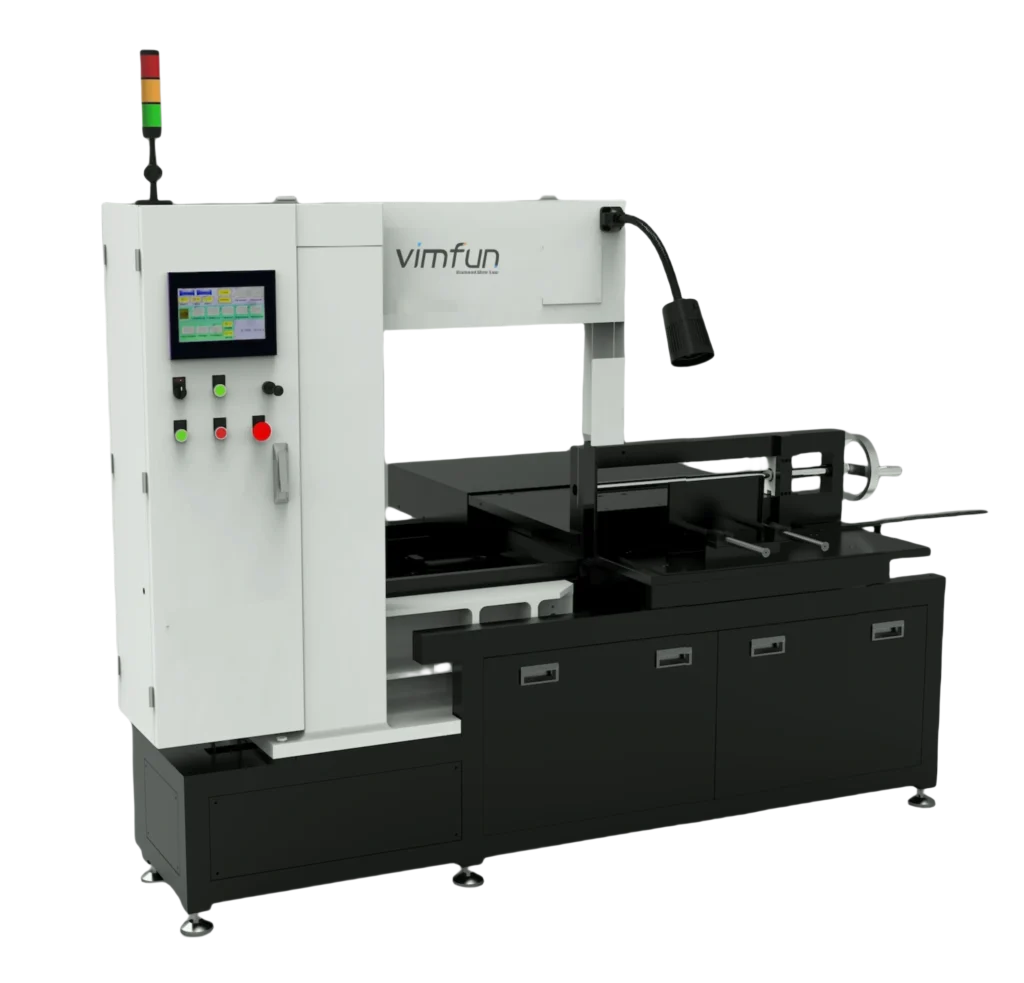
SV 60-60 vertical graphite slicing machine for medium-block production

SVI 80-80 — Production Batch + Profiles

  • Max workpiece: 800 × 800 × 800 mm
  • Slice, outer contour, inner-hole cutting
  • Slicing accuracy: ±0.05 mm
  • Most versatile machine in the range
View Machine →
SVI 250-80 large-format graphite slicing machine used by Mersen Graphite

SVI 250-80 — Oversized Blocks & Complex Profiles

  • Max workpiece: 2,500 × 800 mm
  • Deployed by Mersen Graphite
  • Slicing + outer profile + inner-hole
  • Largest working range in the lineup
View Machine →

Ready to Achieve Tighter Slicing Tolerances?

Send a graphite sample — we will run a free test cut and return a full surface quality and kerf measurement report before any purchase commitment. 24-hour response on all technical enquiries.

Free test cut for all graphite grades
24h response on technical enquiries
1 год machine warranty included
Mersen Graphite verified deployment
Прокрутить вверх