Dans le travail d'électroérosion (EDM), quelques microns représentent beaucoup. Les pièces peuvent ne pas s'adapter au moule. C'est pourquoi vous ne pouvez pas usiner de graphite haut de gamme. En travail de précision, l'usinage avancé du graphite est un must.
Les ateliers de graphite savent une chose. Lorsqu'il est utilisé comme outil de coupe, le graphite n'est pas métallique. La poussière, l'usure de l'outil et la rigidité de la machine sont plus importantes ici que dans le travail normal des métaux.
Dans cet article, la facilité de coupe du graphite est examinée. Il se demande si la précision au niveau du micron est même possible. Il montre la valeur d'être calibré et rigide. Il souligne également où les composants en graphite sont utilisés et comment choisir un bon partenaire.
Dans quelle mesure le graphite est-il réellement usinable ?
Le graphite est l'une des choses les plus faciles à couper. Il se coupe sans déchirure. Pas de liquide de refroidissement nécessaire. Le graphite est également plus rapide à usiner que la plupart des métaux avec usinage avancé du graphite. Mais une coupe facile ne permet pas de fermer les tolérances.
- Pourquoi le graphite se coupe-t-il différemment du métal ?
Le graphite s'écaille en une fine poussière. Il ne roule pas en copeaux comme le métal. Cela signifie moins de chaleur dans la pièce. Pas de liquide de refroidissement requis. La pièce conserve sa forme réelle.
- Structure du grain et son effet sur la précision
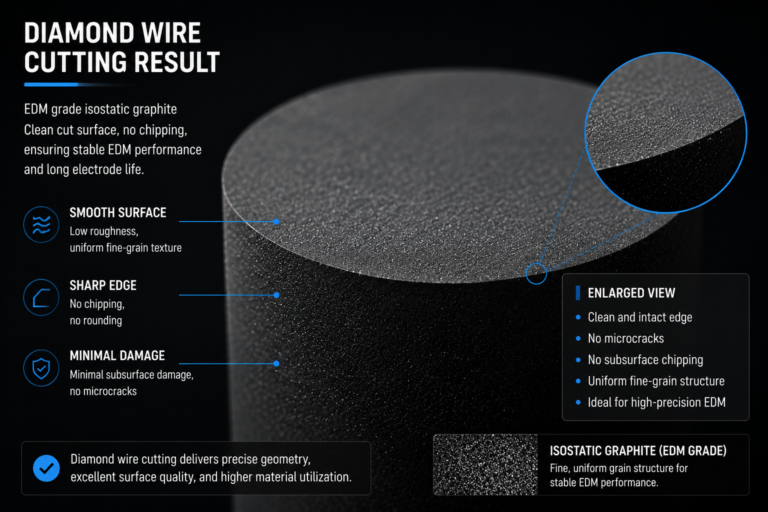
La taille des minuscules morceaux de graphite s'appelle la taille du grain. Elle affecte la douceur de la surface. Elle affecte également la netteté d'un bord. Le graphite à grain fin retient mieux les détails. Ne s'écaille pas aussi facilement aux coins. C'est pourquoi le travail détaillé nécessite souvent une qualité fine ou ultrafine.
Grades de graphite courants utilisés dans les travaux de précision
| Type de grade | Taille de grain typique | Le mieux adapté pour | Finition de la surface |
| Grain grossier | Plus de 25 microns | Outillage grossier, formes générales | Modéré |
| Grain moyen | 10–25 microns | Électrodes EDM standard | Good |
| Grain fin | 5–10 microns | Électrodes détaillées, parois minces | Very good |
| Grain ultrafin | Moins de 5 microns | Travail de tolérance au micron | Excellent |
L'usinage du graphite peut-il atteindre des tolérances au micron ?
Usinage avancé du graphite peut atteindre des tolérances au micron. Mais cela ne fonctionne que si la machine, les outils et l'atelier sont tous contrôlés ensemble. Aucune partie du processus ne peut le faire seule.
Ce que signifie réellement le “ niveau micron ”
Un micron est un millième de millimètre. C'est vraiment minuscule. La “ tolérance au niveau micron ” signifie qu'une pièce est à quelques microns de sa taille prévue. Pour une électrode détaillée, qui est souvent de 5 à 10 microns.
Où la perte de tolérance se produit généralement
Les petites étapes signifient un manque de précision. C'est rarement une grosse erreur :
- Déflexion de l'outil dans les coupes fines
- Changements de température dans l'atelier
- Décalage de la pièce pendant les coupes répétées
- Lecture de la sonde ou du laser bloquée par la poussière
Plages de précision réalistes par application
| Application | Cible de tolérance typique | Niveau de difficulté |
| Électrodes EDM grossières | ±25–50 microns | Faible |
| Électrodes de moule standard | ±10–15 microns | Modéré |
| Électrodes à détails fins | ±5–10 microns | Haut |
| Semiconductor components | ±2–5 microns | Very high |
Calibration: The Foundation of Precision Machining
Calibration aligns a machine’s true place with its reported value. First, this has to be correct. If this is wrong, then tools, and rigidity, matter less. A well-oiled machine can still cut the wrong size if it is out of calibration.
- Why Calibration Drift Affects Graphite More Than Metal
Graphite dust is gritty and fine. It can creep into small parts, such as scales and sensors. This makes calibration drift look faster here than shops cutting metal.
- Tooling Calibration and Measurement Checks
Many shops that do micron level work check the size of the tool. They do that more than regular stores. A tool that’s off a few microns can ruin the next part. Checking is usually a mix of techniques. Work is checked right on the machine with touch probes. Close up optical tools check fine edges. Final check on the coordinate measuring machines for critical parts.
Rigidity’s Role in Holding Tight Tolerances
Stiffness is the capacity of a machine to resist deflection under the action of a cutting force. It is one of the principal things that usinage avancé du graphite relies on. A rigid machine preserves its shape. It does this even on a fast, fine cut.
- Machine Frame Rigidity and Vibration Resistance
A stiffer frame takes little shakes. Otherwise the part may show marks or rounded corners. This is one reason a dedicated machine is often better than a general purpose mill for fine detail work.
- Workholding and Fixture Stability
If a part moves a few microns during a cut, the tolerance is blown. Good fixturing holds the part securely in place. It should be clamped the same way every time. Between steps it should be checked.
- How Rigidity Affects Fine Detail and Edge Quality
Thin ribs, sharp corners and narrow slots are the first to go from rigidity. A low-rigidity machine will tend to round these off. That is often the first sign a machine is too soft.
What Precision Actually Requires Beyond the Machine
Precision is a function of the whole system working together. It’s not just the specification sheet. Stable, micron level results require a stable spindle, a controlled shop and an experienced operator, all at the same time.
- Spindle Stability and Its Contribution to Tolerance
Stable, well-balanced spindle Low spindle runout Runout is a slight wobble at the end of the spindle. The low runout prevents fine tools from walking during the cut. Even the tiniest wobble becomes magnified at the end of a thin tool.
- Environmental Controls and Operator Skill
The machine and part grow and shrink with the heat swings. And that can mess up work to the micron level only. And dust control is equally important. The operator’s plan for the cut does too. Skilled workers are not fond of sharp bends in the road. They set careful speeds near thin sections. This means less bending.
What Is Machined Graphite Used For?
Machined graphite is used mainly for EDM electrodes and high-heat tooling. It is also used for parts that need to maintain shape in heat. Besides mould work, its easy cutting and heat resistant properties make it useful for much more.
- EDM Electrodes and Mold-Making Applications
The most common application of precision graphite is EDM electrodes. Graphite is a good conductor of electricity. It is worn away in a controlled manner in the EDM process. This is also used for shapes too hard to cut in hardened steel in mould and die shops.
- Aerospace and Semiconductor Uses
Graphite is not affected by high heat. This makes it useful for aerospace tooling. It is also used for semiconductor wafer work pieces. These jobs often have some of the tightest tolerances in the industry.
- 3D Graphite and Machining for Complex Shapes
This technique now works on shapes that used to take many setups. This includes undercuts, curved cavities, detail cuts from many angles all in one program. Now lead times are much shorter. It now makes up a growing share of the total advanced graphite machining work.
Graphite Machine Types Built for Precision Work
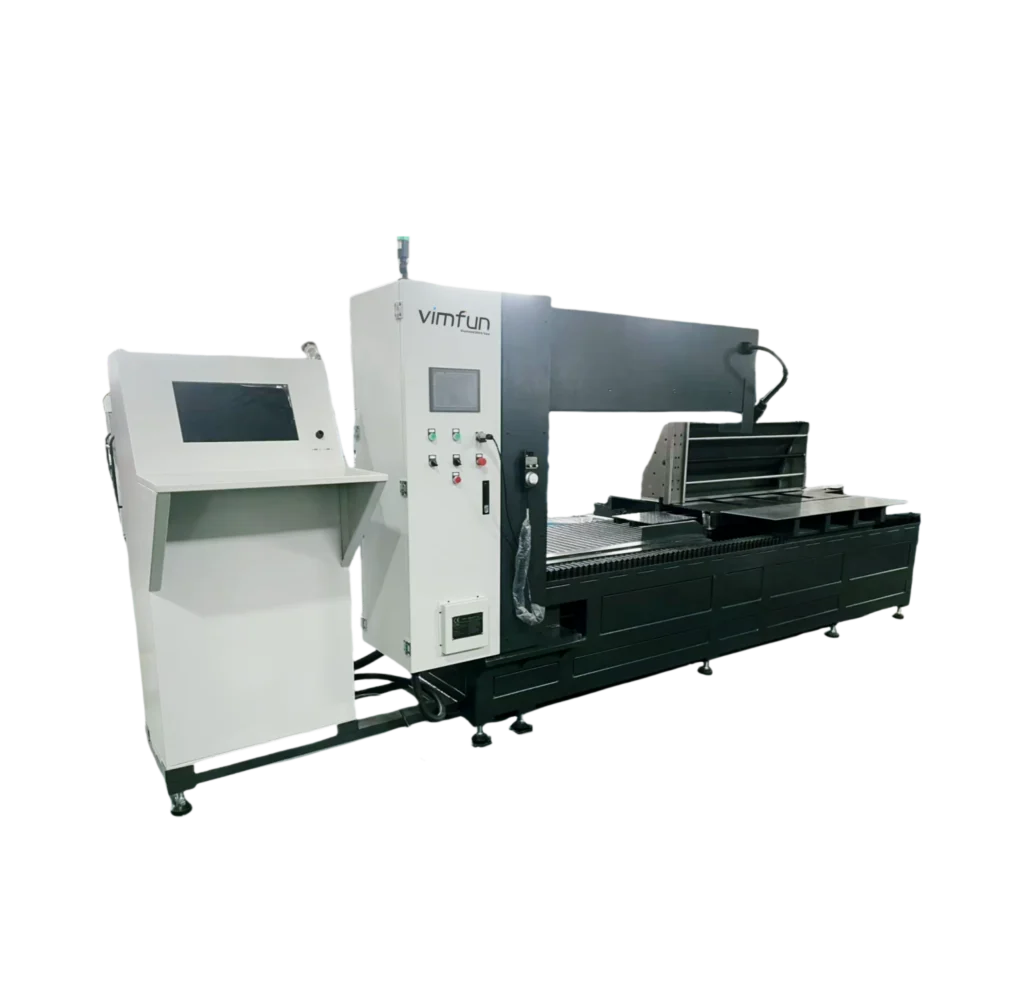
It’s a dedicated machine built around dust control, rigidity and fine-tool stability. It is not any generic machine adapted to the task. The gap is more important as tolerance needs become tighter.
- Dedicated Systems vs General-Purpose CNC
A purpose built unit will typically have sealed covers and incorporated dust collection. Its spindles make the music of fine cutting. This combination is what usinage avancé du graphite relies on for repeatability. A general cnc machine can cut graphite. But it costs some dust control and tool life. Check for fine scales and auto tool checks. These help to cut down on small mistakes over time.

- Best Graphite Shaping Machine Suppliers to Evaluate
When you compare suppliers, get real, written proof of repeat results. Don’t just look at the maximum spindle speed. Big numbers on a spec sheet don’t tell the whole story.
In-House Machining vs Graphite Machining Services
Whether you do it yourself or take it to a shop is up to you but that depends on a few things. It depends on volume, tolerance needs and how often your designs change. Neither choice is always the better one.
When In-House Advanced Graphite Machining Makes Sense
In-house advanced graphite machining works well for shops with steady high volume. It also suits shops that need total control of timing. It is suitable for teams that rework designs a lot during mould work.
Cost and Precision Tradeoffs Compared
| Type de grade | Taille de grain typique | Le mieux adapté pour | Finition de la surface |
| Grain grossier | Plus de 25 microns | Outillage grossier, formes générales | Modéré |
| Grain moyen | 10–25 microns | Électrodes EDM standard | Good |
| Grain fin | 5–10 microns | Électrodes détaillées, parois minces | Very good |
| Grain ultrafin | Moins de 5 microns | Travail de tolérance au micron | Excellent |
Choosing a Graphite Machining Partner or Factory
A good partner can give you real evidence of the claims they make. Marketing words are not enough. It matters just as much for one test part as for a long production run.
What to Look for in Best Graphite Shaping Machine Factories
Check for in-house measuring equipment and proof of origin of the graphite. Also, find a room with dust control. These small details are also what differentiate real precision shops from shops that cut graphite.
Questions to Ask About Tolerance Guarantees
A simple way to ask before you choose a partner:
- What tolerance can you offer on this shape?
- How often do you check your gear?
- What kind of report accompanies the finished part?
Questions fréquemment posées
Is graphite easier to cut than metal?
“Graphite is easier to cut than most metals. Does not curl into chips It takes no coolant and does not warp major heat. It still needs good dust control. It also requires fine-grain stock for detailed work. So it’s not always easier all around.
- No coolant needed
- Requires dedicated dust extraction
Is graphite able to be machined to micron tolerances?
Yes, graphite can be machined to a tolerance of a few microns off the target. This works when calibration, rigidity and the shop are all in control. That kind of precision is routine in fine-detail EDM and semiconductor work.
- Works best on fine or ultra fine grain stock.
- Requires regular checks of tools and machines
Machined graphite is most commonly used for:
Machined graphite is primarily used for EDM electrodes in the mould and die industry. It is also found in aerospace tooling, semiconductor components, and high-temperature industrial parts.
- EDM electrodes for mould cavities
- Fixtures for semiconductor processing
Graphite machining is the reason for loss of precision, why?
The loss of precision is typically from bending of the tool, calibration drift, heat changes, or the part moving during the cut. These little things add up. They rarely read as a single mistake.”
- Worn, uncalibrated tools
- Shop temperature fluctuations
Should you machine graphite in-house or outsource?
Sometimes, it’s better to choose one or the other. Depends on your volume, your tolerance needs and how often your designs change. High, steady volume usually helps in-house work. An outside shop often benefits by low or fluctuating volume.
- In-house Fits high repeat volume
- Outsourcing works well with low or variable volume
- Both can get tight tolerances with the right controls
What tools do you need for precision graphite work?
A dust sealed machine is needed for precision graphite work. Accurate measuring tools are a must. It also requires fine or ultra fine grain stock. Without all three it is hard to maintain tight tolerances over time.
- Machine sealed dusts extracted
- Calibrated measurement system or probe
Conclusions
A great spec sheet doesn’t give you micron-level precision in advanced graphite machining. It is the product of calibration, rigidity and controlled shop working in combination. Shops that treat these as separate issues tend to drift over time even with good equipment.
If your team is considering suppliers, or whether to bring this work in-house, Vimfun is well worth a look. Good resource to understand graphite machining ability and sourcing options before you pick a partner.