흑연 전극 표면 품질은 후처리 문제가 아니라 절단 결과입니다. 전극이 EDM 기계에 도달할 때쯤이면 표면 상태는 이미 블랭크를 생산한 절단 공정에 의해 결정됩니다. 후처리 작업은 절단이 제공하는 것을 개선할 수는 있지만, 첫 번째 절단 중에 입자 수준에서 발생하는 손상을 근본적으로 되돌릴 수는 없습니다.
흑연 전극 표면 품질이 실제로 무엇으로 구성되어 있는지, 절단 공정이 이를 어떻게 결정하는지, 그리고 표면 상태가 금형 품질과 생산 수율에 어떻게 영향을 미치는지 이해하는 것은 일관된 EDM 결과를 원하지만 2차 복구 공정 비용을 감당하고 싶지 않은 제조업체에게 필수적입니다.
흑연 전극 표면 품질 정의
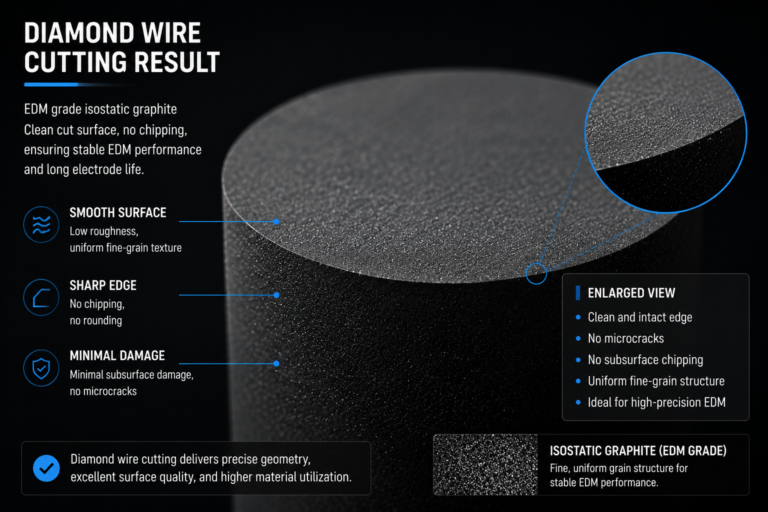
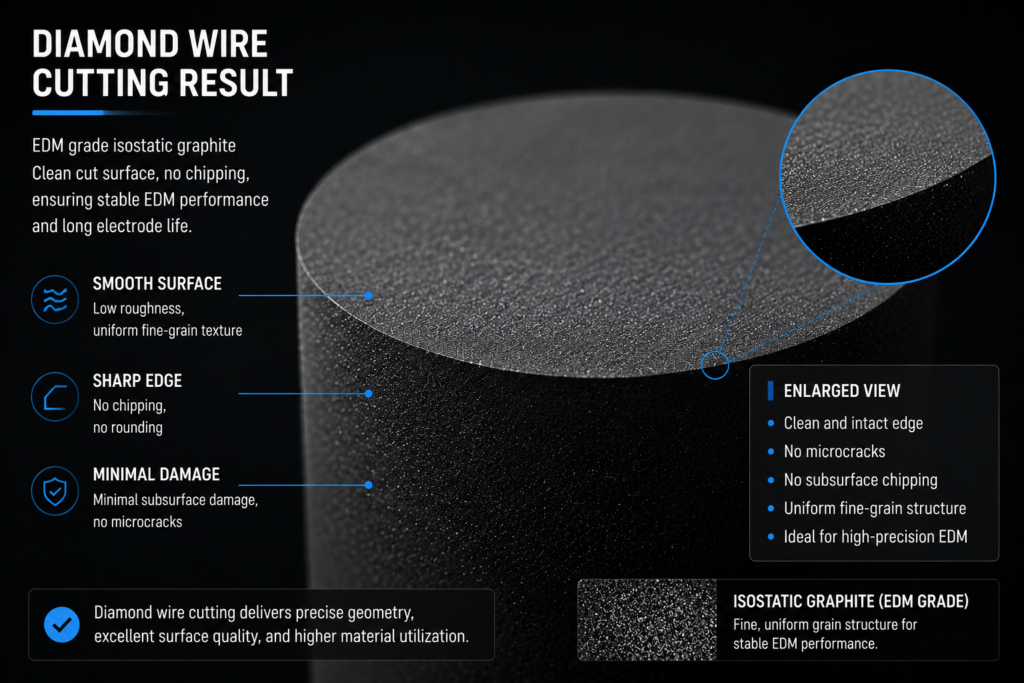
흑연 전극 표면 품질은 단일 측정치가 아니라 세 가지 고유한 특성의 복합체이며, 각 특성은 서로 다른 방식으로 그리고 전극의 서비스 수명 중 서로 다른 단계에서 EDM에 영향을 미칩니다.
표면 거칠기 절단면의 거시적 질감을 설명합니다. 일반적으로 Ra(산술 평균 거칠기) 또는 Rz(평균 봉우리-골짜기 높이)로 측정됩니다. EDM 전극의 경우 절단 후 목표 Ra는 일반적으로 1.6μm 미만입니다. 후처리 작업은 응용 분야에 따라 이를 0.4–0.8μm로 더 낮출 것으로 예상됩니다. 절단에서 Ra가 3μm 이상인 전극은 후처리 작업이 정밀한 개선보다는 복구 작업을 하도록 강요합니다.
모서리 무결성 절단된 모서리와 모서리의 상태를 설명합니다. 이는 EDM 중에 방전 집중이 가장 많이 발생하는 부분입니다. 모서리 칩핑, 둥글게 되거나 미세 버링은 전극이 공작물에서 생산하도록 설계된 형상을 방해합니다. 중요한 모서리의 0.1mm 미만의 칩핑조차도 해당 위치의 EDM 방전 동작에 영향을 미칠 수 있습니다.
표면 아래 결함 상태 흑연 전극 표면 품질의 가장 눈에 띄지 않지만 가장 중요한 차원입니다. 미세 균열, 응력 집중 및 눈에 보이는 절단면 아래에 묻힌 오염은 초기 외관이나 초기 EDM 성능에도 영향을 미치지 않습니다. 전극 마모가 진행되고 손상된 표면 아래층이 노출되면서 실패 메커니즘이 되며, 전극의 서비스 수명 중 예측할 수 없는 단계에서 마모율을 가속화합니다.
이 세 가지 특성은 사후에 동일하게 처리될 수 없습니다. 표면 거칠기는 절단 후 작업을 통해 가장 많이 복구할 수 있습니다. 모서리 무결성은 신중한 수작업 드레싱을 통해 부분적으로 복구할 수 있습니다. 표면 아래 결함 상태는 대부분 복구할 수 없습니다. 절단 단계에서만 피할 수 있습니다.
절단 방법이 표면 상태를 결정하는 방법
절단 방법은 후처리 공정이 적용되기 전에 흑연 전극 표면 품질을 결정합니다. 서로 다른 절단 접근 방식은 흑연의 입자 구조와 서로 다른 방식으로 상호 작용하기 때문에 근본적으로 다른 표면 상태를 생성합니다.
EDM 등급 등압 흑연 — 정밀 전극에 가장 일반적으로 사용되는 등급으로, 다음과 같은 제조업체에서 지정합니다. SGL Carbon 그리고 Toyo Tanso — 올바르게 절단하면 날카로운 모서리와 부드러운 표면을 지원하는 미세하고 균일한 입자 구조를 가지고 있습니다. 잘못 절단하면 동일한 입자 구조가 입자 경계에서 파손되어 칩핑, 찢어진 표면 질감 및 균열 끝이 입자 구조를 통해 전파되는 대신 입자 구조 내에 멈추는 표면 아래 손상층이 생성됩니다.
아래 표는 서로 다른 절단 접근 방식이 흑연 전극 표면 품질의 각 차원에 어떻게 영향을 미치는지 비교합니다.
| 표면 특성 | 전선 절단 | CNC 밀링 | 연마 디스크 |
|---|---|---|---|
| 절단면 Ra | 낮고 일관됨 | 중간, 도구 종속적 | 가변적, 높은 편차 |
| 모서리 칩핑 위험 | 낮은 | 보통에서 높음 | 높은 |
| 표면 아래 손상 깊이 | 최소 | 05–0.2mm(도구 접촉 종속적) | 1–0.3mm |
| 표면 오염 | 낮음(수성 냉각수) | 중간(오일 미스트, 칩 재침착) | 높음(연마재 함유) |
| 배치 간 일관성 | 높은 | 도구 마모에 따라 저하됨 | 변수 |
주요 차별점은 접촉 역학입니다. CNC 밀링은 회전하는 도구를 통해 압축 및 전단력을 적용하며, 이 도구는 절단 경로 전체에서 흑연과 반복적으로 접촉합니다. 각 접촉 주기는 입자 구조에 하중을 적용합니다. 파괴 인성이 낮은 재료에서는 누적 접촉 하중이 표면 아래에 응력 축적 영역, 즉 절단면에서는 보이지 않지만 구조적으로 존재하는 표면 아래 손상층을 생성합니다.
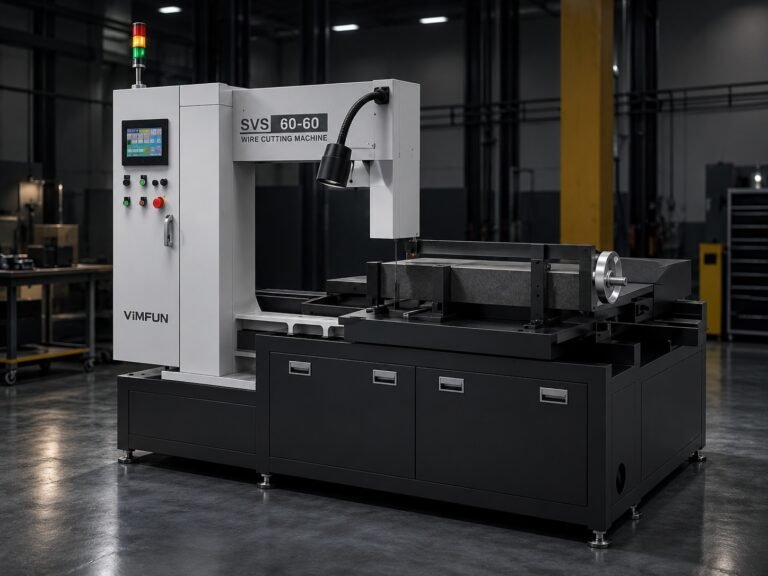
와이어 절단은 제어된 장력과 냉각수 흐름 하에서 움직이는 연마 와이어를 통해 재료를 분리합니다. 절단 영역은 좁고, 흑연에 대한 접촉력은 낮고 분산되어 있으며, 공정은 표면 아래 입자 파손을 생성하는 압축 하중을 적용하지 않습니다. 그 결과 후처리 단계가 적용되기 전에 더 깨끗한 표면 상태, 즉 더 낮은 Ra, 더 나은 모서리 무결성 및 더 얕은 표면 아래 손상층이 생성됩니다.
절단 방법과 표면 상태 간의 관계는 다음과 같은 맥락에서 검토됩니다. 흑연 전극 절단 요구 사항, 이는 표면 품질이 신뢰할 수 있는 EDM 전극 생산을 위해 절단 공정이 충족해야 하는 다섯 가지 협상 불가능한 요구 사항 중 하나인 이유를 다룹니다.
표면 결함 및 EDM 방전 안정성
흑연 전극 표면 품질은 EDM 방전 동작으로 직접 전환됩니다. 각 유형의 표면 결함은 EDM 공정을 방해하는 특정 메커니즘을 가지고 있으며, 각 방해는 정확도, 전극 수명 또는 공작물 품질에 비용을 발생시킵니다.
모서리 미세 버 및 칩핑 방전 개시에 영향을 미칩니다. EDM 방전은 전기장이 집중되는 날카로운 기하학적 특징에서 우선적으로 시작됩니다. 모서리 칩핑 또는 미세 버링이 설계된 모서리 형상을 변경하면 방전 패턴이 설계된 개시 지점에서 벗어납니다. 결과는 불일치한 스파크 분포, 공정 제어 감소 및 전극 형태에서 벗어나는 공작물 형상입니다.
표면 미세 균열 전극 마모율 및 마모 일관성에 영향을 미칩니다. EDM 열 순환 하에서 전극 표면은 방전 위치에서 반복적인 가열 및 급랭에 노출됩니다. 절단 손상이 최소화된 견고한 전극 표면은 예측 가능하고 제어된 마모로 이러한 순환을 수용합니다. 절단 단계에서 발생하는 기존의 미세 균열이 있는 전극은 열 순환이 확장되는 기존 균열 끝을 제공합니다. 마모는 이러한 부위에서 가속되어 전극의 초기 상태에서 예측할 수 없는 불규칙한 전극 후퇴 및 형상 변화를 생성합니다.
표면 오염 전극의 전체 수명 동안 방전 품질에 영향을 미칩니다. 절단 중에 박힌 연마 입자, 기계 가공 냉각수의 오일 잔류물 또는 절단면에 재침착된 흑연 먼지는 모두 방전 표면에 이물질을 도입합니다. 이 물질은 방전층을 방해하고 아크 불안정성을 증가시키며 EDM 공정 신호의 노이즈에 기여합니다. key challenges in EDM graphite electrode cutting 연마 접촉 및 오일 기반 냉각에 의존하는 절단 공정에서 표면 오염을 체계적인 문제로 포함합니다.
절단으로 인한 잔류 응력 장기적인 치수 안정성에 영향을 미칩니다. 절단 공정으로 인한 상당한 잔류 응력을 가진 전극은 EDM 작동의 열 순환 하에서 점진적으로 해당 응력을 완화합니다. 응력 완화는 느린 치수 변화로 나타납니다. 즉, 전극 형상은 의도적인 마모와 무관하게 생산 과정에서 약간씩 이동하여 작업물 배치에 걸쳐 누적되는 오차를 발생시킵니다.
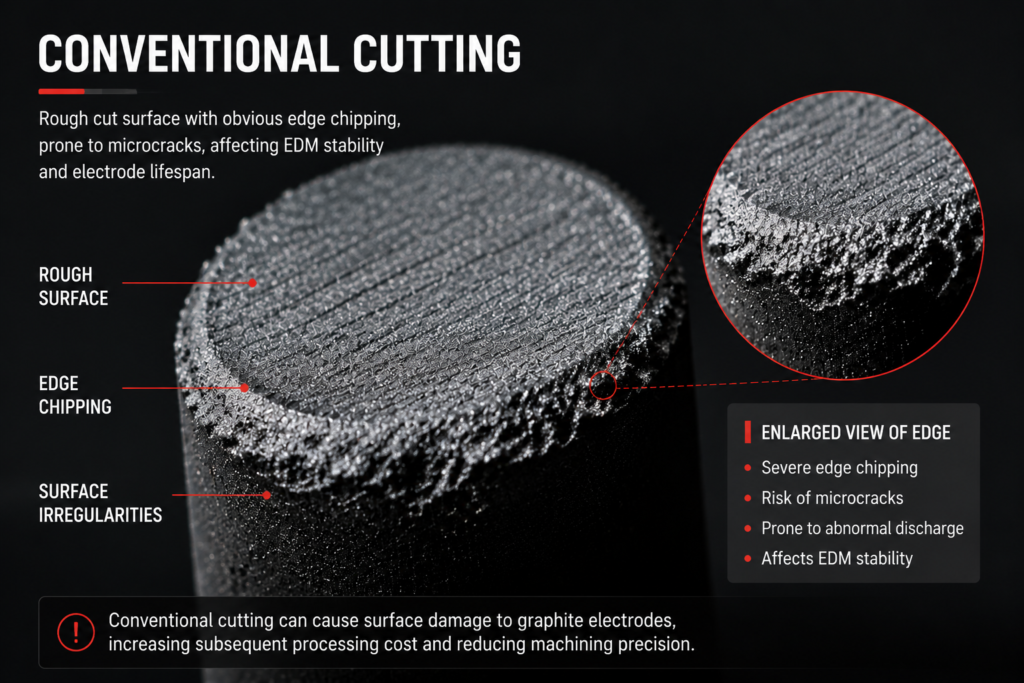
흑연 전극 표면 품질 및 금형 생산 수율에 미치는 영향
흑연 전극 표면 품질의 결과는 전극 자체에 국한되지 않습니다. 이는 EDM 공정을 통해 금형 캐비티 형상으로, 그리고 해당 금형에서 생산되는 제품으로 이어집니다.
캐스케이드는 다음과 같이 작동합니다.
- 전극 표면 결함 → inconsistent discharge behavior → workpiece surface variation
- Workpiece surface variation → mold cavity geometry errors → surface finish below specification
- Mold cavity errors → product dimensional deviation → part rejection or rework
- Part rejection → scrap cost, rework cost, schedule delay
Each step in this cascade amplifies the original defect. A micro-burr on an electrode edge that causes 0.05 mm of inconsistent workpiece removal may translate into a 0.03 mm dimensional error in the mold cavity — which may then produce surface defects or parting-line mismatch in every part run from that mold until the tool is repaired.
The economic implication is that graphite electrode surface quality is not priced at the electrode level. It is priced at the mold level and ultimately at the production run level. An electrode that cost less to cut but delivered a compromised surface may cost significantly more in downstream consequences than the savings at the cutting stage.
This cascade effect is why investment in upstream surface quality — through appropriate cutting process selection — consistently shows better returns than investment in downstream rework and secondary finishing. Preventing a surface defect at the cutting stage costs nothing extra if the cutting process is already capable. Recovering from a surface defect downstream requires additional operations, additional cycle time, and in some cases, electrode replacement before the workpiece is complete.
The connection between cutting economics and electrode material efficiency is examined in 흑연 전극 절단 폭 손실, which covers how the cutting process affects both material waste and overall electrode production cost.
Why Post-Cutting Finishing Cannot Fully Recover Poor Surface State
Secondary finishing operations — lapping, hand dressing, surface grinding — are a standard part of electrode production. They are not, however, a reliable substitute for cutting quality when graphite electrode surface quality was not achieved at the cutting stage.
The limitations are structural. Finishing operations work from the outer surface inward: they can reduce Ra, smooth visible roughness, and dress accessible edges. They cannot reach subsurface damage that lies beneath the workable finishing depth. An electrode with a 0.15 mm subsurface microcrack layer can be finished to a visually clean Ra of 0.6 μm — and still carry the structural damage that will accelerate wear during EDM, because the finishing depth did not reach the crack front.
Edge chipping is partially recoverable if the chip is small and on a non-critical feature. On sharp corners or thin ribs that define the electrode’s designed geometry, material cannot be added to recover a chip. The electrode either goes to use with a compromised edge or is rejected and recut.
Surface contamination from abrasive cutting processes — embedded abrasive particles, chemically bonded cutting fluid residue — is difficult to remove completely through standard cleaning and finishing. Ultrasonic cleaning can reduce surface contamination, but particles embedded in surface pores during aggressive abrasive cutting may persist through the cleaning process and remain at the discharge surface during EDM.
The practical outcome is that secondary finishing adds cost, adds process time, and recovers less than its application suggests. A production process that relies on secondary finishing to compensate for poor cutting quality is paying twice — once for the inadequate cut, and again for the recovery operation — while still accepting elevated risk from subsurface damage that finishing cannot address.
Preventing surface quality problems at the cutting stage, rather than recovering from them downstream, is the consistent finding across precision electrode manufacturing operations. As the EDM graphite electrode cutting process resource details, the cutting stage is the most cost-effective point in the production chain to establish surface quality because it is the point where the material’s condition is still undivided — before shaping, before finishing, and before any downstream decisions have been made.
If graphite electrode surface quality is a recurring problem in your electrode production — showing up as inconsistent EDM performance, unexplained electrode wear variation, or elevated mold rejection rates — the diagnosis most often points back to the cutting process. Contact us to discuss what your current cutting method is delivering and what a higher-quality cut surface looks like in practice.